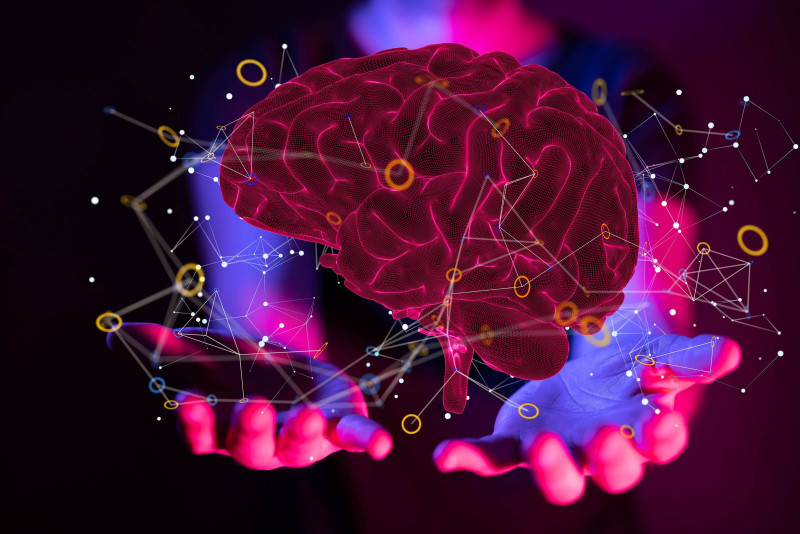
A NEW concept called organoid intelligence, with the aim of developing a new generation of biocomputers, has recently been detailed by a group of researchers.
They want to harness advances in the reproduction of human brain cells in vitro to offer superior intelligence to the computers and smart devices of the future.
This technology promises to be much more powerful and efficient than any form of artificial intelligence as we know it.
This notion of organoid intelligence is described in a paper outlining a roadmap to developing this technology published in the journal Frontiers of Science, by numerous scientists, mainly from Johns Hopkins University in Baltimore.
According to them, work on cerebral organoids, derived from human stem cells, should make it possible in the relatively near future to reproduce entities endowed with memory and a genuine capacity for learning.
Organoids are miniature organs grown in vitro. The term organoid intelligence (OI) encompasses all these developments, leading to a form of biological computing – or biocomputing – that leverages neurons bred in a lab.
All of which is enough to make the likes of ChatGPT seem outdated already.
Complex interfaces could eventually be networked, with brain organoids connected to sensory organoids such as retinal organoids. This could, for example, lead to new therapeutic applications.
Organoid intelligence could have further advantages in terms of energy savings. Its energy consumption should, in fact, be close to that of a human brain.
This is estimated to have a "computational" power of about one exaFlop and consume 20 watts, ie, an efficiency one million times better than that of modern machines (even if they perform very different but complementary tasks).
By way of comparison, Frontier, the most powerful supercomputer in the United States, is estimated to work at 1.1 exaFlop, the equivalent of 1.2 billion billion operations performed in one second, for an estimated energy consumption of 21 megawatts.
However, faced with the numerous challenges raised by this type of research, the researchers also admit that an ethical approach will necessarily have to be incorporated into their work.
As such, it will take a few more years, even decades, before we have a glimpse of what organoid intelligence could have to offer. – ETX Daily Up, March 14, 2023