MENTAL health conditions, from anxiety to depression, can take a heavy toll on a country's economy, if only because they lead to lower productivity and higher absenteeism.
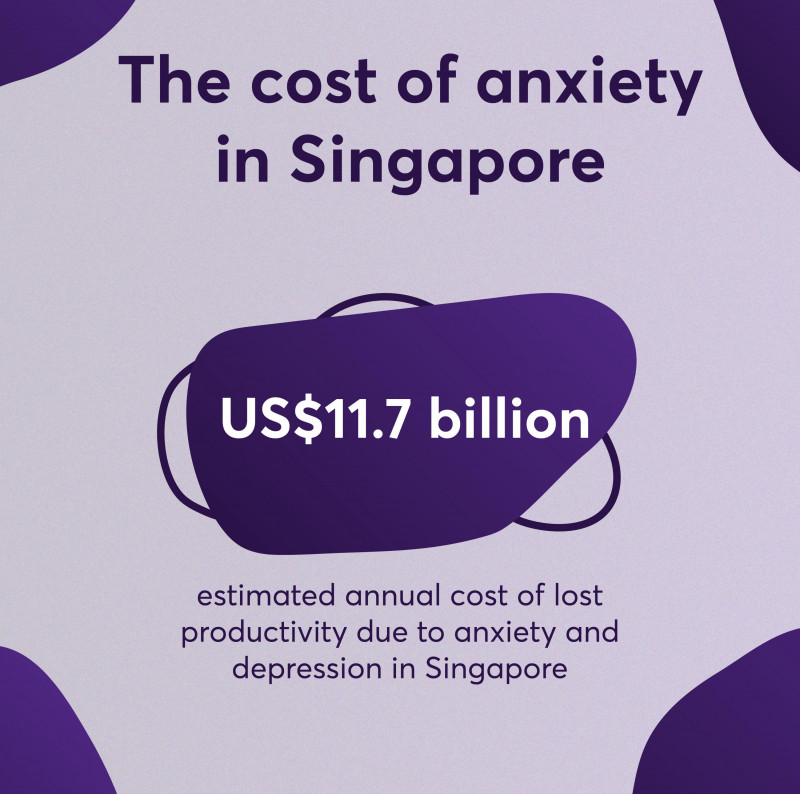
In Singapore, scientists estimate that the economic burden of this major public health issue amounts to some US$11.7 billion (about RM52.22 billion) per year, or approximately 2.9% of the country's gross domestic product (GDP).
One in eight people worldwide were living with a mental disorder in 2019, or some 970 million people, primarily being affected by anxiety and depressive disorders, according to data from the World Health Organisation (WHO).
These figures have increased considerably since the Covid-19 pandemic, reports the WHO, which estimates a 26% and 28% increase respectively for anxiety and major depressive disorders in just one year.
As such, mental health requires particular attention from all nations, whether in terms of prevention, information, treatment or even access to care.
Beyond the public health issue, countries must also take into account the economic burden that such disorders can represent.
In Singapore, for example, lost productivity due to anxiety and depression is estimated to cost no less than US$11.7 billion a year, or 2.9% of the city-state's GDP, according to a new study conducted by researchers from Duke-NUS Medical School and the Institute of Mental Health (IMH).
Published in the journal BMC Psychiatry, the research is based on data from a survey of 5,725 Singaporean adults conducted between April and June 2022.
After determining the proportion of anxiety and depressive disorders in the population, the scientists identified the consequences of such problems, particularly in terms of health expenses and work productivity.
The results provide an estimate of the economic burden that anxiety and depression could represent, namely nearly 3% of GDP.
A significant figure that highlights the importance of setting up programmes, in Singapore and elsewhere in the world, to help tackle mental health disorders.
Lost productivity
In detail, the study found that 14% of the adults surveyed had depressive symptoms, and 15% had anxiety disorders, with many suffering symptoms of both.
Of these, only about a third (32%) sought help for treatment, and about a quarter (24%) consulted a mental health professional.
The researchers also noted that 13% of those affected by these mental health conditions made at least one trip to the emergency room, and 9% were hospitalised.
They estimate that the annual increase in health care costs for these patients could be S$1,050, or about US$785.
At the same time, the study revealed that people affected by these disorders missed 17.7 more days of work per year and were 40% less productive at work.
This data allowed the researchers to estimate the cost of this lost productivity due to anxiety and depression at S$15.7 billion or US$11.7 billion.
In light of these findings, the scientists recommend improving access to support programs and treatments, increasing knowledge about mental health, and expanding the training of health professionals to treat these types of symptoms.
In 2018, two years before the pandemic, the Organisation for Economic Co-operation and Development (OECD) estimated the total cost of mental ill-health in the European Union to be over €600 billion (US$660 billion), or more than 4% of GDP.
And these figures may have increased since the pandemic, once again underscoring the important need for action to prevent certain disorders and improve care for those concerned. – ETX Daily Up pic, April 29, 2023