MORE than half of the world's largest lakes and reservoirs are dwindling and placing humanity's future water security at risk, with climate change and unsustainable consumption the main culprits, a study said on Thursday.
"Lakes are in trouble globally, and it has implications far and wide," Balaji Rajagopalan, a professor at the University of Colorado Boulder and co-author of the paper, which appeared in Science, told AFP.
"It really caught our attention that 25% of the world's population is living in a lake basin that is on a declining trend," he continued, meaning some two billion people are impacted by the findings.
Unlike rivers, which have tended to hog scientific attention, lakes aren't well monitored, despite their critical importance for water security, said Rajagopalan.
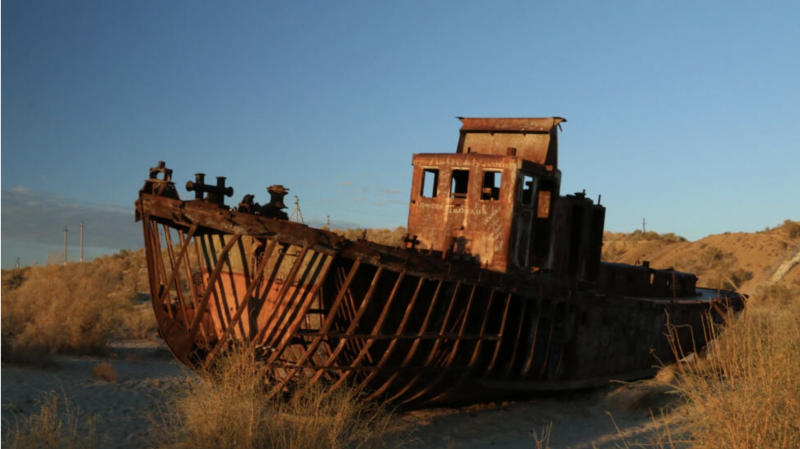
But high-profile environmental disasters in large water bodies like the Caspian Sea and the Aral Sea, signalled to researchers a wider crisis.
To study the question systematically, the team, which included scientists from the United States, France, and Saudi Arabia, looked at Earth's biggest 1,972 lakes and reservoirs, using observations from satellites from 1992-2020.
They focused on larger freshwater bodies because of the better accuracy of satellites at a larger scale, as well as their importance for humans and wildlife.
17 Lake Meads lost
Their dataset merged images from Landsat, the longest-running Earth observation programme, with water surface height acquired by satellite altimeters, to determine how lake volume varied over nearly 30 years.
The results: 53% of lakes and reservoirs saw a decline in water storage, at a rate of approximately 22 gigatonnes a year.
Over the whole period studied, 603 cubic kilometres of water was lost, 17 times the water in Lake Mead, the United States' largest reservoir.
To find out what drove the trends, the team used statistical models incorporating climate and hydrologic trends to tease out natural and human-driven factors.
For natural lakes, much of the net loss was attributed to climate warming as well as human water consumption.
Increased temperatures from climate change drive evaporation, but can also decrease precipitation in some places.
"The climate signal pervades all factors," said Rajagopalan.
Lead author Fangfang Yao, a visiting fellow at CU Boulder, added in a statement: "Many of the human and climate change footprints on lake water losses were previously unknown, such as the desiccations of Lake Good-e-Zareh in Afghanistan and Lake Mar Chiquita in Argentina."
Losses in humid regions, too
One surprising aspect was that lakes in both wet and dry regions of the world are losing volume, suggesting the "dry gets drier, wet gets wetter" paradigm that is frequently used to summarise how climate change affects regions, doesn't always hold.
Losses were found in humid tropical lakes in the Amazon as well as Arctic lakes, demonstrating a trend more widely spread than predicted.
Accumulating sedimentation was blamed for storage loss in drying reservoirs.
But although most global lakes were dwindling, nearly a quarter saw significant increases in their water storage.
These included in the Tibetan Plateau, "where glacier retreat and permafrost thawing partially drove alpine lake expansion," the paper said.
Hilary Dugan, a scientist who studies freshwater systems at the University of Wisconsin-Madison and who wasn't involved in the study, told AFP the research advanced scientific understanding of lake volume variability, which is of "huge importance."
It is "unique in that it focuses on specific lakes, and reports the amount of water as a volume," she said.
But she added: "It's important to keep in mind that many water supplies are from small lakes and reservoirs," and future research should consider these too.
Globally, freshwater lakes and reservoirs store 87% of the planet's liquid freshwater, underscoring the urgency of new strategies for sustainable consumption and climate mitigation.
"If a good chunk of freshwater lakes are drying, then you're going to see the impact come to you one way or the other, if not now in the not-too-distant future," said Rajagopalan.
"So it behooves all of us to be good stewards." – AFP, May 19, 2023