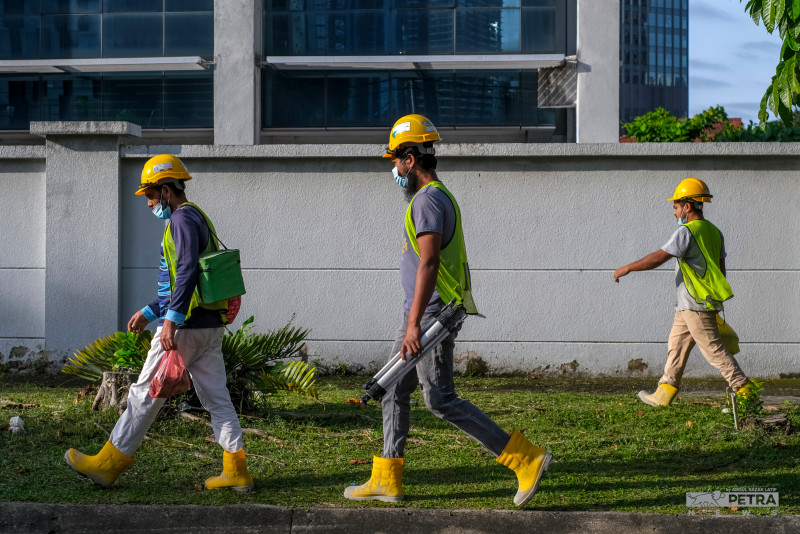
THE MALAYSIAN International Chamber of Commerce and Industries (MICCI) has expressed deep concern at the Home Ministry’s recent decision to cancel unused foreign worker allocations, effectively not allowing the entry of foreign workers into the formal sector with active quotas starting June 1 this year.
While it acknowledged the need for adjustments in repatriation policy and process, the chamber said that Home Minister Datuk Seri Saifuddin Nasution Ismail has yet to clarify if the freed-up quota will be immediately available for application.
Hence, MICCI urged the government to reconsider the implications of this decision on the nation’s economy, businesses and foreign workers alike.
Speaking on behalf of the business and MNC community, Christina Tee, president of MICCI, stressed that this recent decision by the Home Ministry has left many businesses in limbo. These especially include those in the manufacturing, construction, plantation and agricultural sectors that rely heavily on foreign workers.
She lamented the “sudden announcement and lack of clarity of a backup plan” or if new procedures of recruiting foreign workers after May 31, 2024 are being discussed should the quota system be abolished.
“Additionally, the cancellation of quotas yet to be used exacerbates the existing shortage of skilled labour in certain sectors of the economy,” she said in a statement today.
“With Malaysians not being keen to work in these sectors, businesses are left without viable alternatives for staffing upcoming projects.
“Furthermore, this situation has an adverse impact on employers who have planned their projects and operational costs based on the availability of foreign workers.”
Reapplication of quotas takes a long time as well, she stressed.
Employers will face significant challenges in their ability to fulfil contractual obligations and meet project deadlines, leading to financial losses and operational setbacks.
They would even be hesitant to accept orders and new projects since it will require an uncertain amount of lead time before the manpower can arrive for work to commence.
“Ultimately, all of these negatively impact business operations, delaying economic activities and economic growth,” said Tee.
The MICCI also said that other concerns involve the fate of foreign workers who are scheduled to arrive in Malaysia for work post-June 2024.
With the cancellation of quotas, these foreign workers are left without employment prospects, raising questions on who will bear the responsibility for their well-being until projects are confirmed, which could potentially be months later.
To alleviate the burdens imposed on businesses, the MICCI recommends the government look into a two-pronged approach when implementing a restrictive foreign worker policy.
The first is a “balanced approach” that considers both regulatory objectives and the practical needs of businesses and industries.
The MICCI recommends targeted quotas based on sectoral needs, more specifically in sectors that are critically dependent on foreign labour.
This would ensure continuity in operations and prevent disruptions to projects that are already forecasted or scheduled to start post June 2024.
Alternatively, the government can consider maintaining the current pre-approved quota and set a new guideline 1 June 2024 onwards, the chamber said.
The second is a “collaborative approach”, in which the MICCI called upon the Home Ministry and other relevant government agencies to engage in meaningful dialogue with businesses and industry stakeholders.
Dialogue facilitates a better understanding of the bigger picture and challenges businesses’ face with the foreign labour employment market, and find a more sustainable solution. For example, phasing in a restrictive policy gradually will give businesses the time to adjust according to their operational requirements for greater efficiency and sustenance.
“By working together, we can develop comprehensive guidelines and processes to ensure a seamless transition to any policy changes, thus minimising disruptions to businesses and foreign workers,” said Tee.
“We stand ready to collaborate with the government and industry stakeholders to address the challenges posed by the cancelling of unused foreign worker quota and ensure the sustainability of Malaysia’s economy and labour market.” – The Vibes, March 5, 2024