
THE changing of the guard in the last two elections in Kota Marudu, located some 120km north Kota Kinabalu, has failed to lift the district out of poverty.
The agricultural valley, once famous for corn-planting, made headlines in January this year when a video of three pupils wading through the muddy Jalan Samparita-Sonsogon to get to school went viral.
The video, shot by a primary school teacher, highlighted not only Sabah’s most troubling infrastructural issues but also reinforced Kota Marudu's image as one of the poorest areas in Malaysia.
A 2022 Poverty Index Report by the Statistics Department included Kota Marudu as among the country's most impoverished districts.
The district has long been a Parti Bersatu Sabah (PBS) stronghold.
In the 2020 Sabah elections, PBS kept the Tandek state constituency with a new assemblyman, Datuk Hendrus Anding, who replaced Datuk Anita Baranting.
The newly introduced constituency, Bandau, was won by Datuk Wetrom Bahanda on the Bersatu ticket. Bersatu was then a member of the ruling Gabungan Rakyat Sabah (GRS) alliance.
In 2022, Wetrom left Bersatu to run for the Kota Marudu federal seat against Parti Bersatu Sabah president and incumbent MP Datuk Seri Maximus Ongkili. He won.
Ongkili was the Kota Marudu MP for seven terms. As Sabah underwent several political crises, Wetrom joined Parti Kesejahteraan Demokratik Masyarakat (KDM) led by controversial politician Datuk Peter Anthony.
The two state constituencies in Kota Marudu are in the spotlight again as Sabah heads for elections in 2025.
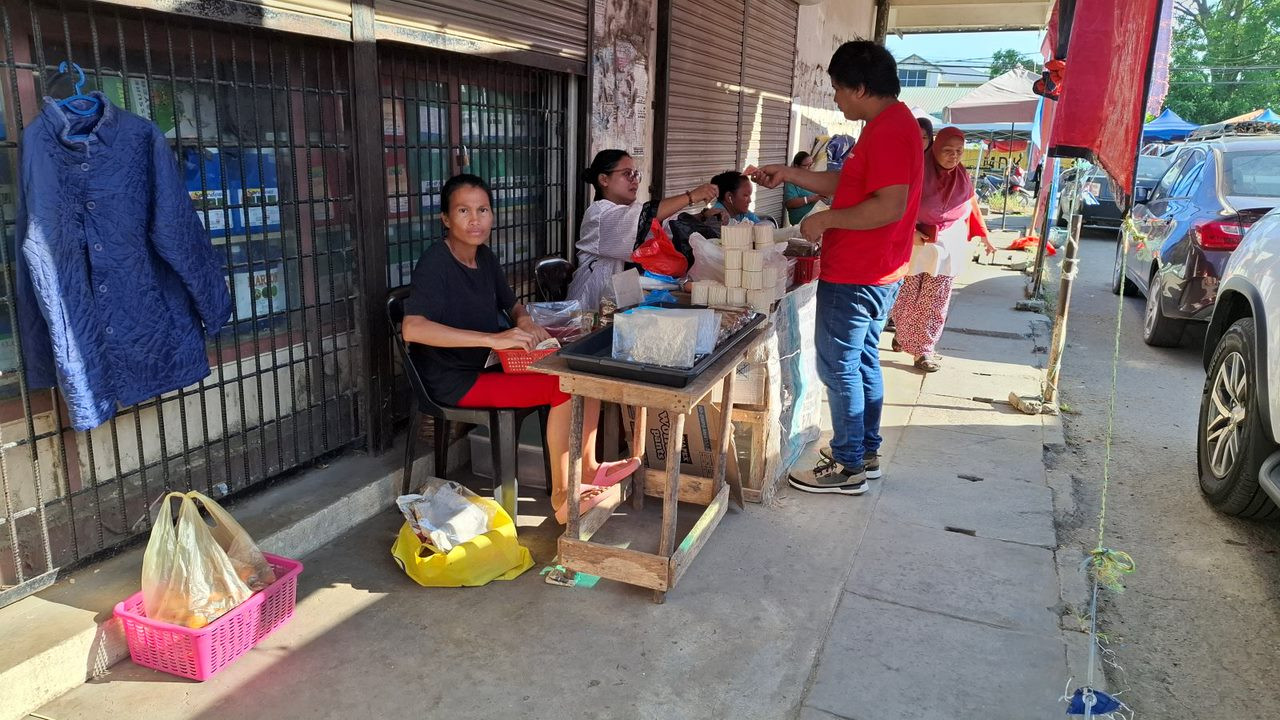
Despite the political changes over the past four years, the socio-economic status of the district with a population of about 250,000 has remained unchanged.
Most of the residents are farmers, fishermen, or odd-job workers.
Twenty-year-old Alexander Sebastian, who works at a coffee shop in Kota Marudu town, hopes to land an office job at a nearby oil palm plantation.
But he fears the day will never come as Kota Marudu offers few employment opportunities.
"My brother and I got a job here with the recommendation of our uncle," he said.
"Our uncle is now 40 years old and he has been working in this coffee shop since he was 12," said Sebastian, who is afraid he will also be stuck at the same job until he retires.
His only consolation is that his employer provides him with meals and lodging.
Sebastian, who is from a remote village in Tandek, said it takes him more than three hours to travel home. It is a journey that is only possible with a four-wheel truck because of the deplorable road conditions.
The scarcity of jobs has seen thousands of young people from the interior district migrate to Kota Kinabalu and Kuala Lumpur in search of better opportunities.
For youths like Sebastian, who come from a poor family, such an escape is unaffordable. He is envious when he sees of his friends returning home with branded clothes and the latest gadgets.
Restaurant owner Khiun Wan Shin is aware that the locals do not have much money to spend. He is surprised that he has managed to keep his business running for over four decades, while most of his neighbours' shops have either closed or rented out to Pakistani traders selling electronic goods.
"Most people here don’t eat out. They cook at home. They don’t have much disposable income because they are mostly poor farmers," said the 56-year-old.
"I believe the only reason I've kept my business this long is because of visitors from other districts and non-Sabahans," he added.
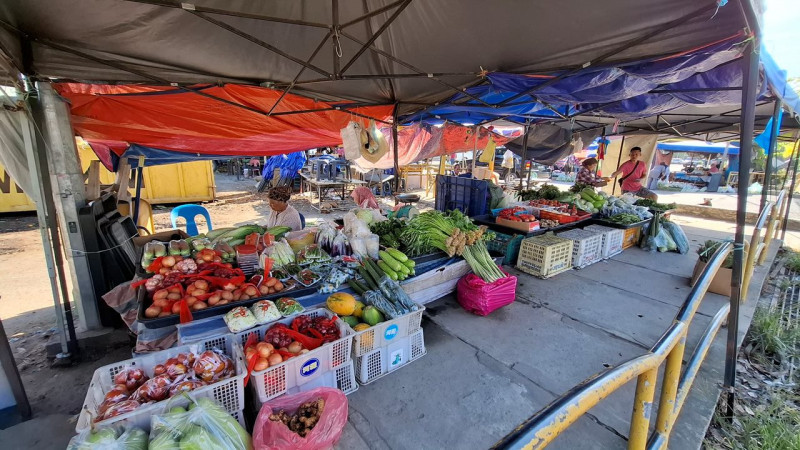
Khiun said business was particularly bad after the 2020 pandemic but he was able to get his produce and ingredients cheap at the local market.
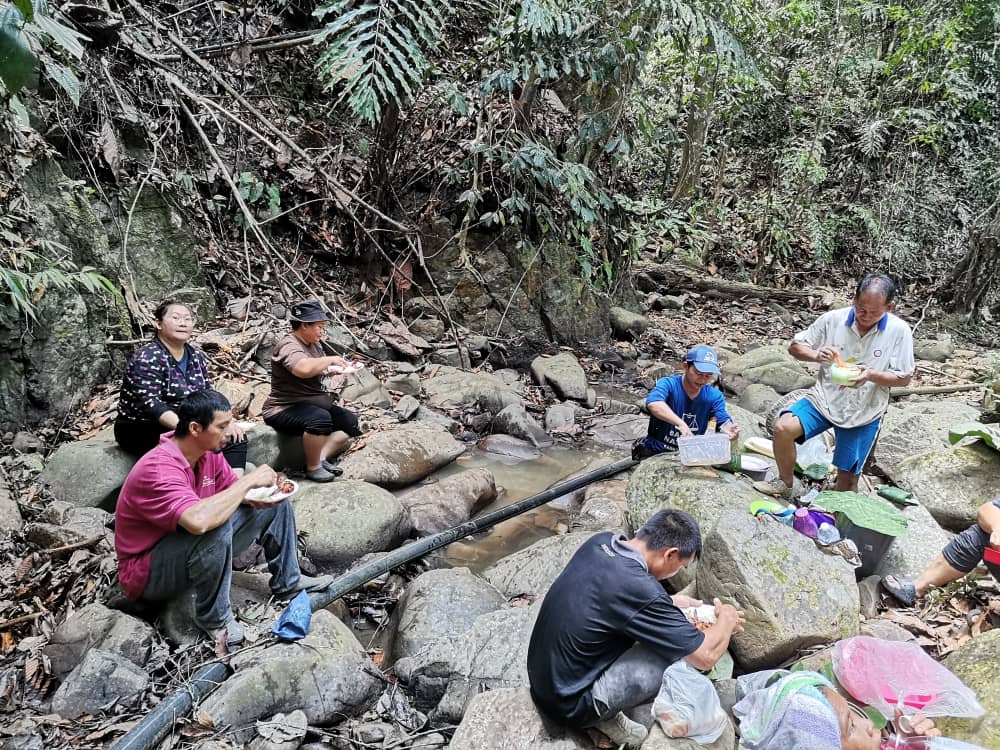
Two jobs to survive
Farmer Saning Aju does not earn much from selling vegetables so he must work odd jobs between harvests, which are once every two months.
The 51-year-old said he works at rubber tapping or helps his friends on their farms.
"If you see people my age sitting down in town, they are not loitering or lazy. We are waiting for friends to call us to work on their farm," he said.
"There could be work like installing a picket fence, building a chicken coop, or harvesting crops.
Saning said a large portion of his income goes towards transporting his produce to the market in town.
"The road is neither paved nor gravelled. It’s peat soil. It’s thick with mud during the rainy season, making it nearly impossible to get through, and extremely expensive when we charter four-wheel truck taxis," said Saning, who commutes between his village and town on a motorcycle, the only vehicle he owns.
He said the bad conditions of Jalan Samparita-Sonsogon are just one of the many challenges he faces.
He does not legally own the land which he farms and where he has built a house.
"I have applied for the land for decades, but the government gave it away to a company. So I am technically a squatter on my ancestral land," he said.
Recently, their water catchment was damaged, and Saning and the villagers had to fix the problem.
"This water source is crucial for our daily use and our farms," he said.
Land competition is a pervasive issue in Sabah. Local leaders in Kota Marudu acknowledge this was one of the perennial problems in the district.
In 2022, the state government handed out native titles to 51 plots of land with 98 hectares in Bandau.
Chief Minister Datuk Seri Hajiji Noor hinted then that more such titles would be issued in the future.
Despite its poor reputation, Kota Marudu has experienced some development over the years.
The number of shops has grown to nearly a thousand from merely 69 shops back in 1994.
The district now has more than three banks, up from just one back then, and a slew of franchise and retail stores such as KFC and Tealive, and the popular Servay Supermarket today.
However, from 2002 to 2023, the district lost 37.9 kilohectares, or 24%, of tree cover. – May 16, 2024