Malaysia

Jordan-based centre ranks Anwar as world's 15th most influential Muslim figure

The publication also placed Anwar in the ninth position under the category of rulers and politicians.

Updated 2 years ago · Published on

 Jordan-based centre ranks Anwar as world's 15th most influential Muslim figure
A rank above Anwar in the same category is Saudi crown prince and prime minister Mohammed bin Salman - October 8, 2025

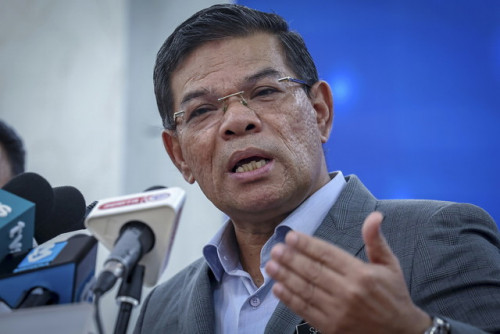
PRIME Minister Datuk Seri Anwar Ibrahim has been ranked as the 15th most influential Muslim figure in the world in the 2025 edition of The World’s 500 Most Influential Muslims published by the Jordan-based Royal Islamic Strategic Studies Centre (RISSC).

According to reports in Free Malaysia Today (FMT), the publication also placed Anwar in the ninth position under the category of rulers and politicians.

RISSC listed Anwar’s history as a political leader and prime minister and described him as a resilient figure who has had a dynamic political journey spanning three decades.

These include his first foray into student politics at Universiti Malaya in the late 1960s, his entry into Umno at the invitation of then-prime minister Tun Dr Mahathir Mohamad, his subsequent dismissal, and how he overcame his tribulations to eventually become prime minister.

"Anwar’s political journey has been a turbulent one, marked by both triumphs and setbacks. As a key figure in Malaysia’s economic boom of the 1990s, he clashed with Dr Mahathir during the 1997 financial crisis, leading to his dismissal in 1998, the publication said.

A rank above Anwar in the same category is Saudi crown prince and prime minister Mohammed bin Salman, whom RISSC described as largely unknown in political and diplomatic circles at the beginning of 2015, but quickly rose to take up prominent political positions.

Other prominent names in the same category include Indonesian president-elect Prabowo Subianto, president Joko Widodo, Bangladesh’s interim prime minister Muhammad Yunus, and mayor of London Sadiq Khan.

Jordan’s King Abdullah II took first place in the overall rankings, followed by Yemeni scholar Sheikh Al-Habib Umar Hafiz and Qatar’s emir, Sheikh Tamim bin Hamad Al-Thani. - October 8, 2024
Related News

Malaysia / 5d

Geopolitical tensions must not derail regional economic integration - Anwar

Malaysia / 6d

Khalid urges PAS to ditch Umno alliance and support Anwar

Malaysia / 1w

Khalid urges Anwar to reject Anthony Loke’s resignation amid political uncertainty

Opinion / 1w

Melaka has spoken. But so has the silence

Malaysia / 1w

Injustice remains injustice, regardless of who commits it – Tengku Zafrul

Malaysia / 1w

Selective outrage over corruption puts political, religious principles under scrutiny

Spotlight

Malaysia

Anwar receives special recognition as 10,000 Muslims gather in Putrajaya

Malaysia

Video of elderly man being assaulted goes viral on social media

Malaysia

The wide reach of corruption and organised crime in the country

Malaysia

Malaysia pushes to give smaller economies stronger voice in Asia-Pacific trade – Anwar

Malaysia

No tsunami threat to Malaysia after 5.4-magnitude earthquake hits Banda Sea

Malaysia

Who is calling the shots in Negeri Sembilan as Ismail’s position comes under scrutiny?

Opinion

Ayob Khan: When the uniform comes off, the principles remain

Malaysia

MySiren to send emergency alerts to compatible phones nationwide from Nov 29 test

You may be interested

Malaysia

Elderly man’s rampage leaves police officer injured in Sungai Besar

Malaysia

National Laureate A Samad Said dies at 91

By Alfian Z.M. Tahir

Malaysia

Asyraf Wajdi furious after MRSM students served ‘raw’ soy-sauce chicken

Malaysia

MPs urged to debate merits of reinstating GST as against SST, says Liew Chin Tong

Malaysia

Hajiji: GRS has not decided on political cooperation for GE16

Malaysia

Three arrested after police chase involving wrong-way escape on Second Link Highway

Malaysia

Plugging leakages, curbing waste key to channelling savings back to Malaysians, says Saifuddin

Malaysia

Companies must pay higher wages to translate economic growth into better livelihoods, says Liew