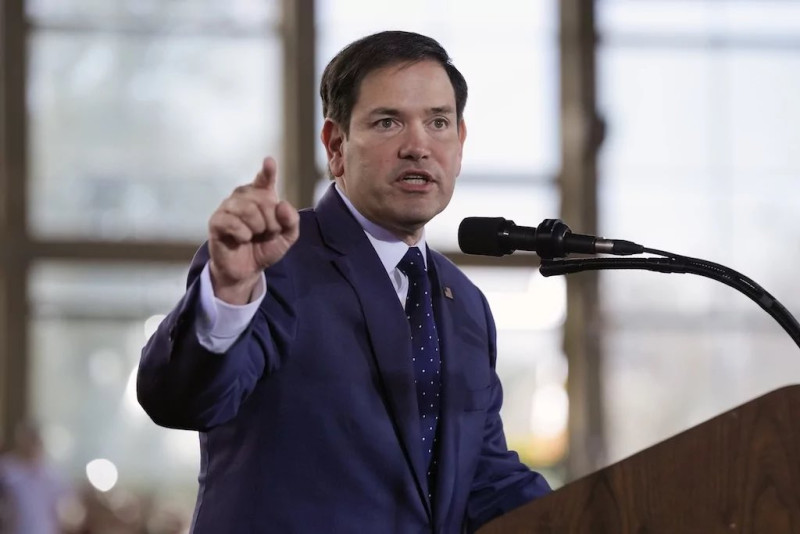
UNITED States Secretary of State Marco Rubio arrived in Malaysia on Thursday for his first official visit to Asia, aiming to bolster ties with Southeast Asian nations even as President Donald Trump’s sweeping new tariffs have unsettled regional partners.
Rubio will represent the US at the 58th ASEAN Foreign Ministers’ Meeting and related high-level talks hosted under Malaysia’s ASEAN 2025 chairmanship. The meetings, taking place at the Kuala Lumpur Convention Centre from 8 to 11 July, include the ASEAN Post-Ministerial Conference with the US, the East Asia Summit (EAS) Foreign Ministers’ Meeting, and the ASEAN Regional Forum (ARF).
“This is significant, and it’s an effort to try to counter that Chinese diplomatic and economic offensive,” said Victor Cha, President of the Geopolitics and Foreign Policy Department at Washington’s Center for Strategic and International Studies.
Rubio’s visit comes at a fraught time. President Trump this week announced tariffs of 25% on Japan and South Korea, and further levies on six ASEAN members—25% on Malaysia, 32% on Indonesia, 36% on Cambodia and Thailand, and 40% on Laos and Myanmar. The move has stoked concerns across the export-reliant region and raised doubts about Washington’s long-term economic engagement.
According to a draft communique seen by Reuters, ASEAN ministers are expected to express “concern over rising global trade tensions and growing uncertainties in the international economic landscape, particularly the unilateral actions relating to tariffs.” The document, dated before the latest tariffs were unveiled, stopped short of naming the US directly but echoed earlier criticism that such measures are “counterproductive and risk exacerbating global economic fragmentation.”
Rubio is also acting as National Security Adviser and faces the dual task of reaffirming American commitment to the Indo-Pacific while defending the administration’s contentious trade policies. A senior US State Department official said Rubio would stress that rebalancing trade relationships was necessary and “promotes American prosperity and security.”
“It’s kind of late, because we’re seven months into the administration,” noted Cha. “Usually, these happen much sooner. But then again, it is extraordinary circumstances. But I guess better late than never.”
China’s Foreign Minister Wang Yi and Russia’s Sergei Lavrov are also attending the ASEAN meetings, though it remains unclear whether Rubio will hold bilateral meetings with either.
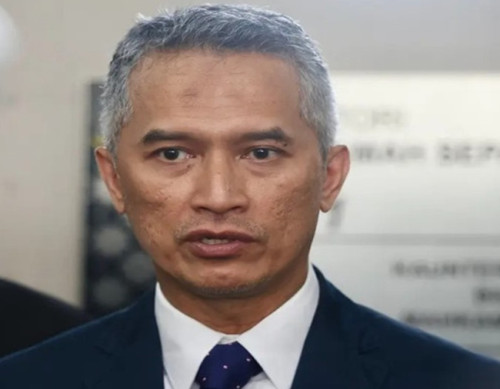
The US delegation touched down at the Royal Malaysian Air Force Base in Kuala Lumpur at 7:39 a.m. and was welcomed by Special Duties Division Secretary Syed Mohamad Bakri Syed Abd Rahman, US Ambassador to Malaysia Edgard D. Kagan, and Chargé d’Affaires to the US Mission to ASEAN Kate Rebholz.
Rubio is also expected to hold bilateral talks with senior Malaysian government officials during his stay. All ASEAN foreign ministers are attending the meetings, except Myanmar, which is represented by a senior official. Timor-Leste’s foreign minister is participating as an observer.
Security cooperation, including freedom of navigation in the South China Sea and efforts to combat transnational crime, drug trafficking, scam syndicates and human trafficking, are also on the agenda.
Despite growing scepticism over the “America First” doctrine, US officials maintain that ASEAN remains a critical partner. The bloc is collectively the world’s fifth-largest economy and has benefited from shifting supply chains amid ongoing US-China tensions. Vietnam is the only ASEAN member to have secured a revised trade deal with the Trump administration, reducing its tariff rate from an initial 46% to 20%.
The United States formalised ties with ASEAN in 1977. The relationship was elevated to a Strategic Partnership in 2015 and further upgraded to a Comprehensive Strategic Partnership in 2022. - July 10, 2025