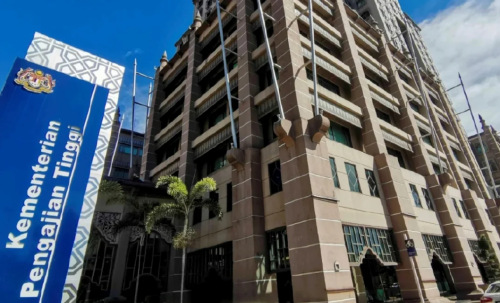
THE Ministry of Investment, Trade and Industry (MITI) has pledged to optimise the RM227 billion allocated for the economic sector under the 13th Malaysia Plan (RMK13), in a move set to accelerate Malaysia’s structural economic transformation.
The RMK13 allocation forms part of a broader RM611 billion development expenditure package for the five-year plan. MITI welcomed the continued support for the Strategic Co-Investment Fund (CoSIF), under the New Industrial Master Plan (NIMP) 2030, to encourage high-value, future-ready investments.
Key policies supporting the ministry’s implementation efforts include the National Semiconductor Strategy (NSS), the National Investment Aspirations (NIA), the Green Investment Strategy (GIS), and the national ESG Industrial Framework (i-ESG).
MITI aims to advance high-growth, high-value sectors, particularly through the NSS and NIMP 2030. Malaysia is seeking to position itself as a regional high-tech semiconductor hub, with ambitions to raise electrical and electronics (E&E) exports to RM1 trillion by 2030. Flagship initiatives such as IC MyChipStart, the Selangor IC Design Park, Penang’s Silicon Island @5km+, and Sama Jaya High-Tech Park in Sarawak are already helping to move Malaysia up the global value chain.
In addition, MITI plans to accelerate the development of Halal Industrial Parks as part of efforts to increase halal exports to RM80 billion by the end of the decade. Malaysia recorded RM33.32 billion in halal exports in the first half of 2025 alone.
The ministry is also working to enhance Malaysia’s appeal as a regional hub for trade, investment and talent. More than 13,000 skilled Malaysian workers have been trained in the semiconductor sector through partnerships with CREST and TalentCorp. Many have benefited from wage increases of up to 20 per cent, with over half earning more than RM3,000 per month.
Sustainability remains a central focus through the GIS, which prioritises seven sectors including renewable energy and the circular economy. As of March 2025, green investments totalling RM22.9 billion have been approved, spanning 1,492 projects and creating over 9,000 jobs.
To enhance global competitiveness, MITI is building on Malaysia’s recent leap in the World Competitiveness Ranking 2025—from 34th to 23rd.
This momentum will be supported by the National Competitiveness Council, the Special Task Force for Agency Reform (STAR), and more than 1,000 regulatory reform initiatives under the Reducing Bureaucratic Constraints (RKB) programme.
Looking outward, the National Trade Blueprint 2.0 will be introduced to guide Malaysia’s trade expansion.
MITI will encourage exporters to capitalise on Malaysia’s 18 existing free trade agreements, including the Regional Comprehensive Economic Partnership (RCEP) and the Comprehensive and Progressive Agreement for Trans-Pacific Partnership (CPTPP).
Negotiations are underway with the EU, the Gulf Cooperation Council, and South Korea, alongside efforts to deepen regional cooperation through platforms such as the Johor-Singapore Special Economic Zone (JS-SEZ), the Indonesia-Malaysia-Thailand Growth Triangle (IMT-GT), and BIMP-EAGA.
“We welcome the enhanced implementation monitoring mechanism under RMK13 through the Policy Implementation Plan Monitoring System (PPD),” said MITI Minister Tengku Zafrul Abdul Aziz.
“For MITI, execution is key. From the Invest Malaysia Facilitation Centre to the Delivery Management Unit under NIMP 2030, we ensure timely progress updates via our quarterly MITI Report Card,” he said.
“MITI is committed to ensuring that the economic strategies under its mandate are implemented effectively to deliver sustainable and inclusive growth.
“These efforts will bolster governance, enhance the quality of life, and open up wider opportunities for SMEs. With these initiatives, we aim to realise the goals of RMK13 and position Malaysia as a driver of global economic potential,” Tengku Zafrul added. - August 5, 2025