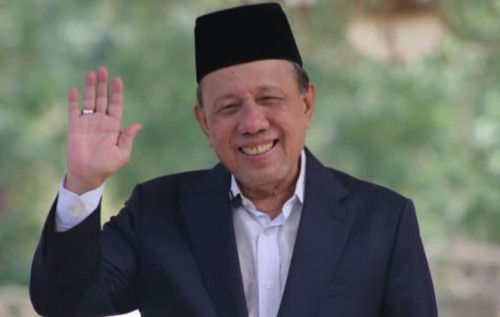
MALAYSIA’S energy transition must be both transformative and inclusive, said Deputy Prime Minister and Minister of Energy Transition and Water Transformation, Fadillah Yusof, in a keynote address at the “Driving the Green Energy Transition” forum in Kuala Lumpur on 6 August.
Speaking at the event hosted by MBSB Group and MBSB Investment Bank, he emphasised that Malaysia’s journey towards decarbonisation was not about “chasing ideals,” but about “shaping outcomes.”
“We are entering an era that demands nothing short of transformation,” he said. “Malaysia’s energy transition is not merely about technology. It is about trust.”
Fadillah reaffirmed the Government’s commitment to delivering a secure, low-carbon and affordable energy future, driven by inclusive policy, industrial resilience and regional coordination.
He reported that, as of July 2025, Malaysia had reached 4,571.06 megawatts of operational renewable energy capacity, with solar alone accounting for over 4,200 megawatts. Renewables now represent 31 percent of the national electricity mix, keeping Malaysia on track to meet its 40 percent target by 2035 and 70 percent by 2050.
Malaysia’s clean energy momentum is being driven by a mix of nationwide initiatives, including the long-standing Feed-in Tariff programme, utility-scale solar projects under the Large-Scale Solar (LSS) scheme, and distributed solar uptake via Net Energy Metering (NEM) and Solar Community (SELCO) schemes.
Collectively, these efforts have significantly lowered household energy costs and empowered local communities to benefit directly from clean power generation.
Corporate demand for green energy is also rising. Through schemes such as the Green Electricity Tariff (GET), the Corporate Renewable Energy Supply Scheme (CRESS), and the Commercial Green Power Programme (CGPP), businesses are increasingly sourcing clean energy directly.
The Community Renewable Energy Aggregation Mechanism (CREAM) is another recent effort enabling housing areas and small commercial hubs to collectively access renewable electricity, creating what Fadillah called “energy democracy.”
While renewables remain the long-term goal, natural gas continues to play a crucial role as a bridging fuel. Malaysia will add up to 8,000 megawatts of efficient gas-fired capacity by 2030 to maintain grid stability and eventually support hydrogen integration.
Fadillah also noted that Tenaga Nasional Berhad (TNB) will invest RM40 billion between 2025 and 2027 in grid modernisation, battery storage, digital energy platforms and Malaysia’s first hydrogen-ready pilot projects. “This is the private sector putting confidence into action,” he said.
Malaysia’s energy vision extends beyond its borders.
As ASEAN Chair in 2025, the country intends to lead regional efforts in scaling up connectivity, climate financing and clean technology exchange. “Our response is the National Energy Transition Roadmap (NETR), a strategic, long-term vision for net zero by 2050,” said Fadillah.
Among the key milestones, Malaysia launched the Energy Exchange Malaysia (ENEGEM) in April 2024, exporting renewable electricity to Singapore—a move set to expand from 50 to 300 megawatts.
Frameworks such as Cross-Border Electricity Sales for Renewable Energy (CBES-RE) and internationally certified Malaysia Renewable Energy Certificates (mREC) are being employed to ensure credibility and investor confidence in regional clean energy trade.
Plans are also in motion for large-scale multilateral projects, including the proposed Vietnam–Malaysia–Singapore (VMS) offshore wind corridor. Fadillah said these efforts could unlock up to US\$2 billion in annual R\&D and create 9,000 new jobs across the region each year.
He stressed that the green transition should be seen as a long-term investment rather than a cost. Malaysia alone requires an estimated USD143 billion to meet its national targets, while ASEAN’s regional needs exceed USD3 trillion.
Malaysia remains a global leader in Islamic sustainable finance. Of 291 green sukuk issued worldwide, 262 originated from Malaysia. Fadillah urged financial institutions to fully leverage this edge in funding renewables, hydrogen, and nature-based climate solutions. He highlighted the Bank Negara Low Carbon Transition Facility (LCTF), which provides up to RM10 million in concessional financing for SMEs investing in decarbonisation. He encouraged MBSB and other lenders to expand their support in this area.
Fadillah also revealed that Malaysia is in exploratory talks with Russia on civilian nuclear energy, though he noted that no decision had been made and any evaluation would be “guided by science, transparency, and safety.”
Issuing a direct appeal to financiers, Fadillah urged institutions to scale up investment in solar and corporate renewable energy programmes through innovative green sukuk models and blended finance solutions. He also called for collaborative efforts to accelerate cross-border investment in clean power and regional grid integration.
“The green transition is not just about megawatts and emissions—it is about momentum,” he said. “We stand at a crossroads not of crisis, but of opportunity. What we build today will define Malaysia’s legacy as a leader in clean energy, regional cooperation, and sustainable development.”
He concluded with a call for shared responsibility: “Let us move forward with unity of purpose and clarity of vision. Let us dare to lead. Because the energy of tomorrow must begin with the decisions we make today—and with the collective will to leave no Malaysian behind.” - August 6, 2025