THE government has tabled amendments to the Countervailing and Anti-Dumping Duties Act 1993, in a move designed to bolster the country's trade defence mechanisms and ensure local industries are not undermined by unfair foreign competition.
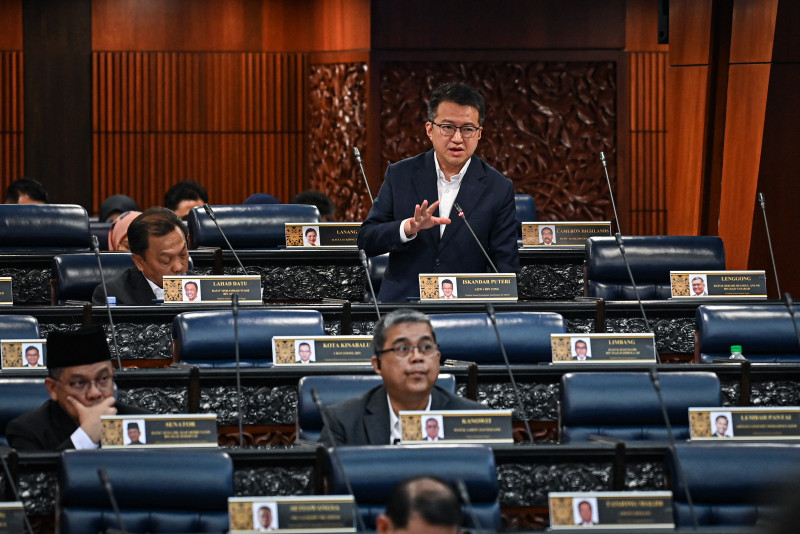
Speaking during the second reading of the amendment bill in Parliament on Tuesday, Deputy Investment, Trade and Industry (MITI) Minister Liew Chin Tong said the proposed changes are intended to address outdated provisions and respond to evolving global trade dynamics.
“I beg to move that a Bill to amend the Countervailing and Anti-Dumping Duties Act 1993 be read a second time,” the Deputy Minister said in his introduction.
He explained that the Act, first enacted more than 30 years ago, remains Malaysia’s only legislative instrument for dealing with the adverse effects of unfair trade practices such as dumping and subsidised imports. At the time of its original passage, trade remedies were not widely used, particularly among developing countries.
“When Act 504 was drafted in 1993, the relevant World Trade Organization (WTO) agreements on trade remedies were not yet finalised, and Malaysia had yet to enter into any free trade agreements with its trading partners,” he noted.
The Act was last amended in 1998, but with significant shifts in global trade and the domestic industrial landscape, the Deputy Minister said it was time for a comprehensive review.
“The amendments proposed in 2025 are aligned with the Government’s objective to enhance existing laws to safeguard local industries from the adverse effects of unfair trade practices. If left unaddressed, such harm may force local producers to cease operations,” he cautioned.
The move also comes in response to intensifying global trade tensions. “Trade remedies such as anti-dumping and countervailing duties can be used to address trade diversion caused by disputes between major global powers,” he said.
Malaysia has initiated 67 anti-dumping actions between 2011 and 2024, up from 43 between 1995 and 2010, highlighting growing reliance on trade remedies to protect the domestic economy.
Among the most significant changes is the introduction of anti-circumvention provisions, which the Deputy Minister said go beyond WTO requirements, or “WTO-plus”.
“These provisions enable the Government to investigate and act against foreign exporters who attempt to circumvent imposed duties by minor product alterations or re-routing through third countries,” he said.
He cited a past case where local industry complaints over the possible evasion of duties on cold rolled coils (CRC) exported from China and South Korea via Taiwan could not be acted upon due to a lack of legal provisions under the current Act.
Amendments to definitions such as “subject merchandise”, “export price” and “dumping” aim to close interpretative gaps that have previously allowed exporters to escape anti-dumping duties via judicial review.
“For example, two major exporters from Vietnam manipulated export price definitions to mislead the court, which then ruled in their favour. These companies were allowed to continue exporting without anti-dumping duties,” he revealed.
The Bill also introduces clearer procedures for administrative and sunset reviews, empowering local producers to apply for re-evaluation of existing duties when warranted.
“These changes will provide clarity and avoid overlapping administrative review applications, ensuring that trade remedies remain effective and relevant,” he added.
Under the proposed law, the Minister will have the authority to appoint investigators and stagger the implementation dates of specific provisions to allow for smooth transitions.
“MITI has benchmarked best practices from jurisdictions including Australia, the UK, India, Thailand, the European Union and Vietnam,” he said.
The amendments are also consistent with national strategies such as the New Industrial Master Plan (NIMP 2030) and the National Semiconductor Strategy (NSS), which seek to strengthen Malaysia’s manufacturing sector and elevate its position in global value chains.
The government also conducted extensive stakeholder consultations, including sessions with other ministries, the Attorney General’s Chambers, Royal Malaysian Customs, and industry groups such as the Federation of Malaysian Manufacturers and Malaysia Steel Association.
In total, the amendment bill comprises 21 clauses, including key provisions related to investigation powers, judicial review limitations, and sunset clause revisions to prevent abuse of legal processes that may delay duty enforcement.
“These reforms will ensure Malaysia’s legal framework remains clear, structured and aligned with international trade norms,” said the Deputy Minister.
He urged all members of the Dewan Rakyat to support the proposed amendments.
“With these changes, we are not only protecting our domestic industries but also positioning Malaysia as a firm defender of fair and free trade. Let us work together, across political lines, for the future of our nation’s economic resilience.” - August 26, 2025