THE Association of Southeast Asian Nations (ASEAN) has long been seen as a bastion of peace, stability and dynamic progress.
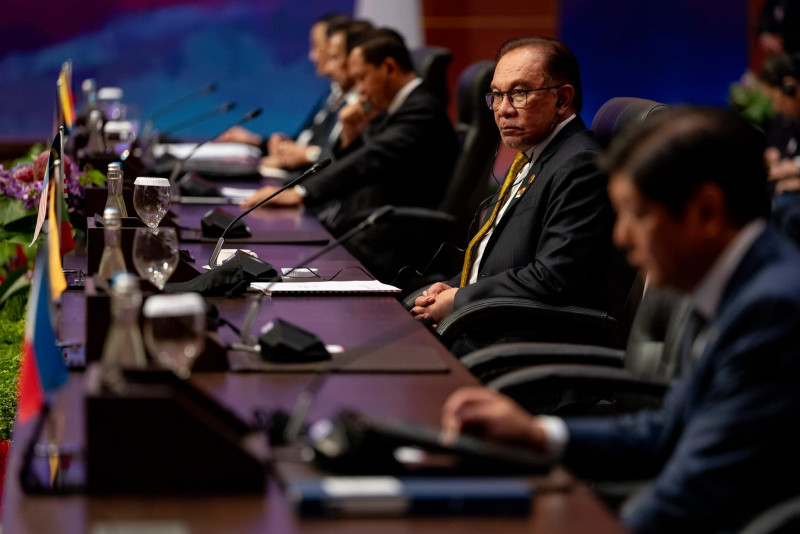
According to Prime Minister Datuk Seri Anwar Ibrahim, this reputation is no accident—but the result of deliberate, principled cooperation among its member states since its founding in 1967.
“The achievements of ASEAN’s ten member states—soon to be eleven with the anticipated admission of Timor-Leste this year—have been built on a culture of consensus, open communication, and solidarity,” Bernama cited Anwar writing in a commentary published by global opinion platform Project Syndicate.
Anwar highlighted ASEAN’s ability to manage tensions, prevent conflict and foster prosperity in one of the most diverse regions on earth. This spirit of solidarity, he said, was tested recently when Malaysia, as current ASEAN Chair, facilitated talks between Cambodia and Thailand following violent border clashes.
“Through careful listening, principled mediation, and constructive engagement by both the United States and China, the parties were able to reach an immediate ceasefire. The episode underscored not only the enduring value of dialogue and mutual respect, but also strengthened public confidence in ASEAN’s role as a guardian of peace and stability,” he said.
In an increasingly fragmented world marked by great power rivalry, intensifying geo-economic competition and growing scepticism towards multilateralism, Anwar—who also serves as Finance Minister—asserted that ASEAN must adapt to protect its centrality.
“In such an environment, ASEAN centrality is no mere diplomatic aspiration—it is an existential necessity,” he said. “Founded amid the turmoil of the Cold War, ASEAN has long stood as a symbol of peace, neutrality and stability.”
He referred to the 46th ASEAN Summit, held in Kuala Lumpur in May, which reaffirmed these core values and marked a historic moment: the unanimous decision to admit Timor-Leste as the eleventh member, signalling ASEAN’s deepened commitment to inclusivity and unity.
Emphasising the need to preserve ASEAN’s autonomy—its ability to speak with one voice rather than be spoken for—Anwar warned that doing so requires constant vigilance.
“It demands our steadfast adherence to patience and sustained diplomacy, which have long been the bedrock of regional order,” he said.
With a population of 660 million, ASEAN is one of the world’s most dynamic markets. Yet Anwar cautioned that to unlock its full potential, the region must bridge development gaps and build stronger, fairer intra-regional relationships.
Looking ahead to the 47th ASEAN Summit in October, he said the agenda will include efforts to dismantle tariff and non-tariff barriers and reinforce commitments to inclusive and sustainable trade.
“At a time when protectionist sentiment is rising and trade wars threaten global growth, ASEAN must chart a different course—one that builds resilience through openness and reform,” he said.
He underscored the importance of the Regional Comprehensive Economic Partnership (RCEP), the largest trade agreement in history, as a cornerstone of ASEAN’s economic architecture. Its effective implementation, he added, is critical to delivering tangible opportunities for citizens and continued economic prosperity for member states.
Anwar also urged ASEAN to expand global partnerships through key initiatives such as the ASEAN-Gulf Cooperation Council (GCC)-China Summit, and ongoing efforts to modernise trade agreements with China, India and South Korea.
“With the digital economy set to drive ASEAN’s next growth phase, finalising the ASEAN Digital Economy Framework Agreement has become an urgent priority—especially amid the intensifying race in AI and other transformative technologies,” he said.
He noted that this initiative—encompassing trade, technology and connectivity—serves one overarching purpose: to safeguard ASEAN’s autonomy in an unpredictable global environment.
“At the May summit, ASEAN leaders warned against unilateral trade measures, retaliatory tariffs, and deepening fractures. Our response to these global threats must be a renewed commitment to openness, reform, and a rules-based trading system,” said Anwar.
While openness builds resilience, he cautioned, division drives up costs, deters investment and heightens vulnerability to shocks such as currency volatility, capital outflows and supply chain disruptions.
“Although globalisation has its flaws, it has also created interdependence through shared interests, thereby curbing unchecked unilateralism,” he said.
On climate change, Anwar called for sustainability to be embedded in ASEAN’s economic agenda. He pointed to the ASEAN Power Grid initiative as a reflection of the bloc’s determination to invest in clean energy, generate green jobs and ensure long-term energy security.
“Business-as-usual is no longer an option. Bold action today is the price of a fair and sustainable future,” he said.
In a world marked by volatility, the Prime Minister said ASEAN’s fate is a shared one, urging deeper unity through the revitalisation of strategic frameworks such as the Zone of Peace, Freedom and Neutrality (ZOPFAN), and the strengthening of ASEAN-led platforms like the East Asia Summit and ASEAN Regional Forum.
“These platforms remain vital for dialogue, confidence-building and preventive diplomacy,” he said.
He highlighted the strategic importance of the ASEAN-GCC Summit and new trilateral efforts with GCC and China, which align Southeast Asia’s needs with Gulf capital and China’s reach. He also noted that the newly established ASEAN Geoeconomic Task Force will bolster the region’s collective response to economic volatility and uncertainty.
Anwar then offered a clear message: ASEAN may not control global events, but it cannot afford to be passive.
“We can—and we must—shape our own future with courage, foresight and solidarity. By remaining true to its founding values while adapting to new realities, ASEAN can continue to be a beacon of peace, prosperity and progress for generations to come,” he said. - Sept 5, 2025