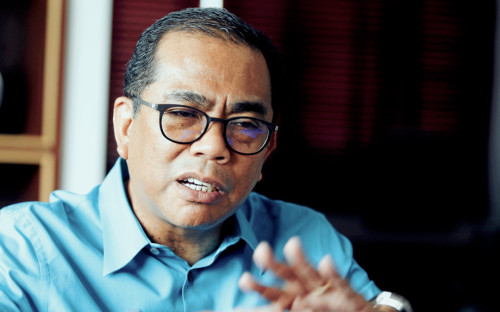
EDUCATION advocates and parents have called on schools to treat caning as a measure of last resort, urging instead for values-based discipline that fosters empathy, understanding and lasting behavioural change.
They stressed that discipline should never be driven by fear or humiliation, but grounded in respect, guidance and open communication to help students internalise a sense of right and wrong.
The debate reignited after Prime Minister Datuk Seri Anwar Ibrahim told Parliament yesterday that he personally believes caning should be permitted in schools, provided it is conducted under strict guidelines and safeguards against abuse.
Parent Action Group for Education Malaysia chairman Datin Noor Azimah Abdul Rahim said that while caning may achieve short-term obedience, it fails to instil genuine understanding.
“Caning instils fear as a response to threat, not understanding. Research shows it can cause anxiety, aggression, shame and damaged relationships between the punisher and the punished,” she said, as reported by The Star.
She warned that fear-based discipline could suppress curiosity and hinder both intellectual and emotional development.
“While many parents feel discipline in schools has weakened, caning should never be the first solution. Children respond best to consistency, guidance and empathy,” she said, adding that any form of corporal punishment must be governed by strict safeguards to prevent harm or humiliation.
Noor Azimah also emphasised that caning does not address the root causes of misconduct.
“Bad behaviour must be tackled with rehabilitation and intervention,” she said, calling for restorative approaches such as counselling, mentoring and peer mediation that encourage reflection and empathy.
Malaysian Association for Education secretary Hamidi Mookkaiyah Abdullah echoed these concerns, noting that although some view caning as an effective deterrent, its psychological impact often undermines its purpose.
“Students may obey rules only to avoid pain, not because they truly understand right and wrong,” he said.
He cautioned that corporal punishment can breed resentment and trauma, eroding trust between students and teachers.
“Instead of viewing teachers as mentors, students may begin to see them as punishers. This damages the foundation of mutual respect that effective teaching relies on,” he added.
Hamidi urged educators to adopt positive discipline methods such as reinforcement, counselling and modelling good behaviour, describing them as more effective in nurturing responsible, emotionally balanced students.
Parents also expressed mixed views. Hana, a 38-year-old mother of four from Petaling Jaya, disagreed with caning but supported stricter measures such as exam suspension or phone bans.
“Schools can be stricter by using exam suspension as a disciplinary action so children learn consequences. Phones should also be barred. Only if all these fail should caning be considered,” she said.
For software engineer Hesmond Jeet Oon Chee Houng, 35, positive reinforcement and logical consequences work best in shaping responsible behaviour.
“I’d still prefer to find a way to connect rather than to force. That’s better in the long run,” said the father of one.
Meanwhile, senior bank executive May Shahrin, 41, believed a hybrid approach combining traditional and modern methods could be effective if properly regulated.
“The purpose must be correction, not humiliation. It should only be carried out by authorised personnel,” said the mother of two.
As the debate continues, educators and parents appear united on one principle — that discipline, whatever its form, must aim to educate, not intimidate. - October 24, 2025