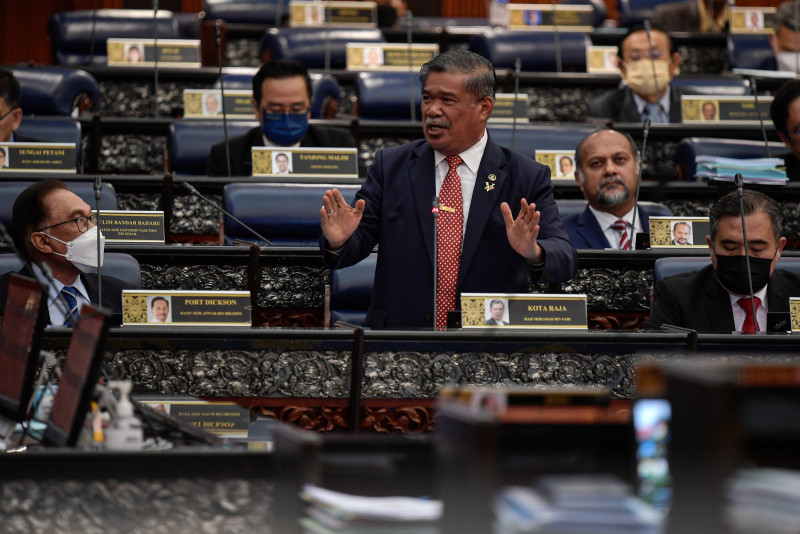
THE nation is facing difficulties in securing sufficient local rice supplies due to a decline in national paddy production, driven by a combination of domestic and external factors, according to Datuk Seri Mohamad Sabu, Minister of Agriculture and Food Security.
Speaking in the Dewan Rakyat, Mohamad said the reduction in output stemmed from a decrease in paddy-growing areas, with cultivation shrinking by 5.6 per cent and productivity falling by 5.3 per cent.
“The situation has been influenced by land conversion, irrigation issues, abandoned fields, extreme weather such as floods and droughts, as well as attacks by pests and diseases.
“Infrastructure factors including drainage systems, inconsistent water supply, and soil fertility also affect production, alongside global climate change,” he explained.
Data from the ministry shows that paddy production in 2024 reached 2.06 million metric tonnes, yielding 1.36 million metric tonnes of rice.
This marks a decline from 2023, when production stood at 2.17 million metric tonnes, producing 1.43 million metric tonnes of rice.
As a result, Malaysia’s Self-Sufficiency Ratio (SSR) for rice fell to 52.9 per cent in 2024, down from 56.2 per cent the previous year.
To address the issue, the government, through the Ministry of Agriculture and Food Security, is reviewing its paddy production strategies, focusing on improving productivity, expanding potential cultivation areas, and incorporating modern technology.
“The SMART Large-Scale Paddy Field programme (SMART SBB) is being expanded nationwide, including Sabah and Sarawak.
“At the same time, the government is strengthening the national rice buffer stock system, diversifying import sources, and increasing investment in weather forecasting technologies and the development of rice varieties that can withstand extreme climate conditions,” Mohamad said.
He added that the 70 per cent domestic production target is not a fixed policy but serves as a strategic benchmark under the National Agrofood Policy 2.0 and the National Food Security Policy Action Plan for long-term planning in the paddy and rice subsector. - February 12, 2026