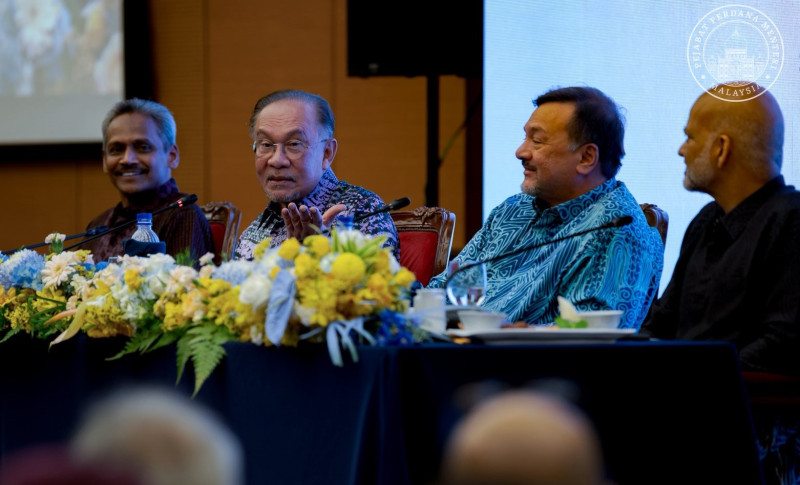
MALAYSIA’S heavy subsidy commitments and dependence on imported essentials are leaving the economy vulnerable to external shocks, Prime Minister Datuk Seri Anwar Ibrahim has warned, as he urged clearer public communication on the country’s underlying economic strains.
Speaking at the Malaysia MADANI Scholars Forum Series 9, Anwar said the government must be candid about the scale of current pressures, even as it pursues reform and growth strategies.
He pointed in particular to continued reliance on imports such as gas and fertiliser, alongside a subsidy bill that includes more than RM4 billion a month for petroleum.
“This is the time for us to see this issue as ‘creative disruption’. We are facing a crisis, but at the same time there are opportunities that can be harnessed,” he said.
He cautioned, however, that framing the situation too optimistically risks obscuring the seriousness of the challenges facing the country.
“We cannot focus too much on opportunities to the extent that the people do not understand that we are actually facing serious problems. Although Malaysia is more fortunate than some neighbouring countries, the pressure still exists,” he said.
Anwar said transparent, fact-based communication was essential to ensure both the public and civil service understood the macroeconomic realities underpinning government policy, even if such openness invited criticism.
He also expressed concern that some ministries continued to operate in silos, arguing that tighter coordination was required given the scale of fiscal pressures.
At the same time, he stressed that recent economic indicators pointed to underlying resilience, citing stable inflation and continued foreign investment inflows as signs that policy direction remained sound.
“Performance over the past year has been encouraging, in terms of sustainability, controlling inflation and attracting foreign investment into the country,” he said.
These gains, he added, were supported by central bank stewardship, political stability and consistent policymaking.
Global developments nonetheless pose significant risks.
Anwar highlighted tensions involving Iran, Israel and the United States as potential disruptors to supply chains and commodity prices, with direct implications for Malaysia.
“That is beyond our control, but we must be prepared with strong economic resilience,” he said.
He added that Malaysia’s diplomatic ties with neighbouring countries and partners in the Middle East provided a degree of strategic advantage.
“Malaysia is among the countries that has good relations with many Gulf leaders as well as the leadership of Iran. They see Malaysia as a trusted partner,” he said.
Calling for a unified national response, Anwar said policymakers and economic leaders must do more to explain complex issues in accessible terms.
“We need to face this situation with a spirit of togetherness. This is a shared responsibility, and all parties, including economic leadership, must go to the ground to explain these issues in a language easily understood by the people,” he said.
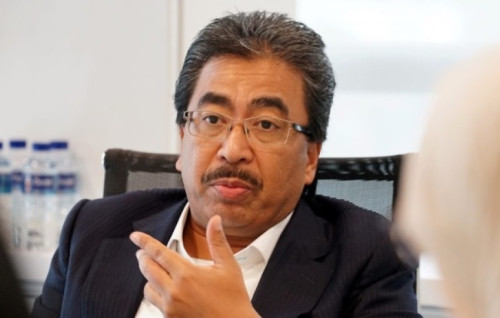
Meanwhile, Finance Minister II Datuk Seri Amir Hamzah Azizan said structural reforms were central to strengthening the country’s fiscal position after inheriting high deficits and extensive subsidy commitments.
“The government is focusing on fiscal reform, including reducing the deficit, rationalising subsidies and implementing tariff adjustments to strengthen the country’s financial position,” he said.
He added measures such as diesel subsidy rationalisation and adjustments to electricity and water tariffs were designed to create fiscal space, enabling more targeted assistance through programmes including Sumbangan Tunai Rahmah and Sumbangan Asas Rahmah.
In parallel, the government has mobilised investment through state-linked firms and private sector participation to support growth and deepen capital markets.
“Overall, around RM120 billion in new funds has been mobilised to stimulate economic growth,” he said.
Amir said the broader aim was to raise economic complexity, attract higher-value industries and expand quality employment, positioning Malaysia to better withstand future global uncertainty. - April 1, 2026