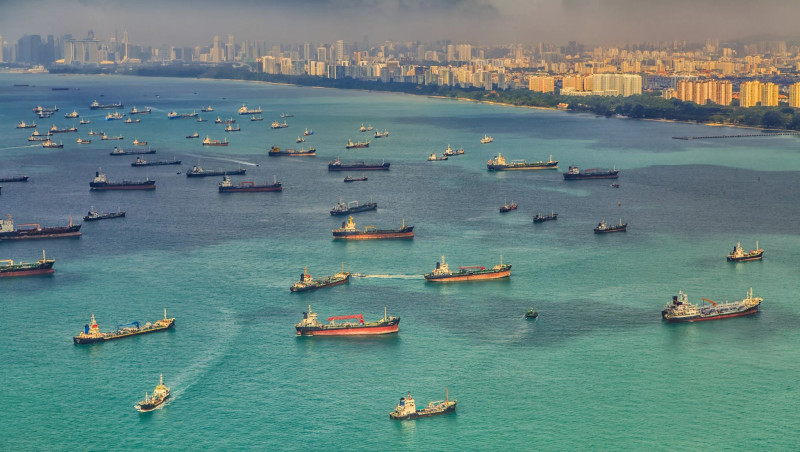
THE Association of Southeast Asian Nations (ASEAN) must take a firmer and more coordinated stance to prevent the Strait of Melaka from becoming entangled in great-power rivalry, as instability in the Gulf raises fears of wider regional spillover, a maritime expert has warned.
Maritime analyst and scholar Nazery Khalid said the regional bloc should make full use of its diplomatic influence and established relationships with major powers, including the United States and China, to ease tensions and safeguard Southeast Asia’s critical sea lanes.
“As a grouping founded on the principles of neutrality and non-alignment, ASEAN needs to address any potential escalation that could affect regional security at an early stage,” he told Bernama.
He stressed that ASEAN member states should collectively exercise strategic prudence to prevent great-power confrontation and avoid prolonged conflict that could disrupt trade flows, economic stability and regional security.
Nazery cautioned that a prolonged conflict in the Gulf, particularly if hostilities persist and the Strait of Hormuz becomes effectively constrained, could increase pressure on alternative global energy and trade routes, including the Strait of Melaka.
He said the growing number of vessels diverted or denied passage through the Strait of Hormuz, particularly in the Gulf of Oman and the Persian Gulf, could trigger a domino effect across interconnected global port networks.
“Ports along the Strait of Melaka, especially Port Klang and the Port of Singapore, which have extensive linkages with ports in the Gulf, risk being affected if the closure of the Strait of Hormuz is prolonged.
“Disruptions to shipping services between both regions could lead to cargo backlogs at these ports and subsequently create congestion in the supply chain.
“This situation is unavoidable given that ports are interconnected within the global maritime trading landscape and the integrated nature of global supply chains,” he explained.
He added that while spillover risks remain limited for now, they could escalate if the conflict drags on or intensifies further.
Nazery also highlighted structural limitations within ASEAN, noting that unlike the European Union, the bloc does not operate under a legally binding framework that compels member states to follow collective decisions or strategic directives.
“Member states are only bound by commitments to uphold a rules-based order in line with international law, foster good relations among themselves (for example through the ASEAN Free Trade Area and various working groups), and collectively promote socio-economic and security cooperation with external partners through multilateral platforms,” he said.
He emphasised that ASEAN states, as sovereign nations, retain the freedom to pursue national interests while adhering to the principle of non-interference and operating through consensus and flexibility.
Nazery said efforts to ensure the Strait of Melaka remains open, safe for international navigation and environmentally protected are not anchored in a single regional charter, but instead rely on shared commitments to maintain regional harmony and cooperation.
The Strait of Melaka, he noted, is recognised as a vital international shipping lane, and therefore governed by the United Nations Convention on the Law of the Sea (UNCLOS), which guarantees freedom of transit passage for both commercial and military vessels.
On April 22, reports emerged that Indonesia was considering imposing levies on commercial ships passing through the strait as a potential revenue measure.
However, Indonesian Foreign Minister Sugiono later clarified that Jakarta would not impose such charges, stating that the move would be inconsistent with international law.
According to Indonesia’s Antara news agency, he reaffirmed that Jakarta fully respects international legal frameworks, particularly UNCLOS.
Nazery said that while coastal states that have ratified UNCLOS retain sovereign rights over their territorial waters, such rights must be exercised in accordance with international law.
“The Strait of Melaka is defined as a strait used for international navigation; therefore, UNCLOS applies and guarantees the right of transit passage without obstruction for commercial and naval vessels,” he said.
He added that Malaysia, Indonesia and Singapore, as coastal states, bear collective responsibility for ensuring safe navigation, orderly traffic flow and environmental protection in the waterway.
“As signatories to UNCLOS and members of the International Maritime Organization and the United Nations, they are legally bound to ensure the waterway remains open to all vessels exercising the right of transit passage,” he said.
He warned that introducing tolls or charges would contradict these obligations and undermine the principle of freedom of navigation.
“Therefore, imposing charges on vessels passing through the strait would deny their rights and be considered discriminatory, thus contradicting the spirit of UNCLOS and a rules-based order,” he said. - April 27, 2026