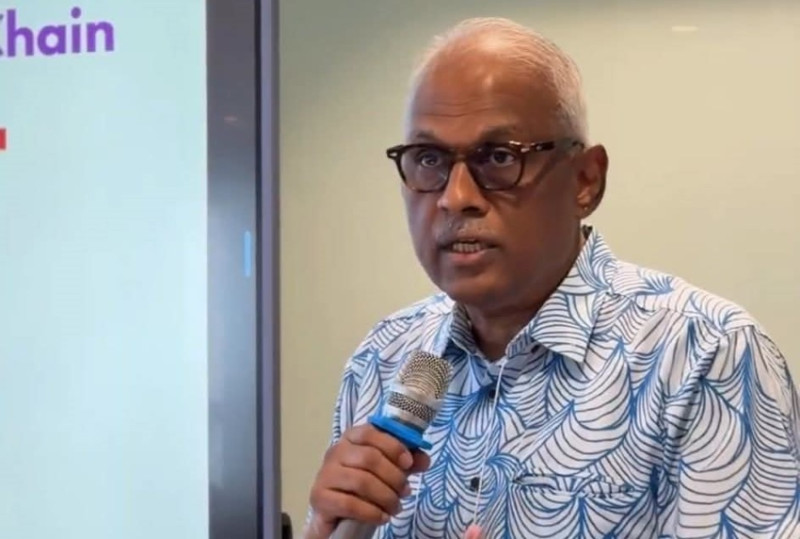
IN the final part of his three-part series, Charles Santiago called for the suspension of the Foreign Workers Centralised Management System (FWCMS), arguing that the concession granted to Bestinet raises serious questions about financial transparency and accountability.
Framing the issue as a matter of public accountability, Santiago said the central question now is not just about disputed claims surrounding international endorsements or alleged involvement of security agencies — but “who benefits, and who pays”.
He argued that attempts to discredit critics of the system as self-interested were a diversion from more pressing concerns about the structure and impact of the FWCMS itself.
“Attack the messenger. Impugn the motives. Avoid the substance,” he said, describing the response from parties defending the system.
Profit structure under scrutiny
Santiago outlined that the FWCMS is a privately developed, profit-generating system that was formally granted a government concession in 2024, allowing it to manage millions of foreign workers in Malaysia.
Under the system, fees are collected for each worker processed — costs that he said are ultimately borne by employers, migrant workers, and labour-sending countries, many of whom are among the most vulnerable in the regional workforce ecosystem.
He stressed that because the system was built without public funding, financial returns flow back to the concession holder rather than the Malaysian public.
Concerns over the system’s effectiveness were also raised, with Santiago pointing to a joint statement in May 2024 by the International Labour Organisation, International Organisation for Migration and United Nations Office on Drugs and Crime.
The agencies had highlighted cases involving Bangladeshi workers who arrived in Malaysia with valid permits but found that promised jobs did not exist — an issue that occurred during the FWCMS period.
Santiago argued that this raised serious questions about claims that the system had eliminated exploitation.
Lack of transparency flagged
He further criticised the concession agreement for its lack of transparency, noting that the financial terms have not been made public and have not undergone parliamentary scrutiny.
According to him, there has also been no publicly available independent audit evaluating whether the system has met its stated goals, including curbing trafficking and worker exploitation.
“The public has never seen the financial terms. Parliament has not scrutinised the contract,” he said.
Calls for suspension and review
In his concluding remarks, Santiago called for immediate action, including the suspension of the concession agreement pending an independent review.
He also urged the government to disclose the full financial terms of the 2024 deal, subject all related decisions since 2012 to parliamentary scrutiny, and clarify whether claims involving international organisations were verified prior to the contract being signed.
Additionally, he called for transparency regarding the alleged role of the Special Branch and for an independent audit of the system’s performance, particularly in preventing trafficking, debt bondage and exploitation.
“Malaysia does not need a system whose legitimacy rests on misrepresented international endorsements, unverifiable security agency recommendations and contractual secrecy,” he said.
Santiago added that if the system is as transparent and effective as claimed, its proponents should welcome independent scrutiny — not respond with legal threats.
“The fact that critics are met with legal threats rather than open evidence speaks for itself.” – May 14, 2026