DATUK Seri Rafizi Ramli has drawn a clear line ahead of the Johor state election, declaring that Parti Bersama Malaysia will not enter into negotiations with any political coalition and will instead test its strength directly against Malaysia’s established political blocs.
The decision signals the party’s intention to position itself as an independent political force rather than align with existing alliances, despite being only weeks old and facing the prospect of losing election deposits in its first electoral outing.
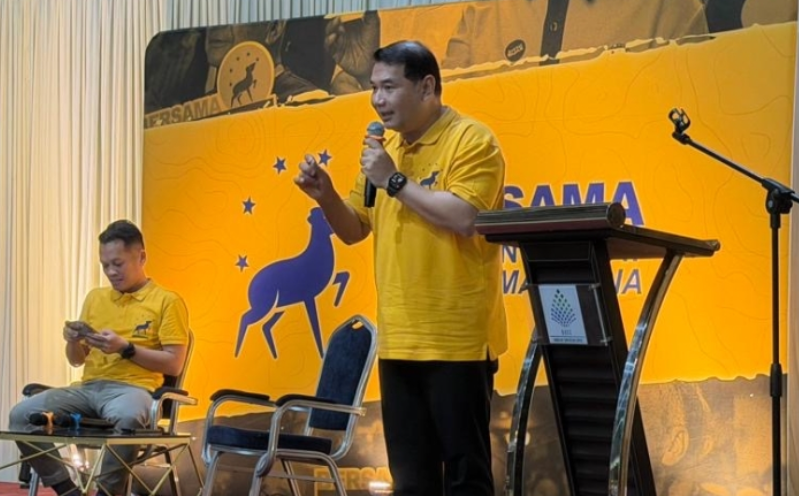
Speaking after Bersama’s inaugural Jelajah Kancil roadshow at the Danga Bay Convention Centre on Saturday, Rafizi said the party’s objective extends beyond immediate electoral success and is focused on building long-term grassroots support.
“Although Bersama is only three weeks old, the party is set to offer an alternative choice to voters.
“If we don’t lose our deposits, it means that the seeds we planted have started to grow. In the event that we do lose them, we will simply work harder and reassess our weaknesses,” he said.
The event, attended by more than 350 supporters, marked the party’s first major public mobilisation effort since its formation and offered an early indication of its ambitions in the southern state.
Rafizi, who serves as the party’s chief strategist, said Bersama is currently evaluating grassroots sentiment and organisational readiness before finalising the number of constituencies it will contest.
“The party needs to examine grassroots responses and the preparedness of the election machinery in respective areas.
“Bersama already has initial figures and has identified potential seats, but we need to review them based on the ground response,” he said.
While the final decision has yet to be made, Rafizi indicated that Bersama could contest as many as 20 seats in the upcoming election.
The former economy minister also announced that the party will begin accepting applications from prospective candidates on Monday, with selections to be scrutinised by a dedicated committee rather than determined through informal recruitment.
“Our candidates will consist of a healthy mix of seniors and youth to meet the aspirations of all voter demographics. We will focus particularly on young professional candidates, as they are the ones who will lead the country in the future,” he said.
The emphasis on younger professionals reflects Bersama’s broader attempt to distinguish itself from traditional political parties by presenting a new generation of leadership and policy-driven candidates.
Rafizi further revealed that the party has already attracted more than 24,000 members since its relaunch, claiming that most recruits are individuals who had never previously joined a political party.
The membership figure, if sustained, would provide an early boost to Bersama’s efforts to establish itself as a credible political alternative in an increasingly fragmented electoral landscape.
The emergence of Bersama follows a dramatic political realignment involving Rafizi and Nik Nazmi Nik Ahmad, both former senior leaders of the Malaysian political mainstream.
On 17 May, the pair announced their departure from their former party before assuming control of Bersama, a little-known political organisation that was originally registered in Penang in 2016.
Their move has since fuelled speculation over whether the new party can attract disillusioned voters seeking an alternative to the country’s dominant political coalitions.
The Johor state election, triggered by the dissolution of the State Legislative Assembly on 1 June, is widely regarded as an important political test ahead of the next general election.
For Bersama, the contest represents more than a fight for seats. It is an opportunity to measure whether public appetite exists for a new political movement willing to compete independently against the well-established machinery of Barisan Nasional, Pakatan Harapan and Perikatan Nasional.
The outcome may determine not only the party’s immediate future in Johor but also whether Rafizi’s latest political venture can evolve into a significant force on the national stage. - June 7, 2026