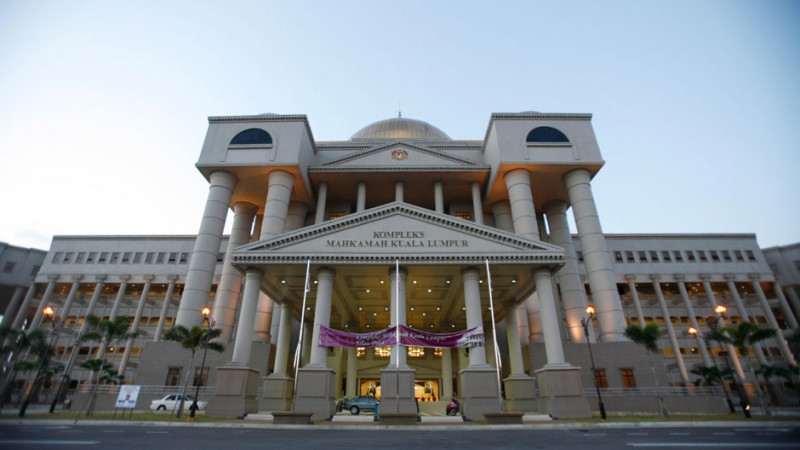
THE Attorney General’s Chambers (AGC) has opposed an application by two individuals seeking leave for a judicial review of the government’s decision to withdraw and target diesel subsidies in Peninsular Malaysia two years ago.
Senior Federal Counsel Mohammad Salehuddin Md Ali argued in the High Court today that the decision was not subject to judicial review because it was not made under any written law.
“It is not regulated by any written law, whether the law referred to by the plaintiffs’ counsel, namely Article 8 of the Federal Constitution and Section 6(2)(g) of the Control of Supplies Act 1961.
“Since there is no law governing the granting or withdrawal of subsidies, it cannot be subject to judicial review because there is no element of public law,” he said.
The application was filed by Azhani Marlan @ Abd Halim, 49, and Mohd Hatta Sanuri, 50, at the High Court in Kuala Lumpur on Oct 7, 2024.
They named Prime Minister and Finance Minister Datuk Seri Anwar Ibrahim, former Economy Minister Datuk Seri Rafizi Ramli, Domestic Trade and Cost of Living Minister Datuk Armizan Mohd Ali, Transport Minister Anthony Loke and the Malaysian Government as the respondents.
Mohammad Salehuddin said decisions to grant or withdraw subsidies involved fiscal and economic considerations within the executive’s authority.
He said the decision was not a right conferred by law but financial assistance and a policy decision that was not subject to judicial determination.
The respondents also argued that the application had become academic following the nationwide standardisation of diesel prices and subsidy mechanisms from July 1 this year.
“The whole purpose of this judicial review is to obtain equal treatment in relation to diesel subsidies between Peninsular Malaysia and Sabah and Sarawak.
“Once it took effect on July 1 this year, because the subsidy was provided progressively to Peninsular Malaysia and equal treatment was given to Sabah and Sarawak as a country as a whole, there is no longer any need for the court to examine the issue,” he said.
In their application for leave, the two applicants are seeking, among other relief, a declaration that the respondents’ decision to implement targeted diesel subsidies in Peninsular Malaysia while fully exempting Sabah, Sarawak and Labuan was irrational, unreasonable, improper, illogical and unfair.
They are also seeking a declaration that the decision was unlawful because it breached citizens’ right to equality under Article 8 of the Federal Constitution.
Counsel for the applicants, Mohaji Selamat, argued that the matter should not be regarded as academic merely because the government had subsequently restored diesel subsidies in Peninsular Malaysia in stages.
Citing several previous court decisions in other cases, he said judicial review proceedings could continue even where the challenged decision had subsequently been withdrawn or changed.
“This latest development, namely the provision of diesel subsidies by quota in Peninsular Malaysia, shows that the decision was made first — to target diesel subsidies in Peninsular Malaysia while exempting Sabah and Sarawak — distinguishing between people in Peninsular Malaysia and those in Sabah and Sarawak using the same budget.
“We take the view that the damage or impact arising from that decision from June 10, 2024 until July 1, 2026, does not disappear simply because the subsidy was restored,” he said.
Mohaji said the applicants maintained that the government’s diesel subsidy decision was subject to the law, including Article 8 of the Federal Constitution and Section 6(2)(g) of the Control of Supplies Act 1961. - September 14, 2026