By Murray Hunter
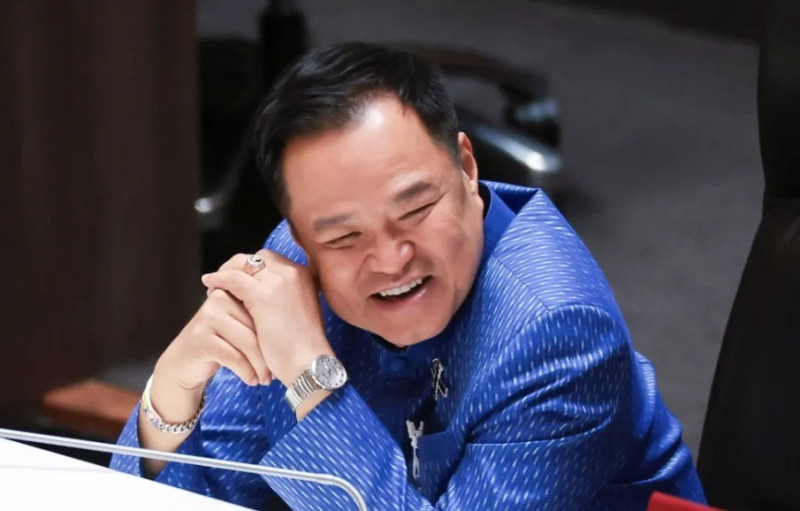
ONE year after Anutin Charnvirakul assumed the premiership, Thailand’s government has settled into a familiar rhythm.
The diverse coalition he leads, backed by Thaksin Shinawatra’s Pheu Thai Party, has restored a sense of “normality” that the country has long known.
Friendliness toward nearly every major stakeholder has become the administration’s defining operating principle.
That approach has come at the expense of ambitious reforms, and it coincides with a stubbornly flat economy showing little growth.
Yet so far, these shortcomings have not translated into sharp unpopularity.
Anutin’s government has converted a precarious minority arrangement into one of the more stable elected administrations of the past two decades.
This is an outcome few political observers would have predicted even five years ago.
Anutin once likened himself to kaeng ho, the northern Thai curry traditionally assembled from leftover ingredients.
A biographer connected the image to a Carabao song about blending disparate parts of society into something resilient.
The metaphor fits the government he has constructed. Little in the Bhumjaithai system is entirely original.
Its components existed before Anutin’s elevation. What is new is the way the party has combined them into a whole greater than the sum of its parts.
Bhumjaithai first leveraged its reputation for effective local service delivery, beginning in its Buriram stronghold, where the party’s popularity once rivalled that of Banharn Silpa-archa in Suphanburi, and expanding across the lower Northeast and central regions.
By the 2026 general election, the party had assembled an electoral machine built on networks of local families.
“Local politics is the root of larger politics,” Kla Tham leader Thammanat Prommin once observed.
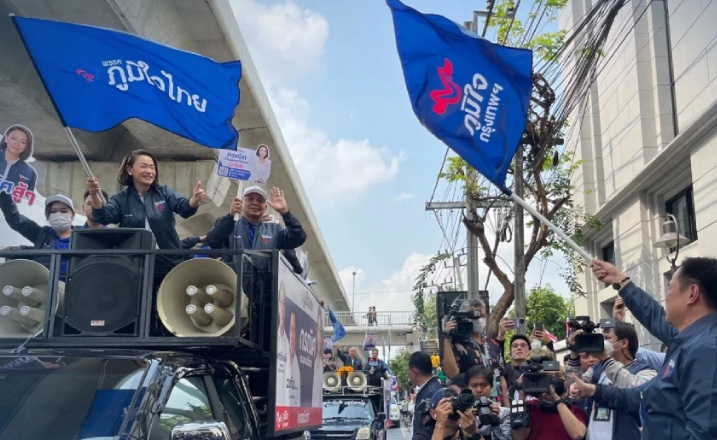
Bhumjaithai understood the insight better than most. Allegations of irregularities aside, this constituency strength proved decisive, as the party became the first to win an election without topping the national party-list vote.
Alongside this local machinery, Anutin completed a conservative rebrand that Bhumjaithai had pursued since the 2023 election, when it moved away from former PM Prayut Chan-o-cha.
No major party is now more closely identified with defending traditional institutions or asserting nationalist credentials.
“If you’re going to be obsessed with Thailand, take it to the extreme,” Anutin declared on the campaign trail.
Where General Prayut Chan-o-cha once stood as the conservative standard-bearer, Anutin successfully appealed to “Lung Tu’s voters” to support “Lung Nu” instead.
For moderate voters seeking competent management, the party also cultivated a technocratic image once more associated with the Democrats.
Whether that branding fully matches reality remains debatable, yet it has conferred a measure of governing credibility the party previously lacked.
Governing, however, has proven more complicated than campaigning.
The Anutin administration often appears to be operating with differing approaches.
Deputy Prime Minister and Finance Minister Ekniti Nitithanpraphas oversees the macroeconomy, while the other Deputy Prime Minister Pakorn Nilprapunt has taken on the difficult task of shrinking the size of government.
At the same time, a lookthep faction of ministers drawn from provincial families exercises its own influence.
Concerns have mounted over projects such as the TH-AI Passport and the Land Bridge (eventually shelved). Scandals in the Interior Ministry, which Anutin has headed for years, persist.
The government’s early handling of the energy crisis drew such widespread criticism that Ekniti was brought in to restore credibility.
When tensions arise between the technocratic and localist tracks, it remains unclear which will prevail.
A year into Anutin’s tenure, his priorities still feel rather vague.
His easy-going style, however, has helped keep the government intact.
However, NIDA’s second-quarter poll showed him trailing People’s Party leader Natthaphong Rueangpanyawut by five points, but the drop is modest compared with the double-digit deficits suffered by predecessors such as Srettha Thavisin.
The current disarray of the opposition has given Anutin the time he needed to establish his style of government.
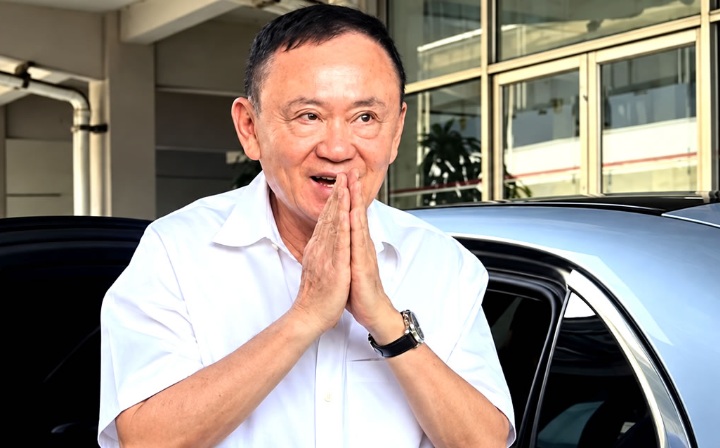
With the opposition weakened and divided, the primary threats to Anutin are internal. Bhumjaithai remains sufficiently united, and Pheu Thai has proven a cooperative partner, with Thaksin largely staying in the background after recent setbacks.
The first year reveals three pillars of the emerging Bhumjaithai system.
First is the kaeng ho political synergy that transformed a minority government into a durable majority coalition.
Second is the dual-track cabinet that mixes technocratic and localist elements.
However, this has yet been able to deliver clear developmental gains and has already produced notable policy shortfalls. Third is the broader institutional dominance that currently shields the coalition from serious external challenge.
The government’s strength rests heavily on rural and provincial networks cultivated through alliances with local power brokers. Urban professionals seeking a more ambitious vision of reform and modernisation have found less satisfaction.
Anutin has proven adept at assembling coalitions that accommodate the Thai establishment and thereby preserve the status quo.
The flat economy and high levels of debt have constrained large-scale visionary projects, while security issues along the Cambodian border have provided a measure of political cover. In the deep South, the administration has largely continued the approaches of its predecessors; promises of new methods have so far amounted more to rhetoric than results.
Looking ahead, the most significant challenges may arrive not immediately but when regional competitors such as Vietnam intensify pressure on Thailand’s trade and economic vitality.
A dire shortage of diesel could become a ‘black swan’ event. In the near term, Anutin’s political base demands attention to rural revitalisation.
Maintaining the current equilibrium of friendliness and institutional control may keep the government secure for now.
Whether that equilibrium can generate the growth and reforms Thailand needs is the more consequential test still to come. – September 19, 2026