Murray Hunter
MALAY history has long been taught as beginning with the Melaka Sultanate around 1400 CE, with a strong emphasis on Malay and Islamic development on the peninsula.
This framework has aligned conveniently with political narratives since Merdeka and especially after the events of May 13, 1969.
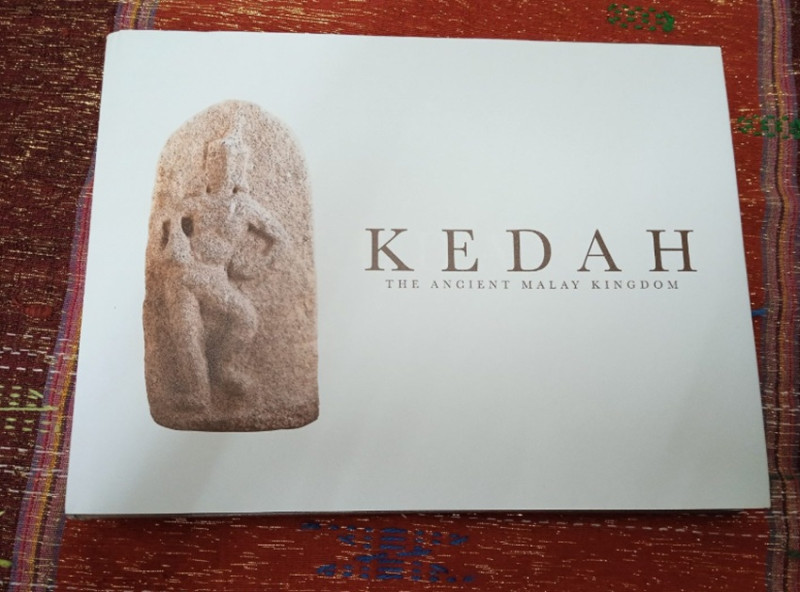
A well-researched book, Kedah: The Ancient Malay Kingdom, by Tunku Taufek Mansur, Tunku Ahmad Ridzwan, and the late Jim Redmond, argues that this paradigm is far too narrow.
By confining the story to Melaka and the arrival of Parameswara, it erases much of the diversity and deeper historical heritage that enrich modern Malaysia.
Although centred on Kedah, the book’s lessons apply to the nation as a whole.
The authors present archival and archaeological evidence showing that Kedah was a continuous kingdom for centuries, much older than Melaka.
Early peninsula civilisations are attested by sites such as Kota Tampan, dating back some 74,000 years and preserved under volcanic ash from the Lake Toba eruption, and the Perak Man, an 11,000-year-old ceremonial burial.
Ancient Kedah is also linked to the powerful Funan Kingdom, which rose around 500 BC, a connection largely absent from official literature.
The kingdom’s position along the northwest coast of the Malay Peninsula made it a vital nexus on maritime trade routes linking India and China, underscoring its early international significance.
British colonial rule further reshaped local narratives, often to justify territorial claims and enforce a “divide and rule” policy.
Under the Anglo-Siamese Treaty of 1909, the British classified Kedah under Siamese sovereignty as “Saiburi.”
A 17-year-old Sultan Abdul Hamid fought to restore its independent statehood and original name.
The Malaysia–Thailand border itself was drawn partly according to the southernmost Buddhist temples (wats).
This cartographic choice reinforced a colonial equation in which Buddhism was associated with being Siamese and Malay identity with Islam.
The term “Malay” was broadened by the British into a continental category encompassing Austronesian and Malayo-Polynesian groups, rather than remaining a direct translation of the more specific “Melayu.”
Resistance to acknowledging the region’s Hindu-Buddhist heritage, evident at sites such as Lembah Bujang, has persisted, fuelled by a modern misconception that Islamic identity requires erasure of the pre-Islamic past.
Researchers working on the book encountered secrecy and institutional resistance in rare-book archives, frequently being told that “they’re not going to like this” because of ongoing geopolitical sensitivities over early historical ownership.
For Tunku Taufek, recovering this deeper history is not merely an academic exercise. In a recent interview with Ibrahim Sani on Lebih Masa, he described his ultimate aim as converting historical knowledge into practical economic progress for Kedah’s people.
Despite its traditional status as Malaysia’s “rice bowl,” the state remains among the country’s poorest.
He seeks to bypass top-down bureaucracy and foster a grassroots, bottom-up economy by reviving local artisanship, traditional wood carving, farming, and heritage tourism.
By restoring Kedah’s place in a longer, more complex continuum, Kedah: The Ancient Malay Kingdom invites a richer understanding of the peninsula’s past, one that recognises continuity, cultural layering, and the contributions of many peoples long before Melaka.
This account should be an essential read in Malaysian schools. – October 27, 2026