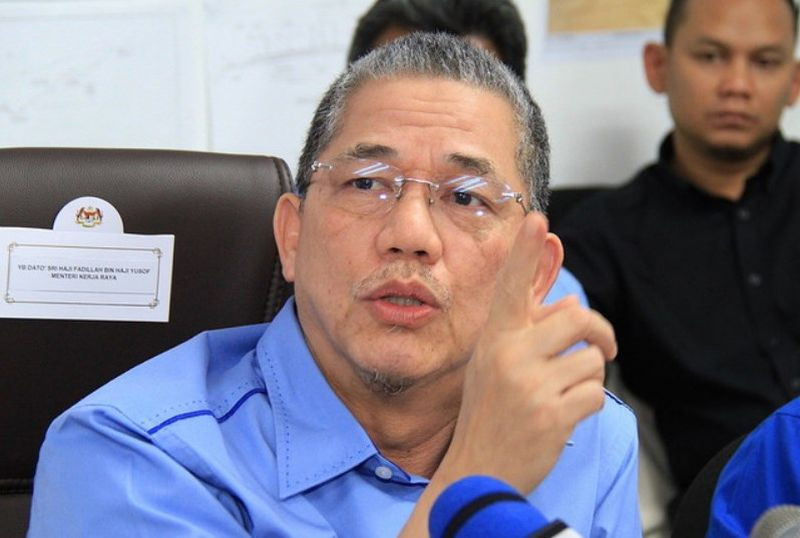
MALAYSIA must strengthen safety standards and certification requirements for battery energy storage systems (BESS) as the country accelerates its renewable energy transition, Deputy Prime Minister II Datuk Seri Fadillah Yusof said.
He said the increasing deployment of renewable energy, particularly solar power, made battery storage essential to balancing electricity supply and demand and maintaining national grid stability.
Malaysia's installed renewable energy capacity has approached 14 gigawatts, with the government targeting a 35 per cent share of renewable energy in installed generation capacity by 2030 and 70 per cent by 2050.
Fadillah said BESS would allow surplus electricity generated during periods of high supply to be stored and redistributed when needed, improving the flexibility and reliability of the national energy system.
“BESS enables energy generated from renewable sources such as solar to be stored and reused when needed. This technology not only helps increase the flexibility of the energy system, but also supports grid stability, energy demand management and the optimisation of renewable energy use,” he said.
Speaking at the launch of the pilot BESS certification project in Kapar today, he stressed that safety must remain a priority as battery storage technology becomes more widely adopted.
He warned that failure to comply with technical and safety requirements could lead to system failures, thermal runaway, fires and threats to public safety and the environment.
“In energy technology development, safety is not an option, not a compromise and not something that can be considered later. Safety must be the foundation of every decision. Technological progress will be meaningless if public safety is put at risk,” he said.
Fadillah, who is also Energy Transition and Water Transformation Minister, said the Energy Commission had issued Battery Energy Storage System Safety Guidelines outlining the relevant technical and safety standards.
He said strict controls were necessary throughout the systems' lifecycle, from design and component selection to installation, operation and maintenance, including for smaller installations in residential and commercial premises.
He welcomed BESSC Sdn Bhd's initiative to develop an additional certification scheme, saying it would contribute towards establishing a safer, more reliable and competitive energy storage ecosystem.
He also called on relevant agencies, including the Energy Commission and Department of Standards Malaysia, to facilitate BESSC's certification application process.
The proposed BESSC certification would be voluntary and serve as an additional value for the industry rather than replace existing regulatory requirements. Any standards developed must remain aligned with the Energy Commission's existing BESS guidelines, he said.
The government, through the Energy Transition and Water Transformation Ministry, would continue supporting the initiative through strategic cooperation, technical guidance and coordination among stakeholders.
Malaysia is also expanding battery storage deployment through the MyBEST tender, involving 400 megawatts of power capacity and 1,600 megawatt-hours of energy storage.
The Large Scale Solar 6 (LSS6) programme also incorporates battery storage components with a power capacity of 1,250 megawatts and energy capacity of 5,000 megawatt-hours.
Fadillah said the energy transition would create opportunities for green investment, the development of high-technology industries and the creation of skilled jobs for Malaysians.
“We do not want Malaysia merely to be a user of the technologies of the future. We want Malaysia to be a country that also shapes, strengthens and leads the technologies of the future,” he said. - November 12, 2026