THE latest broadside by UMNO Youth chief Datuk Dr Akmal Saleh against the renewed 99-year lease of the Kuala Lumpur and Selangor Chinese Assembly Hall (KLSCAH) is not primarily about land premiums or valuation formulas.
It is an attack on freedom of discussion.
For decades, KLSCAH has served as a rare physical space in the capital where social and political ideas could be aired across communities without the immediate filter of party orthodoxy or state control.
Targeting the terms of its continued existence under the guise of fiscal scrutiny reveals a deeper discomfort with independent venues for open debate.
On 14 November 2026, Federal Territories Minister Hannah Yeoh announced that the government had approved a 99-year lease renewal for KLSCAH at a nominal land premium of RM1,000, down from an earlier commercial estimate of about RM4.67 million.
The total initial payment stands at RM5,011, including first-year rent and administrative charges, with annual land rent fixed at RM3,151.
This followed Prime Minister Datuk Seri Anwar Ibrahim’s February 2026 visit during Chinese New Year celebrations, when he directed officials to find a solution that recognised the building’s heritage value.
On 14 September 2026, the Federal Territories Land Committee approved the surrender and re-alienation of the land for institutional use; the formal letter confirming the RM1,000 premium is dated 1 October.
The justification is straightforward.
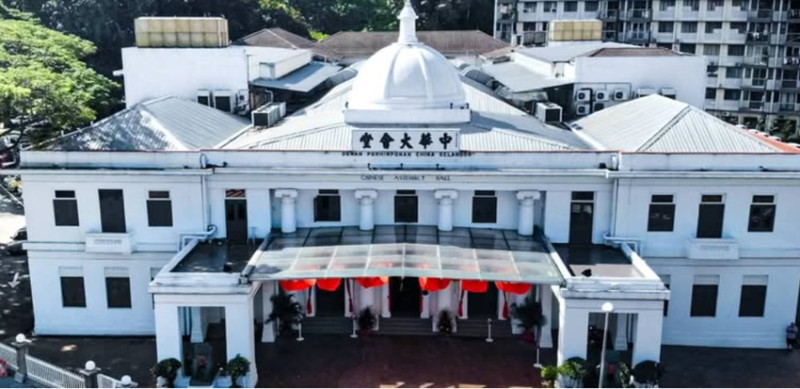
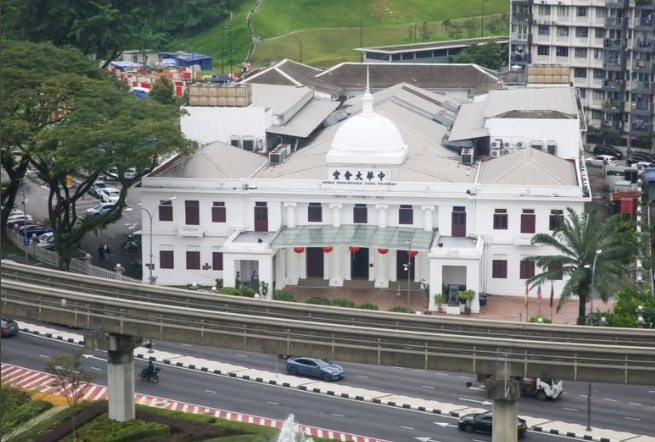
KLSCAH has been a gazetted National Heritage building since 2007.

By converting the land status from commercial to institutional, the association permanently forgoes any right to redevelop the site into condominiums, malls or other high-value commercial projects.
Once that commercial potential is extinguished, the previous valuation no longer applies.
Officials have stressed that the hall continues to pay quit rent, assessment taxes and income tax, and that the nominal premium simply eases the burden on a non-profit that already runs an annual operating deficit while maintaining a century-old structure.
Precedents exist for treating heritage or institutional sites with sensitivity; the principle is preservation of public and cultural value, not preferential treatment of one community.
Akmal and some other critics have focused on the gap between the original estimate and the final figure, demanding explanations of the valuation basis, conditions attached, and why any land in Kuala Lumpur should be treated as having “no commercial value.”
Questions about transparency in public land decisions are legitimate in a democracy.
Yet the framing quickly slid into racialised territory, portraying a heritage decision for a long-established civic institution as evidence of ethnic favouritism.
That move is distinctly familiar, where arguments convert policy debate about institutional continuity into a narrative of zero-sum communal advantage.
Hannah Yeoh and others have pushed back against precisely this racialisation, noting that heritage protection is a national responsibility, not a racial one.
MCA leaders have similarly insisted the issue is about safeguarding a historical landmark, not community background.
KLSCAH’s significance goes beyond architecture or ethnicity.
Founded in the 1920s and completed in the 1930s, the hall has long functioned as a meeting place where Chinese community leaders, reformers, and later multi-ethnic political figures gathered.
It witnessed the founding of MCA and discussions that formed part of the broader independence-era conversation.
In more recent decades, it has continued to host forums, cultural events and civil-society discussions that are not always welcome in more tightly controlled venues. In a political culture where open, sustained debate outside party structures remains fragile, physical spaces that enable such exchange matter.
They are not neutral real estate; they are infrastructure for pluralism.
When a major political organisation concentrates fire on the financial terms of such a space’s survival, the message is larger than RM4.67 million versus RM1,000. It signals that independent centres of discussion are fair game once they can be painted as receiving “special” treatment.
The racial packaging makes the attack more potent and harder to rebut without appearing defensive of one community.
But the underlying impulse is institutional. Reduce the autonomy and longevity of places where citizens can gather, speak and organise outside the preferred channels of power.
That is a repression of the conditions for free speech, not a defence of fiscal rectitude.
Malaysia’s democratic health depends on more than elections and parliamentary seats.
It requires civic institutions and physical venues that allow ideas to circulate, be contested and refined.
KLSCAH has been one of the more durable examples of such a venue.
Defending the practical arrangements that let it continue by including a lease structured around its institutional and heritage character is therefore a defence of society’s capacity for open discussion.
Attempts to undermine those arrangements under cover of valuation disputes or racial grievance should be recognised for what they are: pressure against the spaces where freedom of speech is practised, not merely proclaimed.
Expect more of this in the future as UMNO is regaining its strength. – November 19, 2026