
KUALA LUMPUR – Malaysia currently has two simultaneous approaches to battling the Covid-19 pandemic – a movement control order (MCO) and an emergency proclamation.
Although some say Putrajaya's request for an emergency is overkill, the fact is that it is likely here to stay, at least until August.
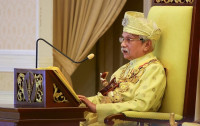
In fact, the government has enacted an emergency ordinance titled the Emergency (Essential Powers) Ordinance 2021, which has been promulgated by the king.
Normally, laws are enacted through Parliament – where MPs debate and vote on proposed legislation. Under an emergency, laws are made through the Agong via these emergency ordinances, bypassing Parliament.
So, what does the Emergency (Essential Powers) Ordinance 2021 entail?
An independent task force
Under Section 2 of the ordinance, an independent task force is formed to advise the king on all things emergency related, such as security, economic, public health and public peace issues.
Members of the task force are appointed by the king.
At the moment, it is unsure whether the task force is similar to the National Operations Council (NOC).
After the May 13 riots and declaration of emergency, Parliament was suspended. Administration of the country was handed to the NOC.
Seizure of land and property
Section 3 of the ordinance allows the king or anyone given powers by the king to temporarily requisition any land or property.
This is despite Article 13 of the federal constitution stating that every person has a right to property.
Section 3(2) further states that, if there are any restrictions on the land, the king or those given powers by the king can do as they wish with the land.
For example, if a particular property is designated solely for residential purposes, it can be used as a quarantine centre or any other purpose the king deems fit.
If a particular land is seized, residents and owners of the land are expected to cooperate with the king or his delegates.
They are also required to respond if asked about any relevant information concerning the land.
And, if anyone refuses to comply with these provisions, they can be fined up to RM5 million and/or imprisoned for a term not exceeding 10 years.
This does not mean that everyone who fails to comply will be fined RM5 million; they can be compounded for a lesser amount.
Power to seize resources
Section 4 states that the king or anyone delegated powers by the king can seize resources if needed.
Such resources include human resources, utilities and facilities.
Section 5 states that if any land, property or resources are seized, compensation must be given.
The sum of the compensation will be based on an evaluation by a party authorised by the king.
The evaluation will be final and cannot be challenged.
Police powers for military personnel
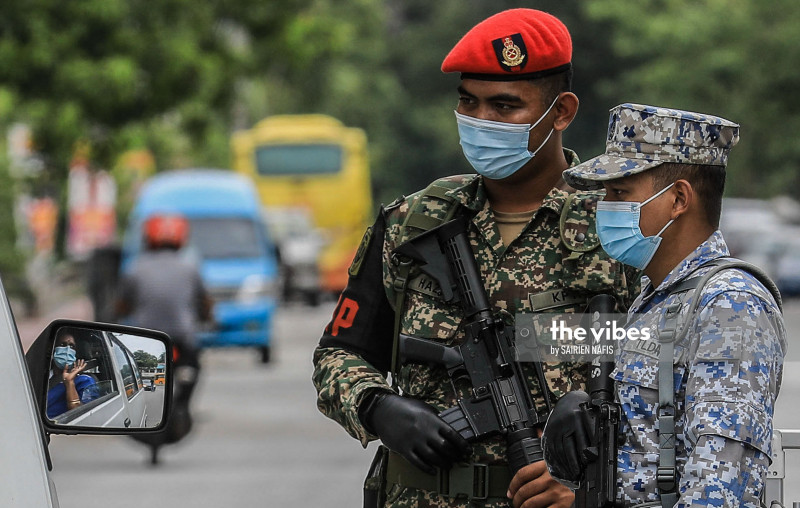
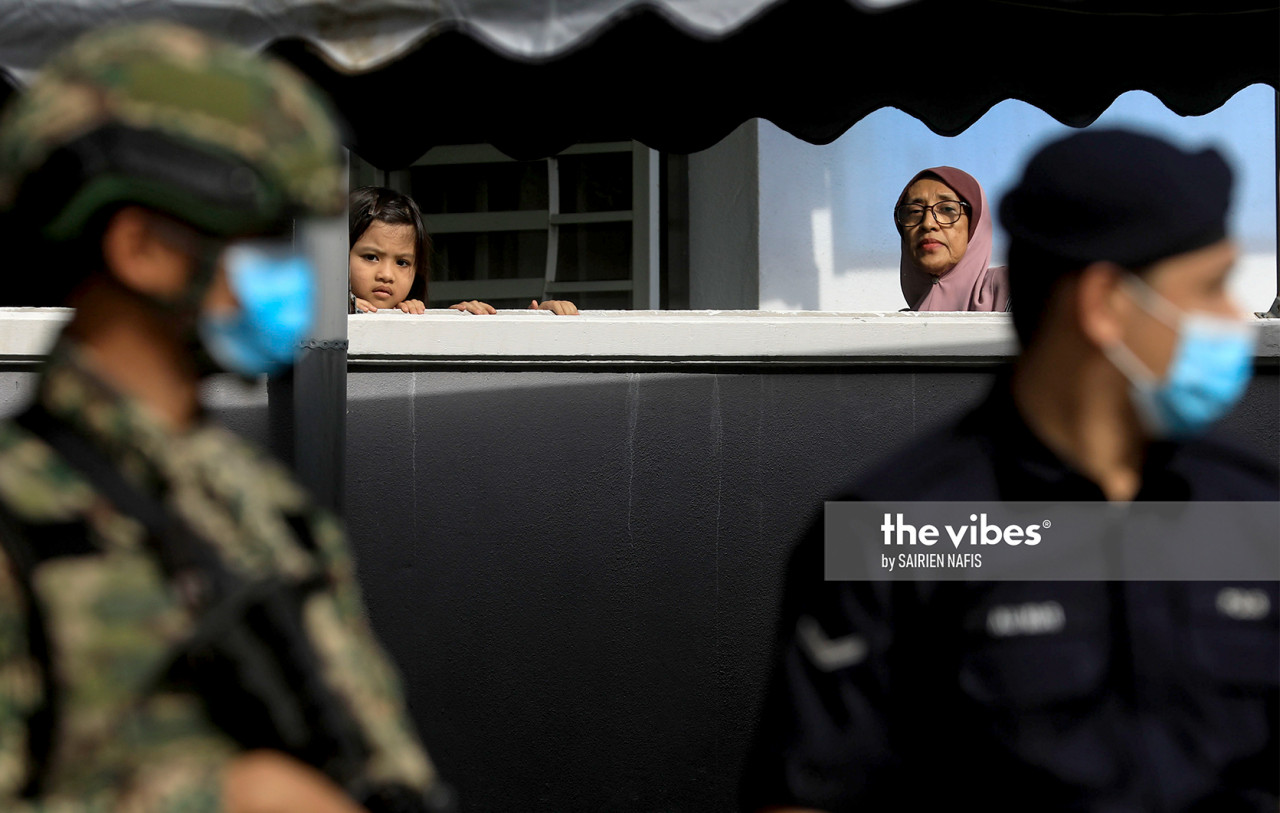
With emergency powers, the army can conduct policing activities.
Section 7 states that a soldier will have similar powers to the police under the Criminal Procedure Code.
However, this does not mean army personnel can act according to their whims and fancies.
For example, if a soldier intends to arrest an individual for non-compliance with standard operating procedures, he would have to detain the person pursuant to Section 15 of the Criminal Procedure Code and other relevant provisions.
Thus, the soldier cannot use excessive force during the arrest and inform the individual of the reasons for the arrest.
Power to compel doctors to work
With the ordinance, any doctor or healthcare worker tasked to work in a particular place according to their practising certificate can be compelled to work elsewhere.
For example, if a doctor is tasked to work in Ipoh, the king or his delegate can compel the doctor to work in Sg Buloh.
What about elections and Parliament?
Rules concerning elections and Parliament are laid out in Sections 12, 13, 14 and 15 of the ordinance.
In normal circumstances, if there is a vacancy in the Dewan Rakyat or Dewan Negara, it must be filled within 60 days.
This is why, if an MP dies or resigns, a by-election must be held within that timeframe.
However, the ordinance effectively cancels out this requirement during an emergency.
Also, the requirement to hold a general election every five years as per the federal constitution is also halted.
As for whether MPs are allowed to attend Dewan Rakyat sittings, this is subject to the king's instructions.
During an emergency, all provisions related to summoning a parliamentary sitting under the federal constitution shall have no effect whatsoever.
These provisions apply to state legislatures as well.
Ordinance prevails over all laws
Section 16 states that the king has powers to make rules.
If any existing law contradicts this ordinance, the ordinance shall prevail.
For example, the Criminal Procedure Code states that police officers and village heads – not soldiers – have the authority to conduct arrests of civilians.
But, because the ordinance gives the army powers under the Criminal Procedure Code, they, too, can conduct arrests. – The Vibes, January 15, 2021