KUALA LUMPUR – Last Wednesday marked a year since the country saw its first Covid-19 cases involving three China nationals who entered Malaysia via Johor from Singapore on January 20, 2020.
During the first wave, a majority of Covid-19 cases were imported and did not involve Malaysians, while infections in the second wave began seeing local transmissions after the first community case was reported on February 4.
It was in the second wave that the government imposed the movement control order (MCO), beginning on March 18 with strict standard operating procedures (SOPs).
A few months later, when infections started showing a decline, the government loosened the SOPs slightly with the introduction of the conditional MCO (CMCO) from May 4, followed by the recovery MCO (RMCO) on June 10.
However, a spike in cases returned for the third wave, forcing the government to re-enforce the RMCO in most states beginning last October, but when the number of cases refused to go down, the government had to re-enforce the MCO, starting with the Federal Territories and five states and subsequently, nationwide, except in Sarawak.
As of yesterday, the cumulative number of cases reported stands at 180,455, with 42,769 active cases.
A total of 667 deaths due to Covid-19 have been recorded so far.
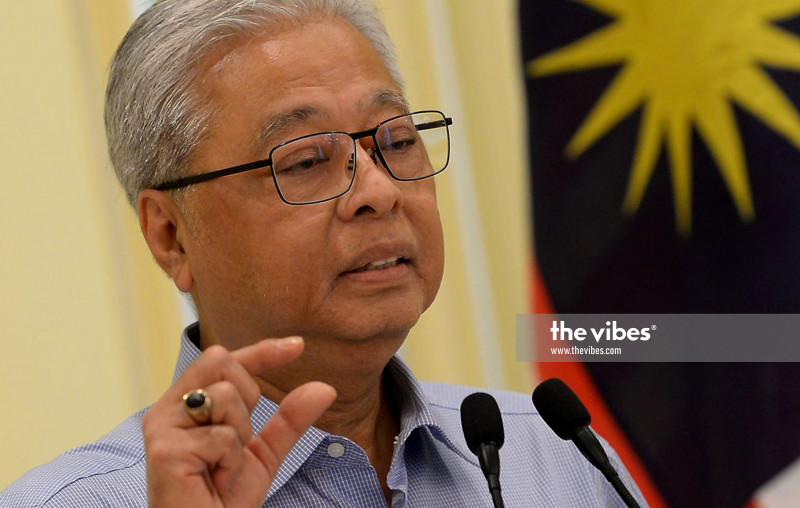
The government has implemented various initiatives, rules and regulations in the country on the advice of the Health Ministry (MOH), with Malaysians informed daily on the latest developments by Senior Minister (Cluster) Datuk Seri Ismail Sabri Yaakob and Health Director-General Tan Sri Dr Noor Hisham Abdullah.
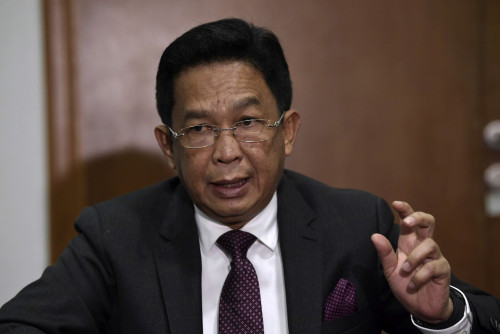
In an interview with Bernama journalist Thivyamalini Ramalu at his office, Ismail Sabri shared his views and experiences on the challenges of managing the pandemic, especially the implementation of the prescribed SOPs during the MCO, CMCO and RMCO period.
The following is the transcript of the interview:
Bernama: Since March last year, the government has implemented the MCO, followed by the CMCO and RMCO. Initially, the efforts seemed successful in reducing the number of cases, but it became critical to the extent that the MCO had to be enforced again. What caused the increase in infections?
Ismail Sabri: At that time (March last year), the people were scared of Covid-19. When the government said ‘stay at home, do not go out’, almost all citizens obeyed and SOP violations were less. But over time, perhaps the people feel that life is back to normal because there is no MCO and even the government has started to provide relief gradually.
Almost all economic sectors were opened and even social activities, such as holding events and sports activities, were allowed, causing the people to feel safe. Although the regulation to wear mask is observed, mass group activities still took place, in particular, the Sabah elections.
Physical distancing was almost not complied with. At that time, one of the reasons for the increase in cases in Sabah was due to foreign immigrants and spread in the next community, subsequently to the peninsula, after the polls ended.
Bernama: What is the public's rate of compliance with the MCO's SOPs?
Ismail Sabri: Based on a study by Universiti Teknologi Mara, almost 95% of the people complied with the SOP on the use of face masks. It has become a new culture, even in rural areas, even though it is not emphasised. But the MOH believes that masks alone, without physical distancing, are not enough. We see most places, like restaurants for example, in which there is no physical distancing. This is the most dangerous.
Bernama: Many say that the number of cases increased again when interstate travel was allowed.
Ismail Sabri: Cases may have surfaced due to interstate crossings, but in terms of the largest contributors of cases, they are foreign workers in the manufacturing sector, which is why they are required to undergo Covid-19 screening tests. Secondly, it’s workers at construction sites. So, we focus on these problems by providing conducive housing for workers and so on. As for the Covid-19 cases due to interstate travel, it is just one of the contributors of cases and not the largest contributor.
Bernama: Are the people adapting well to new norms?
Ismail Sabri: It can be said that there is already awareness in society, just look at the malls. There are less people now because they know that, if there is no need to go out (not to go out), there is no need to leave the house, let alone bring small children along.
So far, the use of masks is obvious and we see people starting to change their way of life and with more discipline, for example, such as bowing respectfully to avoid shaking hands or contact (will be practised more).
The issue is physical distancing, because many believe by wearing a mask, being at a close distance with others is not a risk.
Bernama: The SOP on physical distancing is clearly difficult to comply with. What are the authorities doing to instil more awareness about it?
Ismail Sabri: Firstly, we can only remind the people. Despite being reminded by me and health DG on SOP compliance, every day, dozens of people are held for failing to comply with SOP. Secondly, it is a legal action, with its own punishment, and the third, is self-awareness. There are policemen who are gentle and use their discretion, but sometimes, they have no choice, resulting in the people being penalised.
Bernama: When will the country’s borders be opened?
Ismail Sabri: We will not open the border so quickly because other countries are also facing the Covid-19 pandemic. Although the government recently planned to open its borders for some countries through the green zone travel bubble, it was put on hold.
This is because, even if Malaysia (opens its borders), what about other countries that will not allow Malaysians to travel to their country?
I think, this matter on the border will be the last to be opened because otherwise, cases from other countries will enter and spread in the country. For example, we still stop students from the UK studying in this country (to come). Other students are allowed to enter but with strict SOP. – Bernama, January 24, 2021