KUALA LUMPUR – With the 15th general election looming ever closer, the Election Commission (EC) has been urged to improve its facilities for the disabled, as many from the community are claiming that their needs have been neglected.
Among the problems faced by special needs individuals is that access to voting is not fully disabled-friendly, while reference materials on the entire voting and election process are still lacking.
Physically disabled Mohd Rizal Mat Noor lamented that while every Malaysian is accorded the right to vote, those who are not fully able-bodied continue to face an abundance of challenges in carrying out their electoral responsibility.
“For a physically disabled individual like me, among the biggest challenges are the limited facilities and access in polling centres,” he was quoted as saying by The Vibes’ Malay-language sister portal Getaran.
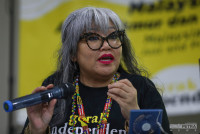
He said this during a forum on access to voting among the disabled, organised by electoral watchdog Bersih 2.0, aimed at providing a platform to affected individuals to voice out their grouses.
According to Rizal, the selection of schools and public halls lacking in disabled-friendly facilities as voting centres has proven to be an obstacle, particularly for those who are wheelchair bound and those on crutches.
“EC officers and volunteers on duty during polling day ought to be given comprehensive training on how to assist the disabled community,” he said.
For autistic individual Mohd Shafiq Badarulhisham, those similar to him often had their needs ignored by officers on duty, due to their disability not being physically recognisable.
“This has forced people like me to display our disabled card to take part in the voting process,” he said, adding that there are also those who do not regard autism as a disability.
Annie Ong, who suffers hearing impairment, said the lack of assistance in translating the promises made by candidates during campaigning has prevented them from truly understanding the messages being delivered and ultimately hindering them from making the right choice.
“Every time during campaigning, various manifestos were offered, but for people like us who can only see, we couldn’t fully understand (the manifesto), and it has proven a huge challenge for us in voting for the right leader.
“In fact, due to this lack of information on the candidates and manifesto, we are forced to vote for parties based on the decision of our families,” she said via sign language, which was then translated by an interpreter.
As a proposal, Ong said every candidate, as well as the EC, should provide a sign language interpreter throughout the election process, while all campaign materials, debates and manifesto should also be uploaded on social media along with their sign language translations.
As for visually impaired Nadir Abdul Nasir, the EC should consider appointing those suffering similar disabilities to monitor the election process.
He said if the EC is willing to collaborate, they would be able to develop technology for other visually impaired voters to carry out their electoral responsibility without the need for a guide.
“One of our biggest challenges is often the issue of spoiled votes. There are also those who vote for candidates who are not necessarily their choice, as they are merely following what their family members or guardians tell them.”
Nadir said this issue could be solved if the EC could simply print ballot papers with Braille writing for those with visual disabilities, adding that such a move would encourage those from the community to come out to vote. – The Vibes, June 6, 2022