
Malaysia

Local communities first line of defence when natural disasters strike

SeDAR programme teaches residents to understand their environment, act to reduce risks

Updated 3 years ago · Published on

Local communities first line of defence when natural disasters strike
The SeDAR programme aims to spread awareness to local communities on their disaster risks and ability to take action as the first line of defence in the event of a natural disaster. – SYEDA IMRAN/The Vibes pic, December 21, 2022

by Kirtigha Pannee Selvan

KUALA LUMPUR – Local communities are learning the importance of taking the first line of action themselves in the event of disasters to reduce calamities through a programme on disaster risk reduction.

The SeDAR programme spreads awareness to communities on their disaster risks and ability to take action, said project coordinator Eriko Motoyama after a recent workshop in Ukay Perdana. 

The programme, held in Ampang and launched by its MP Rodziah Ismail, is significant as this area has been the scene of landslides in the past – including the Highland Towers tragedy in 1993 that claimed 48 lives. Residents over the years have been wary of occasional landslips occurring within the vicinity.

Motoyama said SeDAR, which stands for Strengthening the Disaster Risk Reduction Capacity to Improve the Safety and Security of Communities by Understanding Disaster Risk, is meant to encourage local governments and communities to collaborate on disaster prevention measures and initiatives.
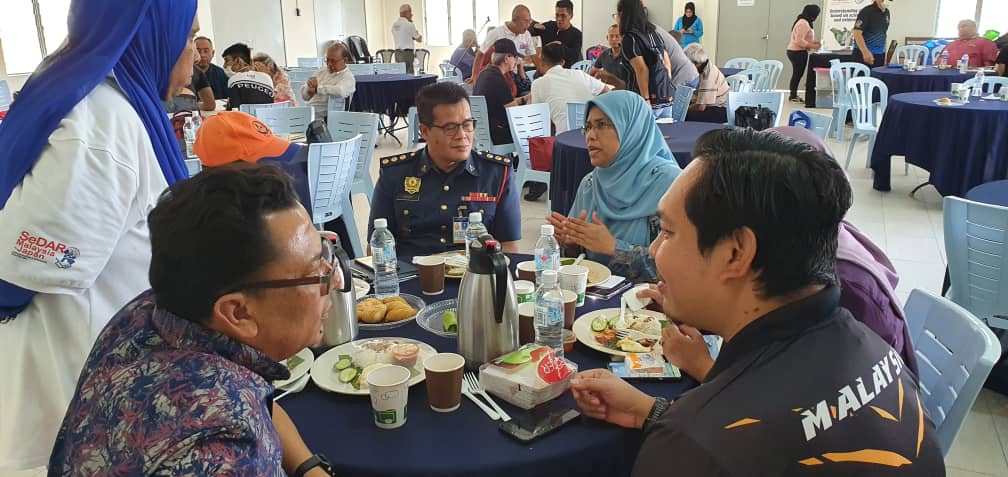
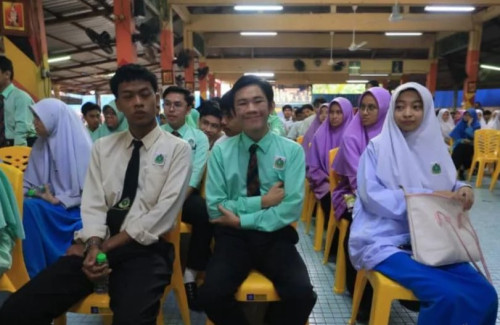
Ampang MP Rodziah Ismail (in light blue headscarf) launches the SeDAR programme at Ukay Perdana, an area that is familiar with landslide occurrences over the last few years. – KIRTHIGA PANNEE SELVAN/The Vibes pic, December 21, 2022

The programme focuses on changing the public’s perception and thinking about disasters in situations where they are helpless, to take charge of their own survival from the start.  

“It teaches people living in communities to prepare and reduce the impact of disasters.”

This can be done by creating community maps that are easier for residents to understand and use, Motoyama said.

She said the workshop explained to residents that community maps can be created by locals for their own use, as they are simpler for non-technical people to understand – whereas scientific maps may be more detailed, but harder to grasp.

With the use of community maps, residents can locate potential dangers and risks in their environment, she added. Understanding their surroundings with the help of these maps can even prevent disasters from happening.

SeDAR, which is a joint effort between Japan and Selangor, also teaches participants about self-help, mutual help, and public help principles drawing from the experience of the Japanese people in disaster risk management.
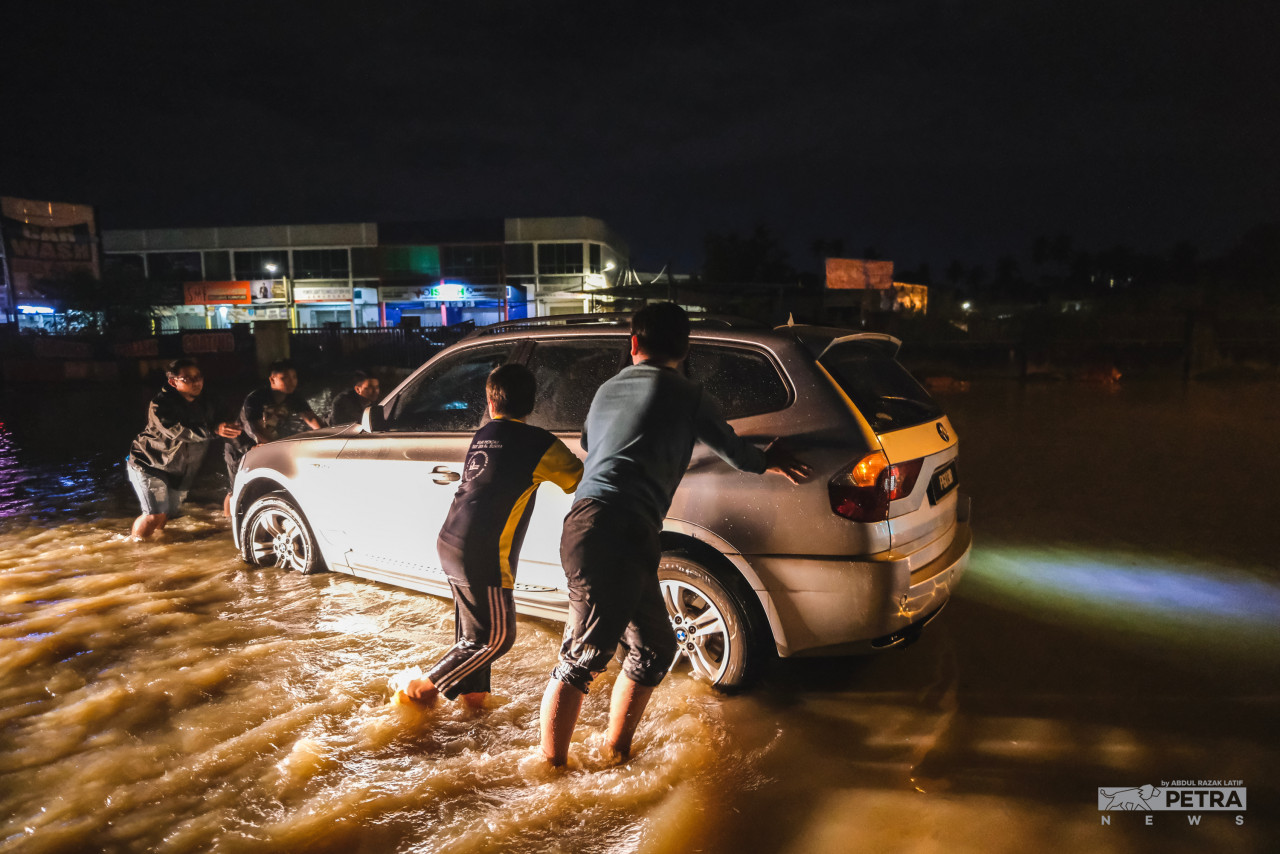
SeDAR is a joint effort between Japan and Selangor which aims to teach participants – who are local communities prone to natural disasters – about self-help, mutual help, and public help principles drawing from the experience of the Japanese people in disaster risk management. – ABDUL RAZAK LATIF/The Vibes pic, December 21, 2022

“According to the Japanese, we can use three kinds of help whenever we face disasters. The first one is self-help,” said Motoyama.

This means that people must know how to save themselves first in a disaster as the first few minutes are the most critical.

“That’s when we can save our lives instead of waiting for public help, which may arrive late.”

For example, Motoyama added, landslides often happen in waves besides there being different types of earth movements. 

“Therefore, the first action we need to do is to evacuate the place. 

“Sometimes, we can save ourselves from the first wave of a landslide by running away and getting out of the place before the second wave, which is more dangerous,” she said. 

The next principle, mutual help, is where people alert others around them and extend help.

People can learn how to provide mutual help from the training given by the Malaysian Civil Defence Force, which has a program called the Civil Defense Emergency Response Team to teach communities how to deal with disaster situations, Motoyama added.

The SeDAR programme is a collaboration project between the International Research Institute of Disaster Science of Tohoku University, the Selangor Disaster Management Unit of the Selangor government, and the Disaster Preparedness and Prevention Centre of the Malaysia-Japan International Institute of Technology, Universiti Teknologi Malaysia Kuala Lumpur. – KIRTHIGA PANNEE SELVAN/The Vibes pic, December 21, 2022

The final principle is public help, which entails government assistance and the involvement of official bodies such as police, civil defence forces, and the Fire and Rescue Department.

The SeDAR programme, which began in 2018, is conducted within Selangor with a focus on areas prone to landslides and floods.

SeDAR is a collaboration project between the International Research Institute of Disaster Science of Tohoku University, the Selangor Disaster Management Unit of the Selangor government, and the Disaster Preparedness and Prevention Centre of the Malaysia-Japan International Institute of Technology, Universiti Teknologi Malaysia Kuala Lumpur. – The Vibes, December 21, 2022
Related News

Malaysia / 2w

Most Malaysian motorists lack flood cover despite rising disaster losses

Community / 3w

Penang: Residents of 4 houses near landslide site not allowed to return home yet

Off beat / 3w

Paya Terubong landslide: MBPP submits draft report

Community / 3w

Paya Terubong landslide: Developer, landowner must take responsibility - CM

Opinion / 1mth

New paradigms in community development needed in Malaysia

Malaysia / 4mth

When ‘safety’ becomes a cover for xenophobia

Spotlight

Malaysia

Anwar receives special recognition as 10,000 Muslims gather in Putrajaya

Malaysia

Video of elderly man being assaulted goes viral on social media

Malaysia

The wide reach of corruption and organised crime in the country

Malaysia

Malaysia pushes to give smaller economies stronger voice in Asia-Pacific trade – Anwar

Malaysia

No tsunami threat to Malaysia after 5.4-magnitude earthquake hits Banda Sea

Malaysia

Who is calling the shots in Negeri Sembilan as Ismail’s position comes under scrutiny?

Opinion

Ayob Khan: When the uniform comes off, the principles remain

Malaysia

MySiren to send emergency alerts to compatible phones nationwide from Nov 29 test

You may be interested

Malaysia

Mother returns to SPM examination hall after 20 years to stand alongside autistic son

Malaysia

Counterfeit cigarette stamps expose potential RM100m revenue risk

Malaysia

Govt eyes up to 250,000 jobs from RM170bil carbon capture industry by 2050

Malaysia

Malaysia's first Global Minimum Tax revenue not expected until second half of 2027

Malaysia

Sarawak PRN: DAP announces 9 candidates, including an MP and former senior cop

Malaysia

Four 1MDB-linked paintings to be displayed publicly, free of charge

Malaysia

88 days on, families of missing Nepal disaster victims still await DNA results, death certificates

Malaysia

It wasn’t the Government that leaked Najib's conditional pardon documents - Anwar