
PETALING JAYA – Following the by-elections in Johor, it’s become clear that the much-anticipated “green wave” attributed to Perikatan Nasional (PN) and Malay voters failed to make landfall in the southern state.
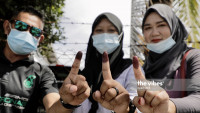
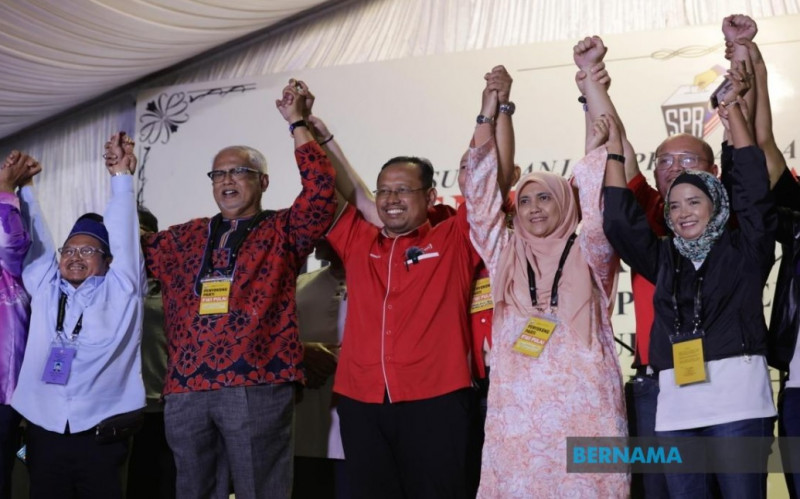
Instead, what transpired was a rejection of PN, with Pakatan Harapan (PH) emerging victorious in both Simpang Jeram and Pulai.
This electoral outcome raises intriguing questions about the state of Malaysian politics and the influence of significant factors.
Before delving into a post-election analysis, it is crucial to understand the backdrop. These constituencies were viewed as battlegrounds due to their nearly equal proportions of Malay and non-Malay voters.
PN’s strategy was unequivocal as they banked heavily on the Malay vote, concentrating their campaign efforts predominantly in Malay-majority areas.
On the other hand, PH adopted a more inclusive approach, traversing both Malay and non-Malay territories, underlining their commitment to a unified electorate.
Many had expected or rather feared the “green wave”, bolstered by a Malay and religious centric narrative, may have a significant impact.
However, the election results tell a different story. Nazri Abdul Rahman’s victory in Simpang Jeram and Suhaizan Kaiat’s win in Pulai underscore that PN’s strategy fell short of expectations.
It appears that the Malay vote is not a monolithic entity, and Johor voters were willing to cross party lines based on various considerations.
One of the prominent elements in the lead-up to these elections was the discharge not amounting to an acquittal (DNAA) of Deputy Prime Minister Datuk Seri Ahmad Zahid Hamidi, who is also Umno president.
Anticipation was rife that the DNAA could tip the scales in favour of PN, particularly among Malay voters.
Yet, the election results suggest that Zahid’s DNAA had a limited impact, failing to create a substantial electoral sway.
The Zahid factor
The Zahid factor, once thought to be a game-changer, turned out to be less influential than anticipated, to the relief of PH-BN.
In Simpang Jeram, PH secured a resounding victory, with Nazri Abdul Rahman leading the charge.
PH received 13,844 votes, while PN trailed with 10,330 votes while the independent candidate S. Jeganathan secured 311 votes.
This outcome translates to a 56.54% vote share for PH, a substantial increase from the almost 41% won by the late Datuk Seri Salahuddin Ayub in the 2022 Johor election.
However, PN’s vote share also rose to more than 42%, up from almost 30% in 2022.
This suggests that those who voted for Barisan Nasional (BN) in 2022 have divided their allegiance between PH-BN and PN, signalling a shifting landscape.
The result in Simpang Jeram serves as a compelling indication of the evolving dynamics within the Malay electorate.
In Pulai, PH’s Suhaizan Kaiat emerged victorious against PN’s Zulkifli Jaafar.
The defeat for PN is undoubtedly a setback, as the coalition had aspired to secure at least one of the seats.
For PH, this victory breathes fresh air into a coalition currently facing much pressure.
The outcome of these by-elections will be felt beyond the boundaries of Johor as it carries national implications.
It can be said that there are four significant takeaways from the polls.
First is the elusive green wave. The resounding PH victory shows that the “green wave” anticipated by PN did not materialise as expected.
The assumption that the Malay vote would overwhelmingly favour PN proved flawed, revealing that Malaysians are increasingly open to cross-party affiliations based on factors beyond ethnicity.
Second is Zahid’s limited impact. The electoral outcome suggests that Zahid’s DNAA, which was perceived as a potential game-changer, failed to exert a significant influence on the voters.
This may lead political strategists to reevaluate the potency of such individual events in swaying electoral decisions.
Third is the shifting Malay electorate. The split of votes between PH-BN and PN in these constituencies highlights the evolving nature of the Malay electorate.
Political parties will need to be more balanced in their approach, recognising that Malaysians are not driven solely by ethnic or religious considerations, especially in Johor.
Fourth is the fluid political landscape. The results of these by-elections hint at a potentially fluid and unpredictable political landscape in Malaysia.
Parties will need to adapt to changing voter sentiments, further intensifying competition as they consolidate support and position themselves for the next general election.
The Johor by-elections may have sent ripples through Malaysian politics, challenging conventional wisdom and emphasising the need for adaptability in a dynamic electoral landscape.
As the dust settles, both PH-BN and PN will need to engage in introspection, recognising that the outcome of these by-elections is a harbinger of the evolving nature of Malaysian politics. – The Vibes, September 10, 2023