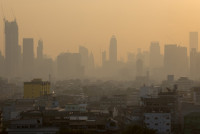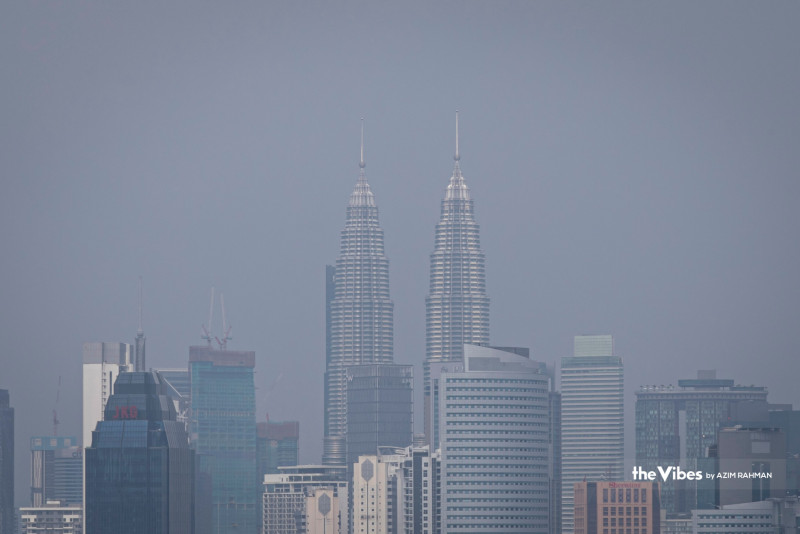
FIRE haze returned to southeast Asia in 2023 after several years of respite due to Covid-19 slowdowns.
But as an El Nino settles in, the clock is ticking as the Association of Southeast Asian Nations (Asean) works to develop a new action plan after an independent review found that the vision of the original roadmap, of a “Haze-Free Asean by 2020”, has not been fully achieved.
Haze severely disrupts regional economies by reducing productivity and tourism while increasing emergency medical spending. The 2015 haze was estimated to have cost USD$16 billion in Indonesia alone, while a less severe episode in 2019 cost an estimated USD$5 billion.
The biomass particles making up the haze are extremely dangerous to human health. As small as 2.5 microns, the particles can easily enter the lungs and bloodstream.
This can cause short- and long-term respiratory, dermatological and ophthalmological problems, especially in young children and adults.
The 2015 haze episode caused 40,000 to 100,000 additional deaths in Indonesia, Malaysia and Singapore, according to studies.
And recent research suggests people regularly exposed to significant levels of air pollution can be more susceptible to diseases such as Covid-19.
With Southeast Asians having already spent decades intermittently breathing in smoke haze, the return of this form of air pollution is of great concern.
Most haze-producing fires occur in disturbed peat swamps in Kalimantan (the Indonesian part of Borneo), on the Indonesian island of Sumatra and to a lesser extent in Malaysia.
Peat swamps are naturally waterlogged, but when they are drained for agriculture the carbon-rich soil dries out quickly and becomes extremely fire-prone.
Fires occur intentionally (to prepare the land for planting) and accidentally (from lightning or cigarette butts).
Peat fires can burn for long periods underground, and they release especially potent smoke that can travel across vast distances and national boundaries. They are also close to impossible to suppress without heavy rainfall.
In especially bad episodes, haze can reach almost all Southeast Asian nations. The haze is transboundary not only in its effects but also in its causes.
Alongside local commercial palm-oil and pulpwood plantations operating on peat, foreign plantations have been linked to fires.
Patrons and clients
Malaysian interests own 18 percent to 30 percent of Indonesian palm-oil plantations, and Singaporean firms also feature prominently.
Even though large-scale intentional burning to clear land has decreased over the years thanks to increased scrutiny, commercial drainage and water-management operations often disrupt peat hydrology in and around plantations. This can increase the risk of large-scale fires in surrounding communities.
Laws and regulations prohibit large-scale plantations in sensitive, fire-prone peatlands, but they are rarely enforced.
Patron–client networks are commonplace in the business culture of Indonesia and other Southeast Asian nations. In these symbiotic relationships the person with the higher socioeconomic position (patron) exercises their influence and resources to provide for the person of lower status (client) in exchange for support, assistance and services.
In the case of plantations, government ‘patrons’ often shield their business ‘clients’ from scrutiny and punishment. This results in a culture of impunity: only a handful of companies have been prosecuted for causing fires.
National pride comes into play too, and patronage can function even across borders: the home governments of foreign plantations have defended their companies against accusations of causing haze.
Complaints and requests from affected countries to Indonesia to control its fires often dissolve into finger-pointing as each country blames the other’s plantations for causing the fires.
Underwhelming solutions offered
Haze has also sparked diplomatic rows. Indonesia has infamously labelled complaining neighbours as being ungrateful for the fresh air that Indonesia provides them outside the haze season, and Indonesia has openly chided Singapore for putting into place an extraterritorial law that would hold liable any entity that causes haze in Singapore.
The complex transboundary nature of the problem means haze cannot be addressed by any individual country. Even the solutions offered by Asean have been underwhelming.
It is notable that one of the only legally binding agreements under Asean is the 2002 Agreement on Transboundary Haze Pollution, but its operationalisation has been hampered by delayed ratification by Indonesia, lack of clarity over the functions of the Asean Specialised Meteorological Centre and uncoordinated assistance efforts.
Still, hope for clean air in Southeast Asia remains. The Roundtable for Sustainable Palm Oil, the world’s most recognisable multi-stakeholder certification scheme for palm-oil production, includes principles and criteria related to peatlands and fires. And work continues on the new Haze-Free Roadmap.
Civil-society movements such as the Clean Air Network in Thailand, PM Haze in Singapore and CERAH in Malaysia have worked to keep haze on the public (and, therefore, government) agenda even outside the haze season.
As El Nino continues to bring drier weather to the region into the next year, action at local, national and international levels could stop the progress of recent years from going up in smoke. – 360info, January 13, 2024
Dr Helena Varkkey is an associate professor of Environmental Politics in the Department of International and Strategic Studies at Universiti Malaya in Kuala Lumpur, Malaysia. Her monograph 'The Haze Problem in Southeast Asia: Palm Oil and Patronage' was published by Routledge in 2016. Her research interests are transboundary haze cooperation, global palm oil politics, and climate governance.
Published under Creative Commons and in partnership with 360info.org