By Ramli Amir
WITH over 90% of Sabah’s cargo handled by sea, the state has all the makings of a thriving logistics hub.
But despite its strategic location in the heart of ASEAN, Sabah’s maritime trade potential remains largely untapped, hindered by fragmented logistics data and a lack of centralised coordination.
Experts believe the key to unlocking Sabah’s trade competitiveness lies in a centralised logistics data centre — a unified platform that could address critical inefficiencies, streamline customs procedures, and boost the state’s role in regional trade.
Such a move would bring Sabah in line with other developing nations, such as Vietnam and Rwanda, that have leveraged similar data-driven initiatives to transform their economies.
Without it, Sabah risks falling behind in a rapidly evolving global market.
Sabah’s Fragmented Logistics System
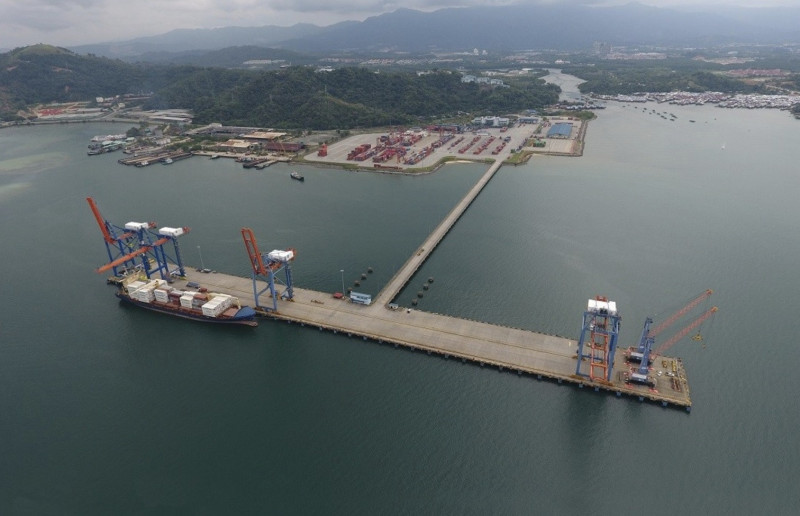
Sabah’s reliance on maritime trade is well established. Ports like Sapangar Bay and Tawau handle the bulk of cargo shipments, yet the sector remains disjointed, with logistics companies, government agencies, and customs authorities operating in silos.
The absence of a coordinated data-sharing platform results in delays, inefficiencies, and higher costs — obstacles that deter foreign investments and undermine Sabah’s trade ambitions.
“A centralised data centre would change the game,” said an industry observer.
“It would allow real-time data exchange across key stakeholders, improving operational efficiency and making Sabah more competitive.”
Such a platform would reduce bottlenecks at ports, track cargo movements in real time, and simplify customs clearance.
The benefits would ripple across Sabah’s economy, creating jobs and attracting investments in shipping, warehousing, and logistics services.
Global Lessons: Vietnam and Rwanda
Two countries offer compelling examples of how logistics data centres can fuel economic growth:
Vietnam established a logistics data hub as part of its National Logistics Master Plan, helping reduce logistics costs and attract foreign investments.
Today, it stands as one of Southeast Asia’s leading exporters, thanks in part to its efficient supply chains.
Rwanda, despite its challenging history, launched Kigali Innovation City, which included a centralised data centre.
The initiative modernised its logistics sector and positioned Rwanda as a regional leader in innovation and trade.
Sabah could emulate these successes. Its strategic location, proximity to major ASEAN markets, and abundance of natural resources give it a competitive edge.
But without coordinated data management, Sabah remains on the sidelines of regional trade.
A Blueprint for Sabah
The idea of a centralised logistics data centre is already gaining traction.
The Sabah Logistics Council (SLC), established to address coordination issues, has taken initial steps. However, without a comprehensive data platform, these efforts remain limited in scope.
Experts suggest collaborating with Universiti Malaysia Sabah (UMS) to develop a state-of-the-art Tier IV data centre that would incorporate green energy solutions and cutting-edge technologies like IoT and AI.
For instance, IoT sensors could track cargo movements, while AI algorithms could forecast demand and identify bottlenecks in the supply chain.
This would reduce delays, improve efficiency, and lower costs for businesses.
What’s at Stake?
If Sabah continues to rely on fragmented logistics systems, it risks missing out on ASEAN’s booming trade opportunities.
A centralised data centre would position Sabah as a gateway for regional trade, attracting investments, boosting employment, and improving the quality of life for its residents.
Without such a platform, Sabah will remain a logistical bottleneck rather than a trade leader.
Sabah stands at a crossroads. The choice to invest in a logistics data centre could define its economic future for decades to come — transforming it into an economic powerhouse or leaving it stuck on the periphery of global trade.
The decision now rests with state leaders to take bold action. Will they seize the opportunity?
Ramli Amir is the former President of the Chartered Institute of Logistics and Transport (CILT) Malaysia and Vice-President of CILT International for Southeast Asia,