


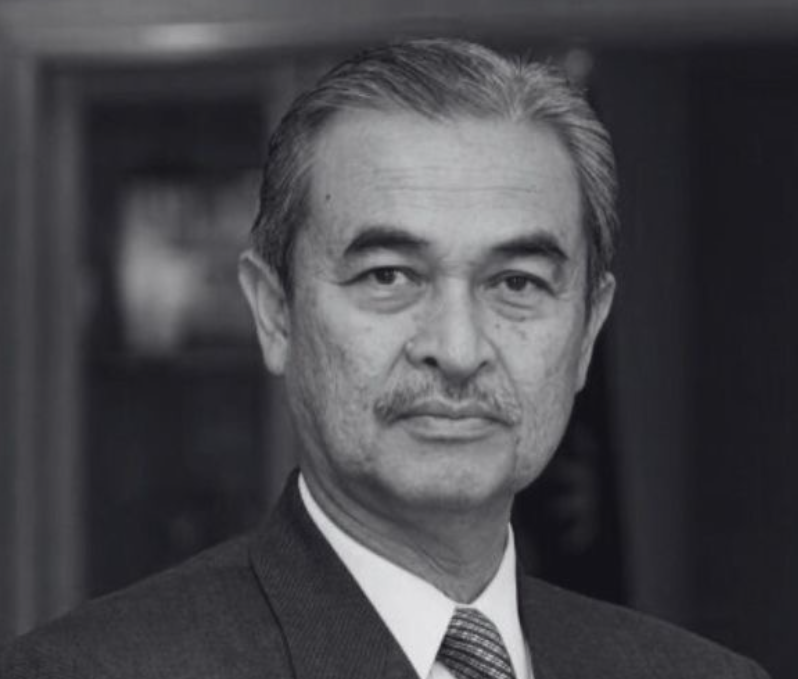
TUN ABDULLAH Ahmad Badawi, who passed away on Monday at the age of 85, is being remembered not only as Malaysia’s fifth Prime Minister but as a forward-thinking leader whose economic vision continues to shape the nation’s development landscape.
Economists have highlighted Abdullah’s commitment to a more inclusive and regionally balanced model of growth as one of his most enduring legacies.
Chief among his contributions was the establishment of five regional economic corridors—Iskandar Malaysia, the Northern Corridor Economic Region (NCER), the East Coast Economic Region (ECER), the Sabah Development Corridor (SDC), and the Sarawak Corridor of Renewable Energy (SCORE).
Sunway University economist Professor Yeah Kim Leng described these initiatives as the cornerstone of Abdullah’s balanced development strategy.
“The multiple economic corridors are designed to leverage each region’s resource endowments, competitive advantages, and growth opportunities,” Bernama quoted him saying.
He explained that by encouraging investment and industrial development across a broader geographic area, the corridors contributed to state-level GDP growth while simultaneously creating employment for local populations.
“This, in turn, reduces migration to the more developed states,” he told Bernama.
Corridors such as NCER and Iskandar Malaysia, he noted, managed to attract high-growth and high-value industries.
The result: better wages, improved income levels, and an enhanced quality of life. “They have also spurred the development of modern housing, commercial centres, infrastructure, and public facilities, along with improved access to quality education and healthcare services,” he added.
While Professor Yeah acknowledged that the economic performance of the five corridors has been mixed and that some may not have fully achieved their development goals within the anticipated timeframe, he stressed that their absence would likely have led to a widening of Malaysia’s regional disparities.
“There is no doubt that, without such regional development policies and plans, Malaysia’s regional disparities would have worsened.”
Meanwhile, Bank Muamalat Malaysia Bhd Chief Economist Dr Mohd Afzanizam Abdul Rashid also paid tribute to Abdullah’s contribution, calling it a pivotal foundation for the country’s ongoing journey toward high-income status.
“Abdullah made significant contributions to Malaysia’s economic development. Initiatives such as the transformation of government-linked companies, the development of the halal economy, and the creation of regional economic corridors helped propel the national economy and served as a template for future development,” he said.
“To this day, these regional corridors remain relevant in various economic development programmes.”
Abdullah, 85, passed away at the National Heart Institute (IJN) here at 7.10 pm on Monday. – April 15, 2025








