


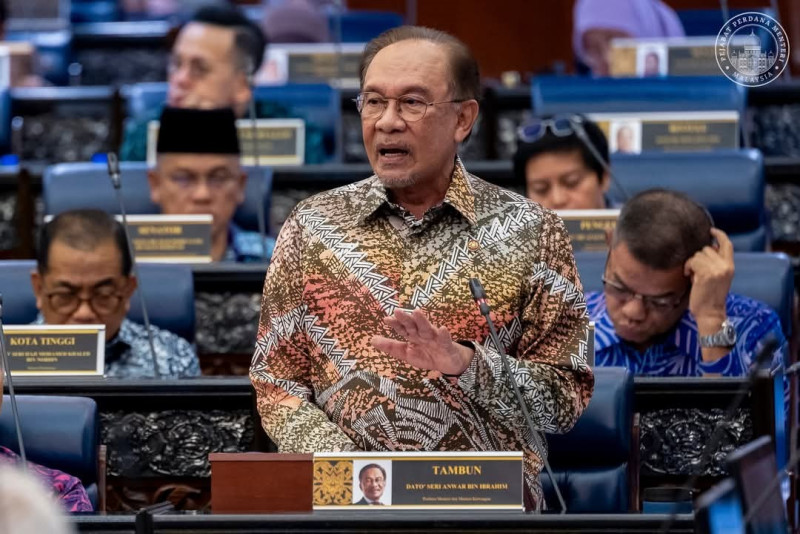
PRIME MINISTER Datuk Seri Anwar Ibrahim has launched the 13th Malaysia Plan (RMK13), outlining a national transformation strategy anchored in economic recovery, technological innovation, and social equity. With an investment target of RM611 billion, the plan is regarded as one of the most consequential policy announcements in recent years.
Set against the backdrop of global economic turbulence and geopolitical instability, RMK13 articulates three central pillars: the formation of a sovereign and dignified nation-state, the development of a Madani-inspired people-first social system, and a shift towards an economy powered by artificial intelligence.
“It is not merely a plan on paper, but one grounded in present-day realities and the urgent needs of the people,” Anwar said, presenting the plan in Parliament on Thursday.
A cornerstone of RMK13 is the government’s renewed commitment to protecting vulnerable groups through continued direct cash assistance, including the Sumbangan Tunai Rahmah (STR) scheme, aimed at cushioning the B40 income group from financial hardship during recovery.
In addressing housing needs, Anwar pledged the construction of one million affordable homes between 2026 and 2035 — a long-anticipated move to support younger and middle-income Malaysians priced out of the housing market.
Healthcare also features prominently in the plan, with RM40 billion allocated for system improvements across the public health network.
This includes upgrades and new builds such as Hospital Tuanku Ja’afar 2 in Negeri Sembilan, Hospital Sultanah Aminah 2 in Johor, the Northern Cancer Centre in Kedah, the Sabah Heart Centre at Queen Elizabeth II Hospital, and the Sarawak Cancer Centre.
The prime minister emphasised that RMK13’s success depends on collective commitment from all sectors of Malaysian society.
“This plan must belong to everyone — individuals, communities, the private sector and government — all must move forward in unison to uplift the dignity and wellbeing of the rakyat,” he said.
Deputy Prime Minister Datuk Seri Dr Ahmad Zahid Hamidi echoed this sentiment, calling the plan a timely and strategic response to economic volatility and supply chain disruptions.
“Its success means more empowered employment sectors, higher household incomes, and more balanced growth between urban and rural areas,” he said.
Anwar urged the public to embrace change with an open mind and a sense of shared responsibility, stating that national progress requires more than policy.
“RMK13 is not the sole responsibility of the government. It is a collective mandate, to be embraced by the private sector, civil society and the rakyat at large,” he said.
For millions of Malaysians, the plan offers renewed hope — not only for economic stability, but also for a more equitable and forward-looking future. - August 1, 2025








