


IN today’s complex global landscape, emotions often overshadow reason, making measured decisions easy targets for misinterpretation.
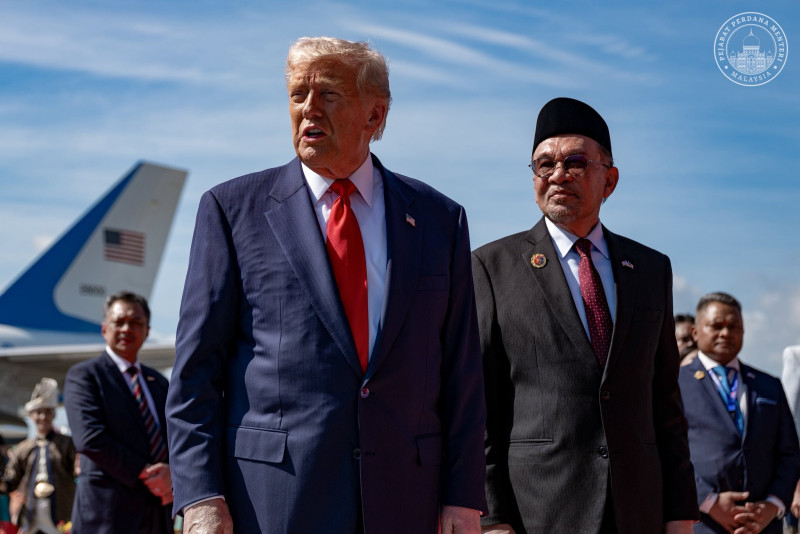
This dynamic has emerged sharply following Malaysia’s signing of the Reciprocal Trade Agreement (ART) with the United States.
“More easily than explaining the truth, it is easier to sell hatred,” observes Datuk Ismail Yusop, Director-General of the Community Communications Department (J-KOM), reflecting on the public discourse surrounding the deal.
Critics swiftly accused the government of compromising national sovereignty, yet the term “reciprocal” signifies mutual benefit, not subjugation. “It is not an absolute agreement that binds our hands, but a flexible framework that allows negotiation, withdrawal if necessary, and action where advantageous,” he explained.
The Ministry of Investment, Trade and Industry (MITI) clarified that no article in the ART obliges Malaysia to submit to U.S. restrictions or amend domestic laws. All decisions relating to security or economic policy must undergo joint consultation.
The agreement guarantees stable access to the U.S., Malaysia’s largest export market, valued at RM198 billion last year. Duty exemptions on 1,711 key export items, including palm oil, rubber, aviation components, and pharmaceuticals, reflect principled diplomacy rather than capitulation. “Rejecting negotiations in the name of ‘pride’ is not courage, but ego disguised as wisdom,” Ismail noted.
Having just completed its tenure as ASEAN Chair, Malaysia is demonstrating principled diplomacy in a world shaped by great power tensions, technological competition, and geopolitical uncertainty. The ART showcases the nation’s ability to pursue economic partnerships without compromising sovereignty, particularly in critical sectors such as rare earth minerals, halal certification, data protection, and government-linked corporations.
“ART is not a symbol of submission but proof that Malaysia can negotiate with confidence. It shows that the country is unafraid to sit at the table of global powers because we know who we are and what we defend,” Ismail emphasised.
He concluded that Malaysia continues to choose rationality over populism: “In a world that rejects reason, Malaysia still chooses to think. Diplomacy is not betrayal; it is the art of protecting national interest in an interconnected world.” - November 7, 2025








