By Datuk Dr Hamdan Leman
THE people of Negeri Sembilan hold a justifiable, deep-rooted pride in Adat Perpatih.
For centuries, this unique customary framework has defined the state’s identity, offering an extraordinary tradition of consensus, matrilineal democracy, and structural checks and balances.
However, for a society to function cohesively in a modern federation, it is vital to clarify a fundamental legal principle: traditional customs do not operate in isolation, nor do they supersede the supreme constitutional law of the state and the federal framework of Malaysia.
While customary sentiments run deep, public discourse must remain anchored to a universal truth: the ultimate goal of any governance framework—whether customary or statutory—is the preservation of objective justice.
A World in Flux: The Imperative for Institutional Stability
We live in an era of profound global uncertainty. On the international stage, we frequently witness the fragility of institutional order, the limitations of international legal bodies to maintain global harmony, and the shifting narratives that blur the lines between right and wrong.
In a world undergoing such rapid geopolitical and social transitions, local institutions have a heightened responsibility to project absolute stability, clarity, and adherence to established rules.
Complex internal disputes regarding state customary traditions should not be handled in a manner that creates administrative ambiguity or public anxiety. Instead, they require a calm, measured alignment with established legal processes.
The Code of Harmony Within Adat Perpatih
Adat Perpatih was never intended to be an instrument of administrative friction or abrupt governance shifts.
Historically, its very essence relies on muafakat (consensus), meticulous deliberation, and equity. When customary actions are perceived to bypass codified legal systems, it risks overshadowing the noble values the ancestors sought to protect.
Any attempt to alter or challenge the standing of a state’s highest leadership must strictly mirror the fairness, transparency, and balance that Adat itself champions.
To act without these safeguards risks transforming a revered tradition into a tool of procedural instability.
The Constitutional Safeguards of a Sovereign Ruler
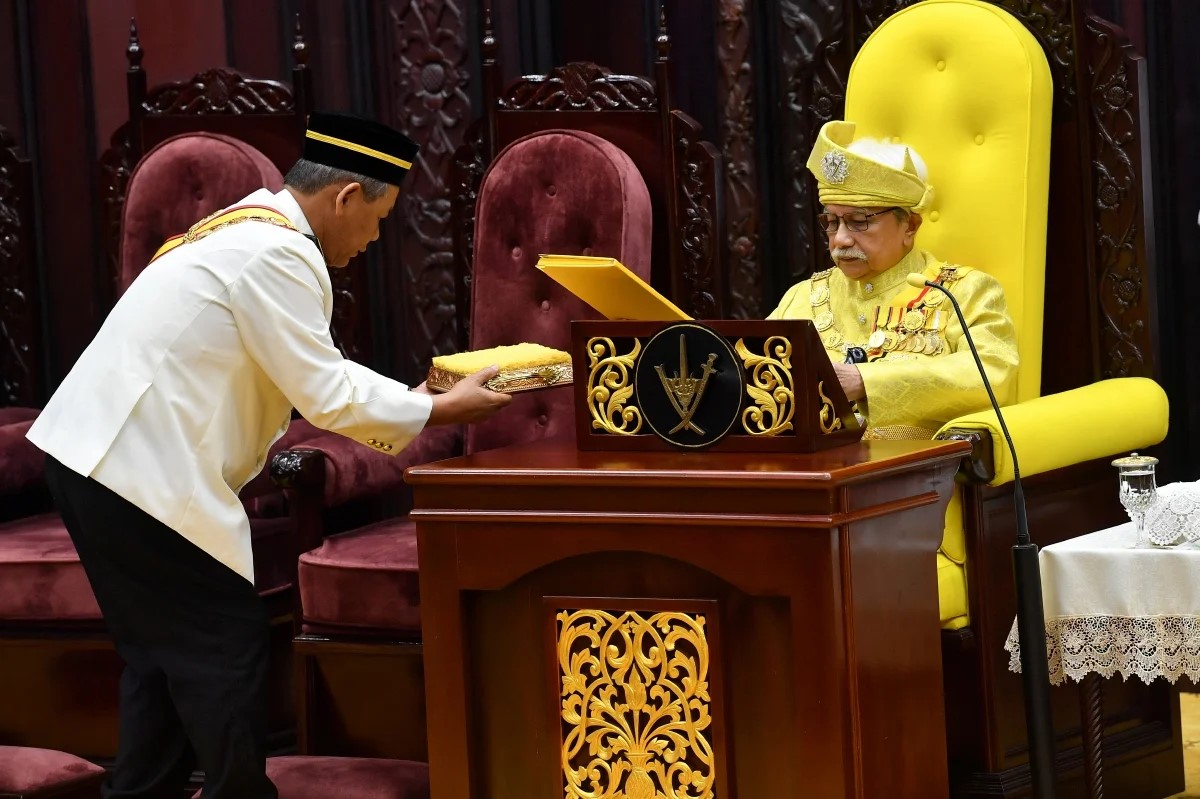
Under the modern legal framework of Malaysia, the position of the Yang di-Pertuan Besar is heavily protected by a dual layer of customary legitimacy and written statutory law.
When faced with unprecedented procedural challenges, the legal recourse and structural protections available to the Ruler are clear:
First, the primacy of the written constitution dictates that in a constitutional monarchy, customary actions must be harmonised with the written law.
The Negeri Sembilan State Constitution establishes a clear, rigorous threshold for any leadership evaluation. It implicitly demands the application of natural justice—meaning a fair, transparent, and comprehensive enquiry where all sides are heard—alongside the formal concurrence of the state’s executive government.
Unilateral or non-statutory declarations completely lack constitutional efficacy.
Second, the principle of executive concurrence ensures that the state’s administrative apparatus and law enforcement agencies function under the authority of the constitution.
Without the statutory endorsement of the Menteri Besar and the recognition of the Federal Government, alternative customary declarations cannot translate into executive or legal reality.
Third, the strength of administrative continuity reinforces public confidence. By maintaining a dignified, calm, and consistent adherence to royal and constitutional duties, the reigning institution anchors the state.
Stability is maintained not through public friction, but through an unwavering commitment to the continuity of the state's governance.
Conclusion: Aligning Custom with the Rule of Law
Just as the global community requires clear frameworks to ensure fairness and prevent chaos, local governance demands a strict adherence to constitutional boundaries.
Customary laws like Adat Perpatih are a source of great cultural strength, but their survival and respect depend entirely on their alignment with the universal principles of natural justice and the written constitution.
The institutional integrity of Negeri Sembilan remains firmly protected when all parties prioritise procedural law over emotional sentiment, ensuring that justice remains the true cornerstone of the state. - June 7, 2026
Datuk Dr Hamdan Leman, an accomplished cardiothoracic surgeon, specialising in the field of congenital cardiac surgery, is a reader of The Vibes and a societal observer