Murray Hunter
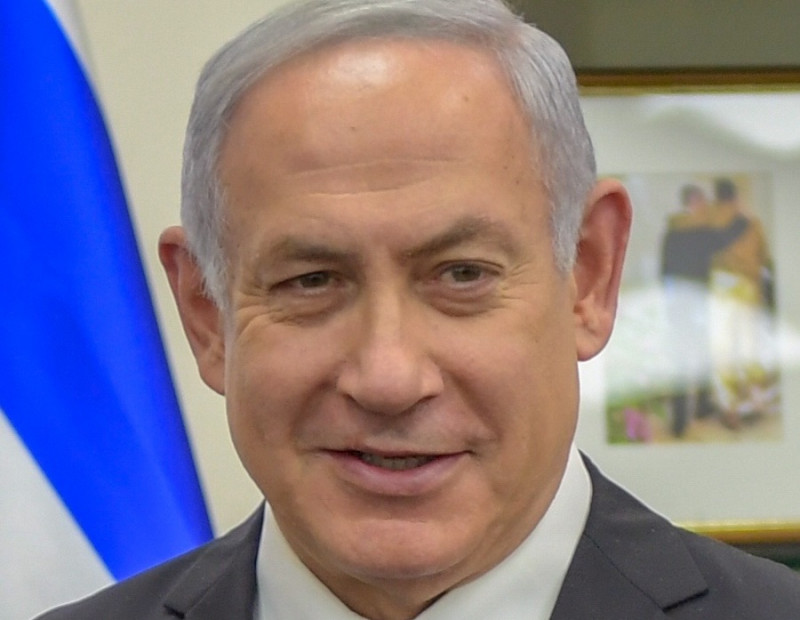
BENJAMIN Netanyahu is positioned to remain Israel’s caretaker prime minister after the inconclusive October 2026 election.
His right-wing bloc sits at roughly 53 seats in the 120-seat Knesset, ahead of Gadi Eisenkot’s opposition at about 48, with Arab parties holding a strong 19.
No clear majority exists without major compromises.
This outcome keeps Netanyahu in control of security and foreign policy levers while coalition talks drag on, potentially for weeks or months.
Netanyahu’s playbook prioritises survival. He can prolong caretaker status, explore a broader unity government by dangling shared security priorities, especially further action against Iran, coordinated with the United States under President Trump.
Domestically, he is challenging the legitimacy of the Arab vote to block any alternative reliance on those parties, and, if necessary, force another election in early 2027 while remaining in office.
Several assessments point to the possibility of escalating or highlighting the Iran threat during this period.
A major security development could rally public support around continuity of leadership and justify delaying political change.
That path carries profound risks for Israel. Recent reports describe heightened U.S. and Israeli military preparations for possible renewed strikes on Iran after the American midterms on November 3.
Early signs, including diplomatic warnings to Gulf states, repositioning of U.S. personnel, replenished munitions, additional Patriot systems, naval build-ups including another carrier strike group, increased joint exercises, and updated Israeli target lists are coming into place to signify further action.
Netanyahu has publicly stressed the need to further degrade Iranian capabilities and has framed regime change or decisive pressure as essential.
He has long advocated aggressive options to Trump, sharing intelligence and pushing maximalist goals, though final decisions rest with Washington, which has delayed action for its own political and economic reasons.
Iran has responded with “zero red lines” rhetoric.
Officials promise a longer, wider, less constrained retaliation with large-scale missile and drone salvos against Israeli targets, multi-front pressure via remaining proxies, and strikes on Gulf energy infrastructure, undersea cables, desalination plants, and other critical assets.
In contrast, Israel’s multi-layered defences, including the Iron Dome, David’s Sling, and Arrow, are now reinforced by U.S. Patriot and THAAD contributions.
However, this time around, there are many questions pundits have about its potential effectiveness against an all-out Iranian onslaught. Saturation attacks can produce leaks.
Israel’s compact size and population density mean even partial successes would cause casualties, infrastructure damage, economic strain, and psychological pressure.
Multi-front activity would stretch resources further.
A truly maximal Iranian response would not destroy Israel overnight, especially with American support, but it would sharply raise costs in lives, stability, and regional spillover.
Netanyahu stands to benefit politically from the resulting chaos.
This reinforces his case for experienced, continuity-focused leadership and can freeze political transitions under the banner of national emergency.
Israeli voters who enabled his continued hold on power may therefore have locked Israel into a more confrontational trajectory.
An alternative government led by figures such as Eisenkot might have pursued different calibrations with greater emphasis on diplomacy alongside deterrence, different timing, or less maximalist endgames, potentially reducing the risk of a broader conflagration while defences still held firm.
Outcomes remain uncertain. Diplomacy continues in parallel, Trump controls the ultimate U.S. timeline, and military moves can serve deterrence as much as preparation for war.
Yet the hypothesis stands: by keeping Netanyahu in position amid active Iran planning, Israeli voters may have chosen a path that heightens the very existential dangers their defences are meant to contain.
If Iron Dome and allied systems are tested to their limits and falter under sustained pressure, the political survival of one leader could exact a heavy price on the country itself. – November 1, 2026