RECENTLY, the Environment and Water Minister said Malaysia is “not categorised as a country vulnerable to climate change”, by way of explaining our exclusion from the United States Leaders’ Summit on Climate 2021.
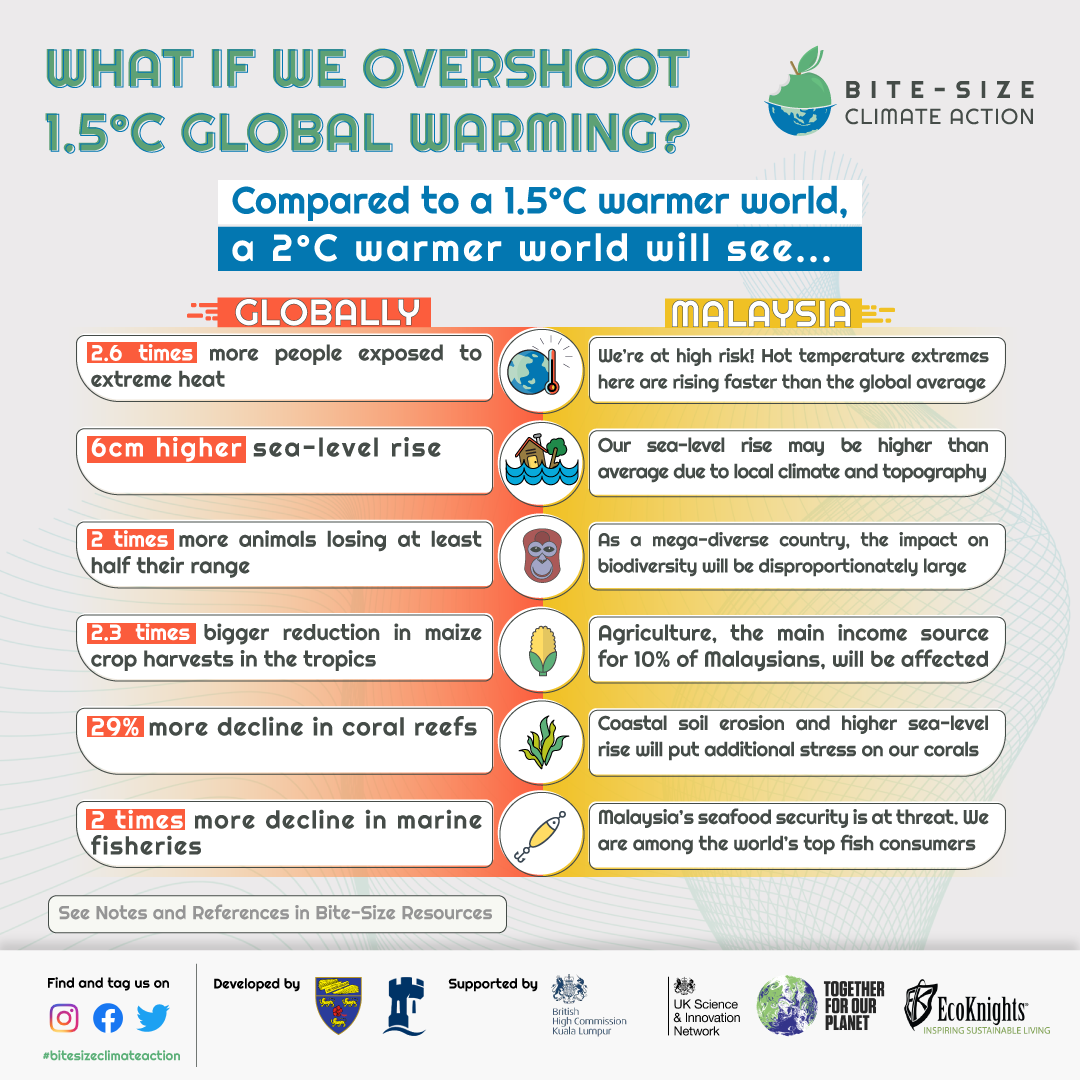
This is simply untrue. If the world overshoots the 1.5°C target set at Paris, adverse effects to Malaysia will include further worsening heat stress, sea-level rise, biodiversity loss and food insecurity.
A new report from the Swiss RE Institute places Malaysia at 47 out of 48 countries (second from last) surveyed in its climate economic impact ranking. It forecasts that Malaysia may lose 4% to 36% of its gross domestic product (GDP) by 2050 if global temperature increases between 2°C and 2.6°C – the current likely range of global temperature gains.
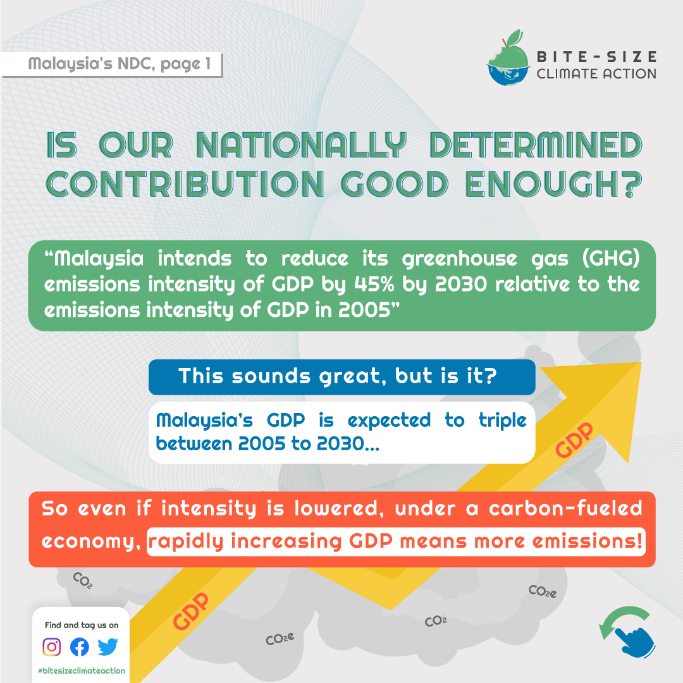
Malaysia often appears positive and active in its climate efforts. Our nationally determined contribution (NDC) intends to reduce greenhouse gas emissions intensity of GDP by 45% by 2030 relative to the emissions intensity of GDP in 2005.
As such, the Malaysian Climate Change Action Council, chaired by the prime minister, was recently established; Bank Negara Malaysia released its guidance document on climate resilience for the finance sector; and, Petronas, which contributes about 20% to the government’s income, has announced its aspiration towards Net Zero Carbon Emissions by 2050.
This sounds great – but is it?
It is often unclear what these high-level pronouncements mean.
Take Malaysia’s NDC, for example. NDC is a term used under the United Nations Framework Convention on Climate Change (UNFCCC), whereby a country that has joined the Paris Agreement outlines its intended climate-related plans, including reducing its emissions.
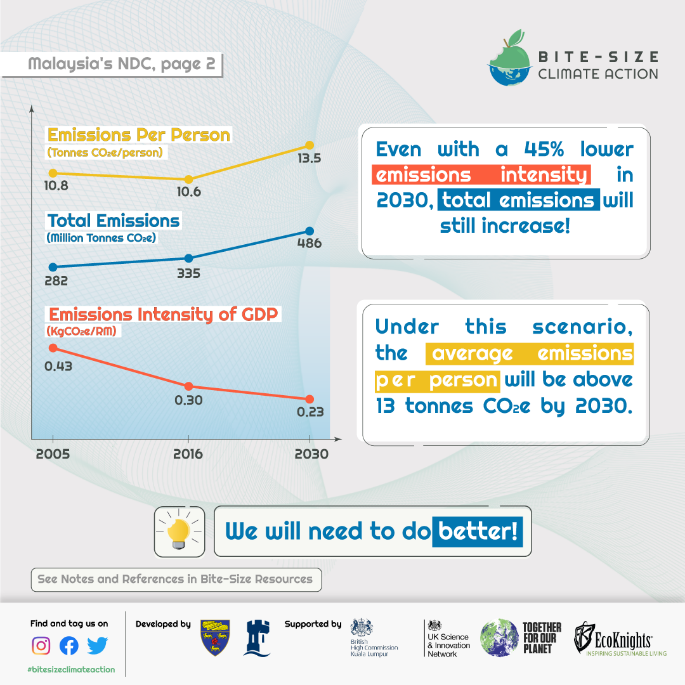
Talk of “reducing” GDP intensity can obscure the fact that actual emissions – overall and per person – are expected to be higher at the NDC end-point in 2030. Under our NDC commitments, the average emissions per Malaysian in 2030 will be four times higher than what is needed on a global scale to meet Paris climate targets.
As well as reducing emissions, there is worldwide interest in the role of forests in removing carbon from the atmosphere.
For example, government data reported to UNFCCC suggests carbon sequestered by Malaysia’s forests currently offsets around three-quarters of our emissions. However, there is concern that assuming equivalence between forest and fossil carbon can detract from efforts to reduce emissions.
There is large data uncertainty over land-based carbon. A striking example relates to Malaysia’s extensive peat forests, which naturally absorb carbon from the atmosphere. A recent study indicates huge greenhouse gas emissions from peat forests that have been disturbed for plantation agriculture.
Now let us consider “net zero”. The International Energy Agency reports that a global goal of “net zero” by 2050 implies no new fossil fuel exploration. However, a closer look at Petronas’ “net zero” pledge reveals that it covers only emissions from its operations.
The use of Petronas’ fossil fuel products likely constitutes more than 80% of emissions linked to the company. In contrast, a recent groundbreaking court verdict in Europe will require Shell to limit emissions from operations and the use of its products.
It is clear that the richest nations, with most responsibility for the climate change problem, should cut emissions furthest and fastest, yet government rhetoric often downplays our own responsibility.
For example, a minister in the Prime Minister’s Department recently pointed out that Malaysia contributed less than 1% of global greenhouse gas emissions. True, but we do make up only 0.4% of the global population.
Malaysia is quickly approaching developed nation status. However, most of our climate commitments continue to come from a position emphasising Malaysia’s status as a still-developing nation. Such rhetoric should not hold us back from prioritising climate action opportunities now.
Mainstreaming climate education and action
Presenting such complex national and corporate pronouncements without emphasising crucial details can make it harder for the public, and even science leaders, to judge the direction of progress, decipher broader implications and decide if we should demand more.
A recent United Nations Children’s Fund survey among youth in Malaysia revealed that even though a great majority think that climate change is a crisis, there is some confusion on basic scientific climate concepts. Malaysian youth need more information and knowledge on what they can do to tackle climate change.
Given the urgency of the crisis, there is a need for non-conventional climate change education and information beyond the classroom for all Malaysians.
Bite-Size Climate Action is a series of free-for-all, fun, flexible and immersive online modules developed by University of Malaya and University of Nottingham Malaysia.
Covering five critical emission sectors for Malaysia – electricity, transport, forests, food and trash – the modules explain the science behind climate change in a Malaysian context and how our day-to-day actions can make a difference through short videos, podcasts, TikTok clips, quizzes and more.
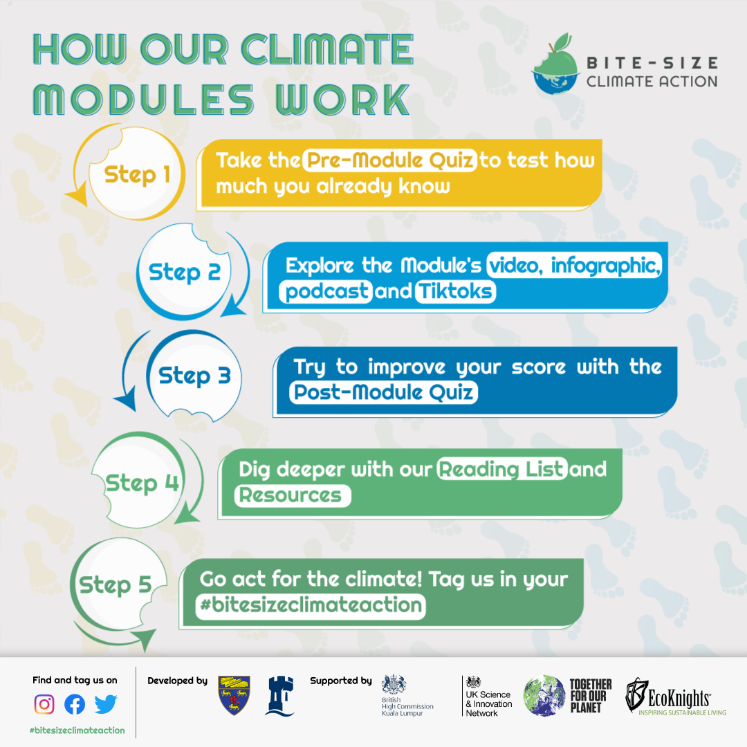
An additional module on change empowers us to engage with others to act for the climate, be it within our immediate social circle or the broader civic space.
As Malaysia is preparing to communicate or update its post-2020 climate actions to the UNFCCC, more clarity and transparency will enable the people to act as collaborators in climate action alongside the private sector, government decision makers and other key stakeholders.
A citizen that is informed and empowered will support climate accountability and action from the government and businesses, while taking personal steps towards realising a vision of a healthier, happier and cleaner Malaysia – and a cooler planet. – The Vibes, June 21, 2021
Matthew Ashfold is associate professor at the Environmental and Geographical Sciences School, University of Nottingham Malaysia, and team member of Bite-Size Climate Action, and Helena Varkkey is a senior lecturer at the International and Strategic Studies Department, University of Malaya, and team member of Bite-Size Climate Action