THIS year’s Earth Day theme of Invest in Our Planet is a timely reminder of humanity’s impact and influence on the climate crisis.
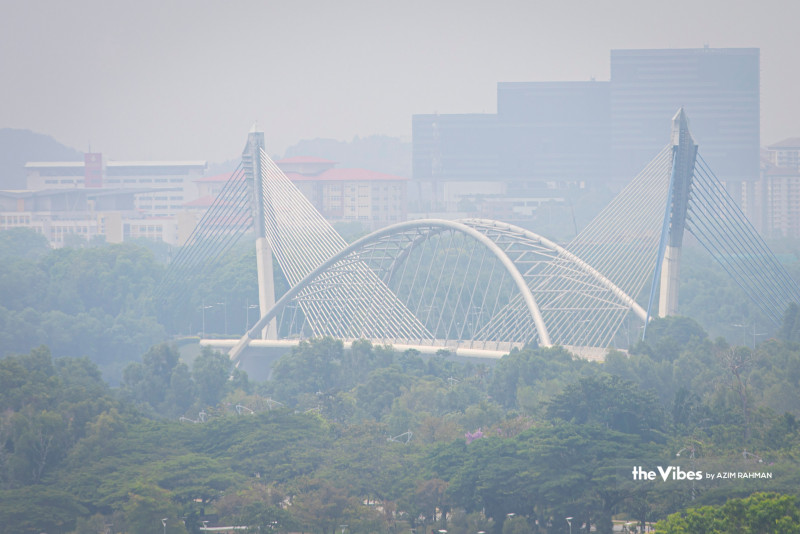
With haze making a comeback and dominating news headlines, we need to develop greater awareness on how our actions shape the future.
As our economy reopened and industrial activities resumed in full, it was only a matter of time before the haze returned.
However, this matter deserves full attention because experts and authorities predict that it will be worse than the situation in the past three years.
More worryingly, we are being warned to brace for a prolonged dry spell starting in July, caused by the El Nino phenomenon.
A form of air pollution, haze is caused by the build-up of tiny particles in the air, such as smoke and dust.
These particles are often produced by human activities, such as burning fossil fuels, industrial processes, and forest fires, which contribute to climate change.
Both haze and climate change are interlinked and have serious implications for human health, the economy, and the environment.
It is important that we take urgent action to reduce greenhouse gas emissions and promote sustainable practices.
While addressing haze is a complex issue, it is reassuring to know that the Natural Resources, Environment, and Climate Change Ministry (NRECC) is making preparations to counter this.
Minister Nik Nazmi Nik Ahmad reportedly said that attention will be focused on tackling illegal open burning by the private sector, in order to prevent peat soil fires.
Undoubtedly, taking measures to address open burning and peat soil fires is a good first step, given that these activities are among the key factors that contribute to the occurrence of haze, along with hot spots, industrial activities and vehicular pollution.
Failure to contain this problem will have dire consequences on Malaysians, ranging from health issues such as acute respiratory infection and bronchitis, to loss of the country’s biodiversity and our food productivity.
In the context of sustainable practices, it is imperative to address haze by reducing emissions from agricultural and other activities that are responsible for its formation.
This includes a two-pronged approach: enabling greater sustainability in agriculture practices, and strengthening land-use policies by putting better accountability and transparency mechanisms in place.
Additionally, there should be efforts to help local communities move away from clearing agricultural lands through the slash-and-burn method. This technique could lead to unsanctioned fires and worsen the haze situation.
Before the pandemic, this happened almost every year, resulting in a blanket of transboundary haze over Malaysia, Indonesia and Singapore.
We urge the Malaysian government to continue to uphold and implement the decisions made at the 23rd meeting of the Asean sub-regional ministerial steering committee on transboundary haze pollution last year.
This can be done by stepping up enforcement against illegal open burning, holding corporations accountable for violating laws protecting forests and peatlands, and making the process more accessible for people to report such incidents.
The return of the haze is a wake-up call for us to take better care of our planet, and embrace sustainable practices to protect the environment as well as our own health and wellbeing.
Whilst the pandemic and lockdowns may have slowed down economic activities, the underlying problems have not disappeared.
Everyone, from the government, businesses, local communities and individuals, has a role to play in mitigating these environmental problems. Investing in our planet and wellbeing can start with something as simple as reporting illegal open burning to NRECC at 03-8889 1972. – The Vibes, April 28, 2023
WWF-Malaysia is part of WWF, the international conservation organisation. Working to sustain the natural world for the benefit of people and wildlife, WWF-Malaysia’s efforts to conserve nature focus on six major goals: forests, oceans, wildlife, food, climate and energy, and freshwater; and three key drivers of environmental problems: markets, finance and governance