


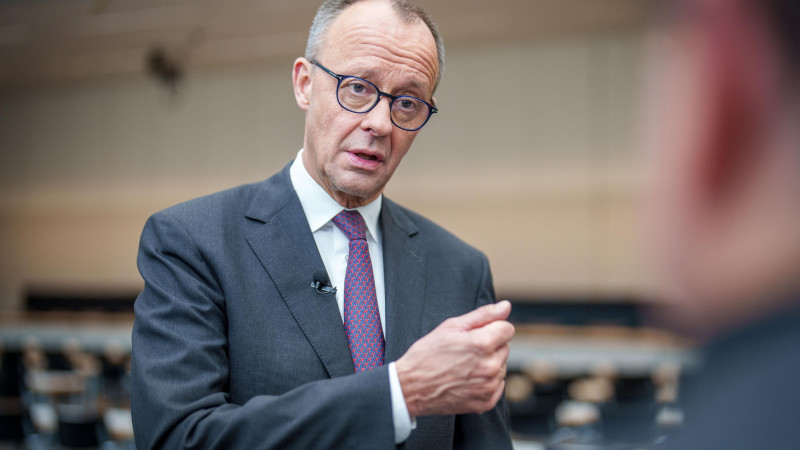
GERMANY'S likely next chancellor Friedrich Merz will start trying to form a coalition government on Monday after his conservative bloc won a national election that saw far-right and far-left parties hoover up support from disaffected voters.
Reuters reported, Merz, who has no previous experience in office, is set to take charge with Europe's largest economy ailing, its society split over migration and its security caught between a confrontational U.S. and an assertive Russia and China.
The 69-year-old faces lengthy coalition negotiations after the far-right Alternative for Germany (AfD) surged to a historic second place in a fractured vote following the collapse of Chancellor Olaf Scholz's unloved three-way alliance.
In an early indication of his policy intentions, Merz also took aim at the U.S. after his win, criticising the "ultimately outrageous" comments flowing from Washington during the campaign, comparing them to hostile interventions from Russia.
"For me, the absolute priority will be to strengthen Europe as quickly as possible so that we can achieve real independence from the USA step by step," Merz said on Sunday.
His conservative CDU/CSU bloc came in first place on 28.6%, ahead of the far-right Alternative for Germany on 20.8%, its best ever result, according to provisional results.
Mainstream parties, however, rule out working with the AfD, a party which is monitored by German security services on suspicion of extremism but has been endorsed by U.S. figures including billionaire Elon Musk.
That means Merz will have to negotiate with Scholz's centre-left Social Democrats (SPD) to form a coalition in talks that are likely to take months following a bruising campaign that highlighted policy differences.
Merz will, however, not have to rely on support from the Greens for an outright parliamentary majority, after the new BSW party founded by Sahra Wagenknecht, a former leader of the Left party, just missed the 5% threshold required to enter the lower house.
Earlier, German Chancellor Olaf Scholz lamented a "bitter" defeat after his centre-left Social Democrats slumped to a heavy loss in Sunday's national elections.
"The election result is poor and I bear responsibility," Scholz told SPD party members, while congratulating conservative opposition leader Friedrich Merz, whose party came out on top. – February 24, 2025









