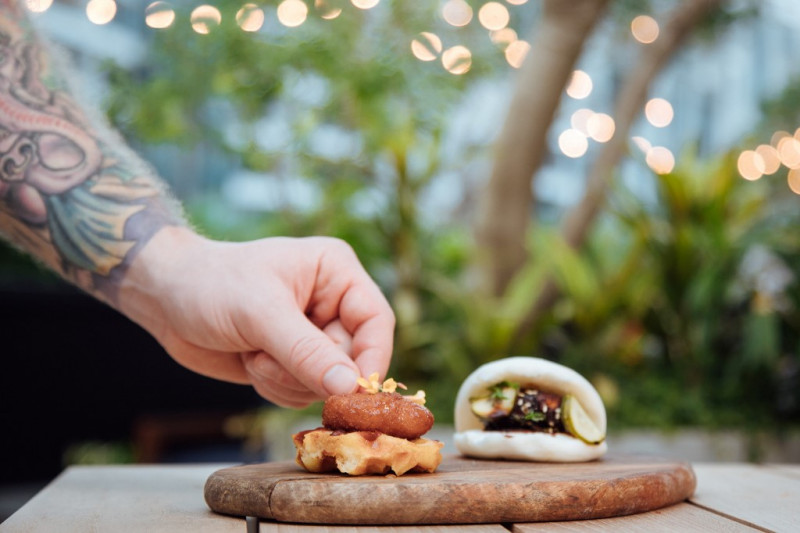
SINGAPORE – Lab-grown chicken meat made a historic debut at a Singapore restaurant today in a culinary first that its creators said could help reduce the environmental damage involved in human food production.
United States start-up Eat Just said earlier this month that its product had been approved for sale in the city-state as an ingredient in chicken nuggets after Singapore became the first country to allow the sale of meat created without slaughtering any animals.
Consumption of animals is an environmental threat as cattle produce the potent greenhouse gas methane, while logging to create pastures destroys natural barriers against climate change.
The company on Wednesday said it had made its first commercial sale of the product to 1880, a restaurant in Singapore’s Robertson Quay, a posh riverside entertainment centre.
The restaurant began serving the cultured meat this evening, saying its first diners were students aged between 14 and 18 years of age who had been invited to the launch after showing “a commitment to building a better planet”.
The launch, however, was closed to the media because of measures against the coronavirus.
Entrepreneur Marc Nicholson, who founded 1880, described serving cultured meat as a “revolutionary step towards solving climate change and creating the opportunity to feed the world without overwhelming the planet”.
Eat Just chief executive Josh Tetrick said this week that the launch “moves us closer to a world where the majority of meat we eat will not require tearing down a single forest, displacing a single animal’s habitat or using a single drop of antibiotics”.
Demand for sustainable meat alternatives is rising due to growing concerns from consumers about the environment and animal welfare, but other products on the market are plant-based.
Meat consumption is projected to increase more than 70% by 2050, and lab-grown alternatives have a role to play in ensuring a secure food supply, the company said.
There were concerns that lab-grown varieties would be too expensive, but a spokesman for Eat Just said the company had made “considerable progress” in lowering the cost. – AFP, December 19, 2020