


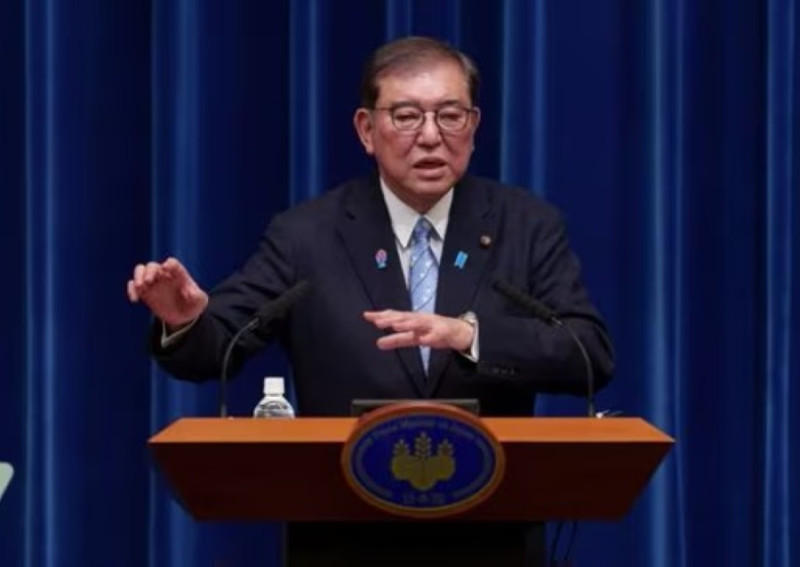
JAPAN will emphasise "fairness" in any discussions with the U.S. on exchange rates, Prime Minister Shigeru Ishiba said on Sunday, as bilateral trade talks grab global attention in President Donald Trump's tariff offensive.
Reuters reported Ishiba, in a talk show on public broadcaster NHK, indicated Tokyo could buy more U.S. energy and suggested flexibility on U.S. accusations of non-tariff barriers to the Japanese automobile market.
Trump - who unexpectedly joined the first round of U.S.-Japan talks on Wednesday and touted "big progress" - has indicated he wants the negotiations to include his accusations that Tokyo intentionally weakens its currency to give its exporters an unfair advantage.
Ishiba said specific discussions on currency policy will be made between Finance Minister Katsunobu Kato and Treasury Secretary Scott Bessent.
"We'll have to deal with this issue from the standpoint of fairness," Ishiba said, when asked how Japan would respond if the U.S. asked for cooperation in boosting the yen. He did not elaborate.
Japan, which denies manipulating the yen, has over the years typically fought to keep a strong yen from hurting its export-reliant economy, but it last intervened in the foreign-exchange market last year to boost its currency.
Kato plans to visit Washington this week for a meeting of the Group of 20 finance chiefs on the sidelines of the spring meeting of the International Monetary Fund. He is widely expected to meet Bessent for bilateral trade talks.
Could lift US energy imports
Some analysts say Japan could use its huge U.S. Treasury holdings - the largest in the world at over $1 trillion - as trade leverage, but Kato this month ruled out using them as a bargaining tool.
"This is something that's based on trust between the two sides, global economic stability, as well the two countries' economic stability," Ishiba said when asked whether Japan would refer to its U.S. debt holdings during the talks.
Trump has hit Japan with 24% tariffs on its exports to the U.S. although, like most of Trump's levies, they have been paused until early July. A 10% universal rate remains in place, as does a 25% duty on cars, a mainstay of Japan's export-reliant economy.
Nikkei Asia reported on Sunday that Japan is considering relaxing auto safety rules for imports as part of its tariff negotiations with the U.S. Washington has long complained that Japanese safety rules are a non-tariff barrier, while Japan and many experts say Detroit automakers do not make cars suited to Japan's roads and drivers.
Asked about such accusations, Ishiba said there were differences in U.S. and Japanese traffic and safety rules that must be taken into account. "But we also need to ensure we're not told our (safety) rules are unfair." - April 20, 2025










