


FOR years, Israel has targeted Iranian nuclear scientists, hoping to choke progress on Iran’s nuclear program by striking at the brains behind it.
The Associated Press reported that now, with Iran and Israel in an open-ended direct conflict, scientists in Israel have found themselves in the crosshairs after an Iranian missile struck a premier research institute known for its work in life sciences and physics, among other fields.
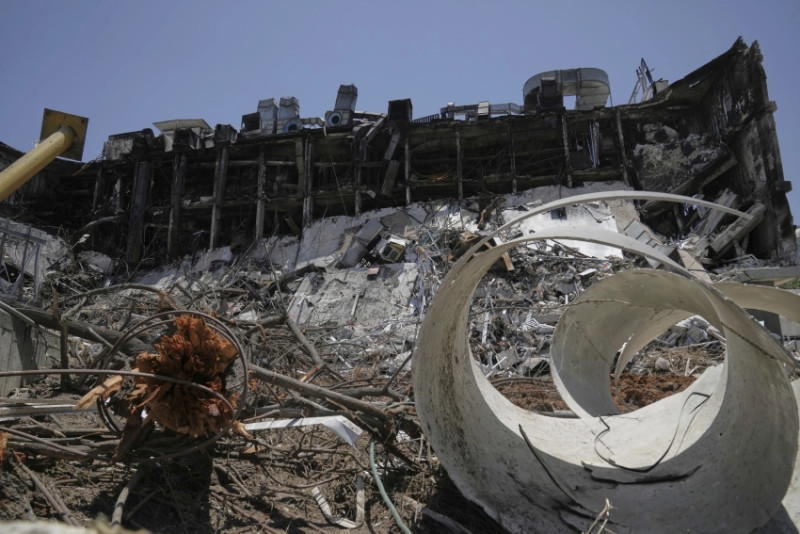
While no one was killed in the strike on the Weizmann Institute of Science early Sunday, it caused heavy damage to multiple labs on campus, snuffing out years of scientific research and sending a chilling message to Israeli scientists that they and their expertise are now targets in the escalating conflict with Iran.
“It’s a moral victory” for Iran, said Oren Schuldiner, a professor in the department of molecular cell biology and the department of molecular neuroscience whose lab was obliterated in the strike. “They managed to harm the crown jewel of science in Israel.”
Iranian scientists were a prime target in a long shadow war
During years of a shadow war between Israel and Iran that preceded the current conflict, Israel repeatedly targeted Iranian nuclear scientists with the aim of setting back Iran’s nuclear program.
Israel continued that tactic with its initial blow against Iran days ago, killing multiple nuclear scientists, along with top generals, as well as striking nuclear facilities and ballistic missile infrastructure.
For its part, Iran has been accused of targeting at least one Weizmann scientist before. Last year, Israeli authorities said they busted an Iranian spy ring that devised a plot to follow and assassinate an Israeli nuclear scientist who worked and lived at the institute.
Citing an indictment, Israeli media said the suspects, Palestinians from east Jerusalem, gathered information about the scientist and photographed the exterior of the Weizmann Institute but were arrested before they could proceed.
With Iran’s intelligence penetration into Israel far less successful than Israel’s, those plots have not been seen through, making this week’s strike on Weizmann that much more jarring.
“The Weizmann Institute has been in Iran’s sights,” said Yoel Guzansky, an Iran expert and senior researcher at the Institute for National Security Studies, a Tel Aviv think tank. He stressed that he did not know for certain whether Iran intended to strike the institute but believed it did.
While it is a multidisciplinary research institute, Weizmann, like other Israeli universities, has ties to Israel’s defense establishment, including collaborations with industry leaders like Elbit Systems, which is why it may have been targeted.
But Guzansky said the institute primarily symbolizes “Israeli scientific progress” and the strike against it shows Iran’s thinking: “You harm our scientists, so we are also harming (your) scientific cadre.”
Damage to the institute and labs ‘literally decimated’
Weizmann, founded in 1934 and later renamed after Israel’s first president, ranks among the world’s top research institutes. Its scientists and researchers publish hundreds of studies each year. One Nobel laureate in chemistry and three Turing Award laureates have been associated with the institute, which built the first computer in Israel in 1954.
Two buildings were hit in the strike, including one housing life sciences labs and a second that was empty and under construction but meant for chemistry study, according to the institute. Dozens of other buildings were damaged.
The campus has been closed since the strike, although media were allowed to visit Thursday. Large piles of rock, twisted metal and other debris were strewn on campus. There were shattered windows, collapsed ceiling panels and charred walls.
“Several buildings were hit quite hard, meaning that some labs were literally decimated, really leaving nothing,” said Sarel Fleishman, a professor of biochemics who said he has visited the site since the strike.
Life’s work of many researchers is gone
Many of those labs focus on the life sciences, whose projects are especially sensitive to physical damage, Fleishman said. The labs were studying areas like tissue generation, developmental biology or cancer, with much of their work now halted or severely set back by the damage.
“This was the life’s work of many people,” he said, noting that years’ or even decades’ worth of research was destroyed.
For Schuldiner, the damage means the lab he has worked at for 16 years “is entirely gone. No trace. There is nothing to save.”
In that once gleaming lab, he kept thousands of genetically modified flies used for research into the development of the human nervous system, which helped provide insights into autism and schizophrenia, he said.
The lab housed equipment like sophisticated microscopes. Researchers from Israel and abroad joined hands in the study effort.
“All of our studies have stopped,” he said, estimating it would take years to rebuild and get the science work back on track. “It’s very significant damage to the science that we can create and to the contribution we can make to the world.” - June 20, 2025










