


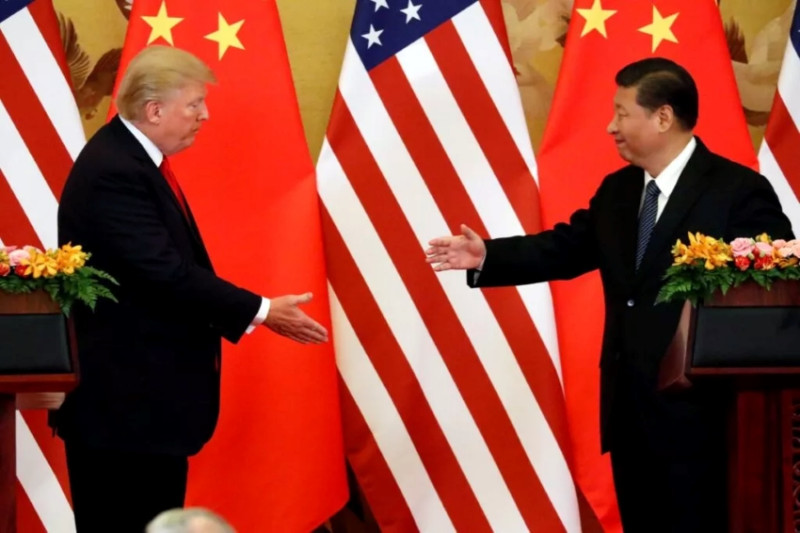
THE United States has reached an agreement with China on how to expedite rare earth shipments to the U.S., a White House official said on Thursday, amid efforts to end a trade war between the world's biggest economies.
Reuters cited US President Donald Trump earlier saying the United States had signed a deal with China on Wednesday, without providing additional details, and that there might be a separate deal coming up that would "open up" India.
During U.S.-China trade talks in May in Geneva, Beijing committed to removing non-tariff countermeasures imposed against the United States since April 2, although it was unclear how some of those measures would be walked back.
As part of its retaliation against new U.S. tariffs, China suspended exports of a wide range of critical minerals and magnets, upending the supply chains central to automakers, aerospace manufacturers, semiconductor companies and military contractors around the world.
"The administration and China agreed to an additional understanding for a framework to implement the Geneva agreement," a White House official said on Thursday.
The understanding is "about how we can implement expediting rare earths shipments to the U.S. again", the official said.
A separate administration official said the U.S.-China agreement took place earlier this week.
U.S. Commerce Secretary Howard Lutnick was quoted as saying by Bloomberg: "They’re going to deliver rare earths to us" and once they do that "we'll take down our countermeasures."
China's embassy in Washington did not immediately respond to a request for comment.
While the agreement shows potential progress following months of trade uncertainty and disruption since Trump took office in January, it also underscores the long road ahead to a final, definitive trade deal between the two economic rivals.
China has been taking its dual-use restrictions on rare earths "very seriously" and has been vetting buyers to ensure that materials are not diverted to U.S. military uses, according to an industry source. This has slowed down the licensing process.
The Geneva deal had faltered over China's curbs on critical minerals exports, prompting the Trump administration to respond with export controls of its own preventing shipments of semiconductor design software, aircraft and other goods to China.
In early June, Reuters reported China had granted temporary export licenses to rare-earth suppliers of the top three U.S. automakers, according to two sources familiar with the matter, as supply chain disruptions began to surface from export curbs on those materials.
Later in the month, Trump said there was a deal with China in which Beijing would supply magnets and rare earth minerals while the U.S. would allow Chinese students in its colleges and universities. - June 27, 2025










