


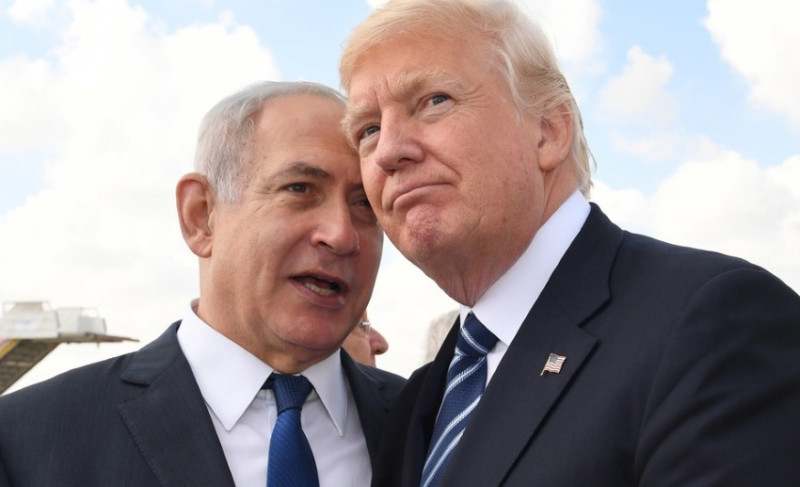
ISRAELI Prime Minister Benjamin Netanyahu may have secured a major political victory with a ceasefire proposal announced alongside former US President Donald Trump, placing renewed pressure on Hamas to accept terms that significantly undermine its authority in Gaza.
Reuters reported on Wednesday that the 20-point plan, unveiled at the White House marks a major shift in the diplomatic landscape surrounding the two-year war in Gaza.
Heavily weighted in Israel’s favour, the proposal calls for Hamas to disarm, release all hostages — both alive and deceased — and relinquish power to an unelected technocratic government under international supervision.
“Instead of Hamas isolating us, we turned the tables and isolated Hamas,” Netanyahu declared in a video message prior to leaving Washington.
While Hamas has said it is still reviewing the plan, international pressure is mounting. Trump has rallied support from Arab and Muslim countries traditionally sympathetic to the Palestinian cause, including Turkey, Egypt and Qatar — all of which maintain communication channels with Hamas.
Hamas, which triggered the war with its 7 October 2023 assault on Israeli territory, has seen its political and military power eroded over the prolonged conflict.
With Gaza in ruins and its allies — such as Iran and Hezbollah — weakened by regional conflicts and Israeli airstrikes, the militant group may find it increasingly difficult to reject the proposal.
Under the terms of the plan, Israel would maintain an indefinite military presence along Gaza’s border, while an international peacekeeping force drawn largely from Arab and Muslim nations would handle internal security. The US would lead a large-scale reconstruction effort in the Strip, backed by international funding.
Notably, the plan sidesteps any immediate discussion of a sovereign Palestinian state — long a nonstarter for Netanyahu.
While it references a “credible pathway” to a two-state solution, the wording is vague and devoid of timelines, leaving Israel free to delay or disregard the issue entirely. In his video statement, Netanyahu insisted, “It’s a danger to Israel and of course we won’t agree to it.”
Despite the plan’s one-sided nature, it offers Hamas some face-saving gains. These include the release of hundreds of Palestinian prisoners, including 250 serving life sentences — a politically painful concession for Israel, but a symbolic victory for Palestinians who view these detainees as heroes.
Additionally, Israel agreed to abandon earlier plans to forcibly displace Gaza’s population. The new proposal guarantees Palestinians the right to remain and return if they voluntarily leave. It also commits Israel to not annex or resettle Gaza — a move strongly favoured by Netanyahu’s far-right coalition partners.
Nevertheless, the plan leaves many key issues unresolved. According to Arab officials speaking anonymously to the Associated Press, language concerning the eventual withdrawal of Israeli troops and the timeline for governance reforms by the Palestinian Authority was watered down to suit Israel’s preferences.
Several countries have reportedly raised these concerns with Washington.
“What was presented yesterday are principles in the plan that require detailed discussion and how to work through them,” said Qatari Prime Minister Sheikh Mohammed bin Abdulrahman Al Thani in an interview with Al Jazeera.
Despite this, the official joint statement from Arab and Muslim countries broadly welcomed the proposal, signalling a shift in regional dynamics. Signatories included Jordan, Saudi Arabia, the UAE, Indonesia and Pakistan — many of whom previously resisted overt cooperation with Israel.
Hamas may try to use these reservations to negotiate amendments to the plan, but its negotiating power is limited. With its leadership increasingly isolated, its infrastructure decimated and its people desperate for relief, analysts suggest the group may have no realistic option but to comply. - October 1, 2025










