


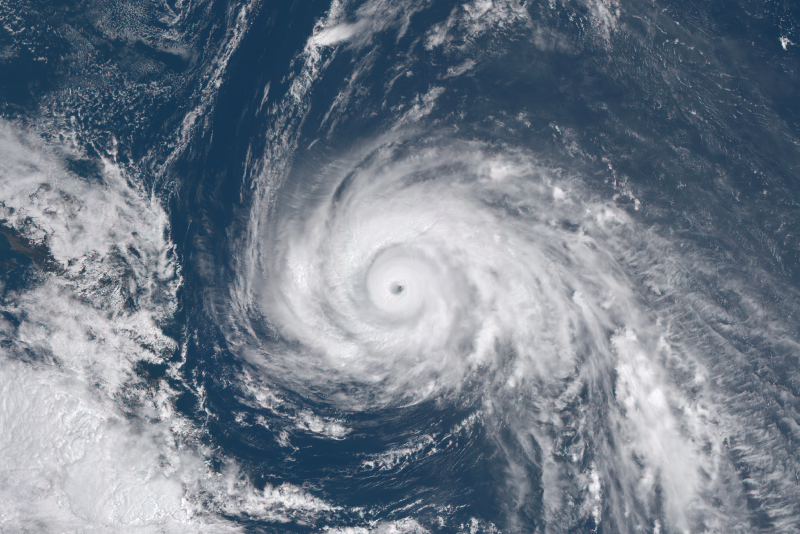
TYPHOON Fung-wong tore through northern Philippines overnight, killing at least two people and isolating towns as residents emerged on Monday to assess the damage.
Over one million people were evacuated ahead of the storm, which made landfall as a super typhoon in Dinalungan, Aurora province on Sunday night, battering Luzon with fierce winds, heavy rain, and storm surges.
Houses were damaged and trees and power lines felled in Santiago, Isabela province.
"We could not sleep last night because of the winds hitting our metal sheets and the tree branches falling," Reuters cited Romeo Mariano who is sheltering with his grandmother, saying.
"Almost all of the tree branches nearby fell, and when we got out to check our home, we saw the damage."
At least two people were killed and two others injured, according to early reports from the Civil Defence office. Aurora Vice-Governor Patrick Alexis Angara said at least three towns remained inaccessible due to landslides and damaged roads.
"Assessment and clearing operations are underway," he told broadcaster DZMM.
The state weather agency reported that Fung-wong was moving over the South China Sea, heading northeast towards Taiwan, while much of the country still faced severe winds, heavy rainfall, and storm surges along coastal areas.
Over 400 flights have been cancelled since Sunday, the civil aviation regulator said. Fung-wong was the 21st storm to strike the Philippines this year, following Typhoon Kalmaegi, which killed 224 in the country and five in Vietnam last week.
Scientists warn that such extreme weather events are likely to become more frequent due to climate change.
"The sea surface temperatures in both the western North Pacific and over the South China Sea are both exceptionally warm," said Ben Clarke, an extreme weather researcher at London's Grantham Institute.
"Kalmaegi will be more powerful and wetter because of these elevated temperatures, and this trend in sea surface temperatures is extremely clearly linked to human-caused global warming."
Researchers note that warmer oceans intensify storms by increasing atmospheric moisture and feeding cyclones with energy.
"Although this does not imply that every typhoon will become stronger, the likelihood of powerful storms exhibiting greater intensity, with heavier precipitation and stronger winds, rises in a warmer climate," said Gianmarco Mengaldo of the National University of Singapore.
Experts also warn of compounding effects from back-to-back storms. "Back-to-back storms can cause more damage than the sum of individual ones," said Feng Xiangbo of the University of Reading.
"This is because soils are already saturated, rivers are full, and infrastructure is weakened. Even a weak storm arriving at this critical time can act as a tipping point for catastrophic damage." -November 10, 2025










