


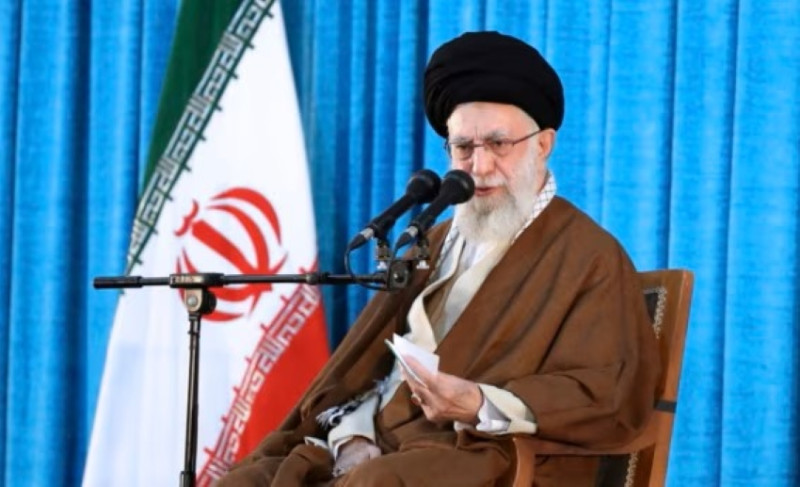
IRANIAN Supreme Leader Ayatollah Ali Khamenei has warned that an American assault on Iran would escalate into a regional conflict, according to state media reports on Sunday, as tensions between Washington and Tehran continue to intensify.
Reuters reported on Sunday that Khamenei sought to downplay the impact of U.S. threats, stating: "(Trump) regularly says that he brought ships (...) The Iranian nation shall not be scared by these things, the Iranian people will not be stirred by these threats."
He stressed that Iran is not seeking confrontation but would respond forcefully to any attack: "We are not the initiators and do not want to attack any country, but the Iranian nation will strike a strong blow against anyone who attacks and harasses them."
Despite the escalation, Iran has indicated that a diplomatic resolution remains possible, asserting that it is ready for negotiations that are “fair” and do not seek to diminish its defensive capabilities.
The U.S. has recently increased its naval presence in the Middle East, deploying six destroyers, an aircraft carrier, and three littoral combat ships, following repeated warnings from President Donald Trump that military intervention could occur if Iran does not comply with a nuclear agreement or halts the killing of protesters.
The comments come in the wake of widespread unrest in Iran that began in late December. Initially sparked by economic grievances, the protests evolved into one of the most significant political challenges to the Islamic Republic since its founding in 1979.
The unrest has now largely subsided after a period of severe repression. Official figures place the death toll at 3,117, while U.S.-based rights group HRANA reports 6,713 verified deaths. Reuters has been unable to independently confirm these numbers.
Khamenei described the protests as akin to a “coup”, claiming the “sedition” aimed to undermine the centres of power governing the country. - February 1, 2026










