


THE last remaining nuclear arms control treaty between Russia and the United States is poised to lapse within hours, leaving the world’s two largest nuclear powers without formal limits for the first time in over half a century.
Reuters, on Wednesday, cited analysts cautioning that the treaty’s expiry could accelerate a fresh arms race, potentially involving China, which has significantly expanded its nuclear arsenal in recent years.
Unless a last-minute agreement is reached, New START’s key provisions will cease, removing restrictions on the number of deployed warheads and delivery systems.
Matt Korda, associate director for the Nuclear Information Project at the Federation of American Scientists, said, “Without the treaty, each side will be free to upload hundreds of additional warheads onto their deployed missiles and heavy bombers, roughly doubling the sizes of their currently deployed arsenals in the most maximalist scenario.”
Korda also emphasised that the lapse of the treaty does not automatically equate to an immediate arms race, citing the substantial financial and logistical costs associated with nuclear weapons production.
U.S. President Donald Trump has offered mixed signals on the future of arms control, stating last month that he would negotiate “a better agreement” if the treaty expired.
Meanwhile, Russian officials report no response from Washington to President Vladimir Putin’s proposal to extend the treaty’s limits.
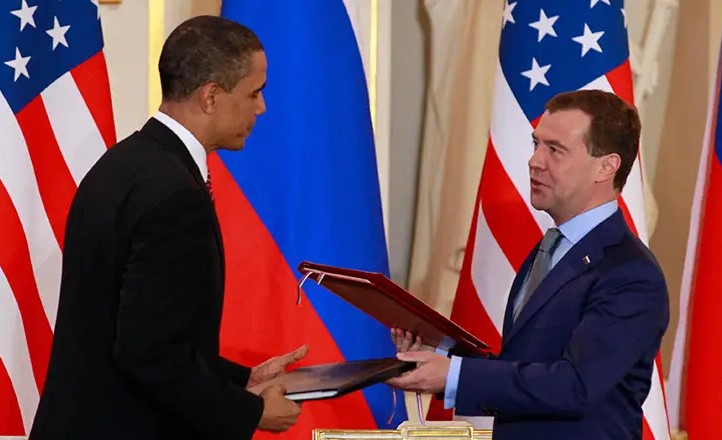
New START, signed in 2010 in Prague, forms part of a decades-long web of arms control agreements designed to reduce the risk of catastrophic nuclear conflict, a threat that peaked during the Cuban Missile Crisis of 1962.
Global nuclear stockpiles have declined from over 70,000 warheads in 1986 to roughly 12,000 in 2025, yet modernisation programmes in the United States and Russia continue, and China’s arsenal has more than doubled over the past decade.
Supporters of arms control stress that the treaty’s expiration undermines confidence, trust, and the ability to verify nuclear intentions, while opponents argue that such agreements hinder innovation, facilitate potential cheating, and constrain the strategic flexibility of major powers.
Reflecting on the existential stakes, President Trump observed in February last year, “If there's ever a time when we need nuclear weapons like the kind of weapons that we're building and that Russia has and that China has to a lesser extent but will have, that's going to be a very sad day. That's going to be probably oblivion.”
As the clock ticks down to New START’s expiry, international observers warn that the absence of limits on the world’s largest nuclear arsenals marks a critical moment for global security and non-proliferation efforts. - February 4, 2026










