


U.S. President Donald Trump has refused to dismiss the possibility of deploying US ground forces into Iran as the Middle East conflict, triggered by joint US-Israeli military strikes, enters its third day and threatens to extend well beyond a month.
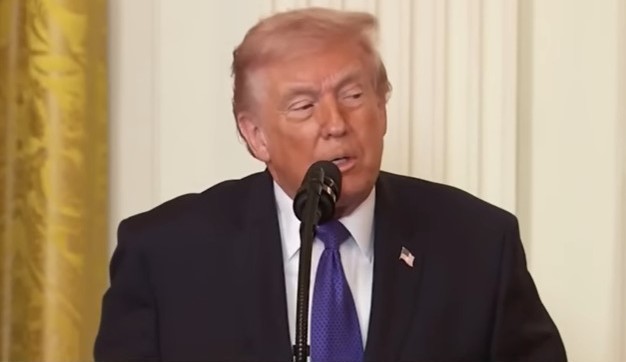
Speaking to the New York Post, Trump acknowledged the possibility of boots on the ground, stating, “I don't have the yips with respect to boots on the ground – like every president says, 'There will be no boots on the ground.' I don't say it. I say 'probably don't need them,' [or] 'if they were necessary.'”
At a subsequent White House briefing, he described the operation as the "last, best chance" to curb Iran’s alleged nuclear ambitions and neutralise “the intolerable threats posed by this sick and sinister regime.”
AFP reported on Tuesday that the conflict has intensified across multiple fronts. Iran’s Revolutionary Guards issued a stark warning to the United States, declaring that “the enemy should know that their happy days are over and they will no longer be safe anywhere in the world, not even in their own homes.”
Meanwhile, Iran alleged that Israel and the US had attacked its nuclear facility at Natanz, though the UN nuclear agency reported no indication of damage to nuclear installations.
Trump outlined four key objectives of the campaign: to destroy Iran’s missile capabilities, annihilate its naval forces, prevent the regime from acquiring nuclear weapons, and stop it from funding or directing terrorist operations abroad.
Israel escalated its air campaign with a “broad strike” in the heart of Tehran, resulting in loud explosions across the Iranian capital.
Iran responded by appointing Revolutionary Guards general Majid Ebnelreza as acting defence minister after the previous minister was killed in the strikes.
Drone attacks also targeted Britain’s RAF Akrotiri base in Cyprus, prompting evacuations, while Greece dispatched frigates and F-16 jets to the island.
Across the Gulf, Iran launched 15 cruise missiles at a US airbase in Kuwait and targeted vessels in the Indian Ocean. QatarEnergy halted liquefied natural gas production after facilities were hit, and a drone strike ignited a fuel tank in Abu Dhabi.
The US embassy in Kuwait urged citizens to “take cover” amid black smoke visible over the city.
Humanitarian concerns are mounting. Mirjana Spoljaric of the International Committee of the Red Cross warned that civilians face “grave danger” and that the conflict risks escalating into a “large-scale armed conflict that will overwhelm any humanitarian response.”
China and Turkey have called for ceasefires and diplomatic engagement, with Beijing offering to play a “constructive role” in ending hostilities.
The conflict has also disrupted international transport.
Dubai Airports announced a limited resumption of flights, Germany is sending planes to evacuate stranded tourists, and thousands fled southern Lebanon following Israeli strikes on Hezbollah positions, with the Lebanese government reporting 52 fatalities and 28,500 displaced.
Iran retaliated with missile and drone strikes targeting US-linked vessels and Israeli sites, including Prime Minister Benjamin Netanyahu’s office.
Earlier, the Iranian Red Crescent reported that 555 citizens have been killed across 131 cities affected by the strikes, including three Revolutionary Guards members and five army personnel.
The conflict has sent global energy and financial markets into turbulence. European gas prices surged more than 50 percent amid disruptions in the Gulf, while Wall Street indices fell over one percent before partially recovering.
The unfolding crisis marks a significant escalation in regional tensions, with world powers and humanitarian organisations urgently calling for restraint, diplomacy, and protection of civilians as the Middle East faces mounting instability. - March 3, 2026










