


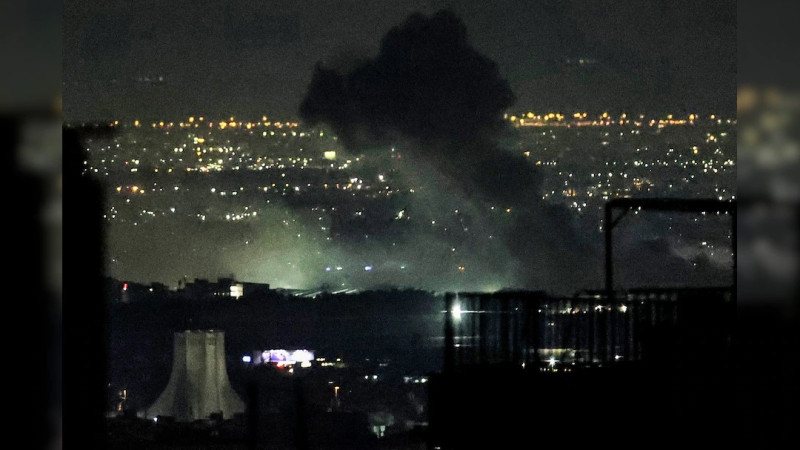
THE intensifying conflict in West Asia has unleashed a humanitarian and environmental crisis, with UN agencies warning of toxic “black rain” in Iran, widespread displacement in Lebanon, and disruptions to key global supply routes, following ten days of warfare, reported Xinhua.
Bernama-Xinhua cited Ravina Shamdasani, a spokesperson for the UN Human Rights Office, highlighted the environmental and health consequences of Israeli and US strikes on Iranian oil depots.
She raised concerns over the proportionality of the attacks, noting that the targeted facilities “do not appear to be of military exclusive usage,” and questioned whether international humanitarian law obligations were fully observed.
Christian Lindmeier, spokesperson for the World Health Organisation, confirmed that Tehran has experienced both “black rain” and acidic precipitation in the wake of the strikes.
“We are in touch with the hospitals and with the authorities, and the Iranian authorities have issued an alert advising people to stay indoors, in light of the attacks on oil warehouses especially,” he said.
Lindmeier also warned that reported strikes on oil infrastructure in Bahrain and Saudi Arabia could cause broader regional pollution exposure.
In Lebanon, the UN Refugee Agency (UNHCR) reported that more than 100,000 people have been displaced in the past 24 hours due to Israeli strikes and evacuation orders, bringing the total number uprooted by the conflict to nearly 700,000.
Karolina Lindholm Billing, UNHCR representative in Lebanon, described the desperate conditions: “We see cars lined along the street with people sleeping in them. Most fled in a rush with almost nothing.
“They’re seeking safety in Beirut, the Mount Lebanon region, in northern Lebanon and parts of the Bekaa.”
Jean-Martin Bauer, director of the UN World Food Programme’s Food and Nutrition Analysis Service, warned that maritime trade routes critical to global commerce are also under pressure.
“Two key points of the global supply chain set-up are affected by restrictions and by risk, and shipping lines are diverting their services,” he said.
Bauer added that the requirement for war risk insurance has increased costs for shipping containers in affected areas by between US$2,000 and US$4,000 per container, further compounding the economic impact of the conflict.
The warnings underscore the cascading effects of the West Asia hostilities, spanning immediate humanitarian needs, environmental hazards, and disruptions to international trade.
As UN agencies coordinate relief and monitor environmental risks, the regional crisis continues to reverberate across global health, security, and supply networks. - March 11, 2026










