


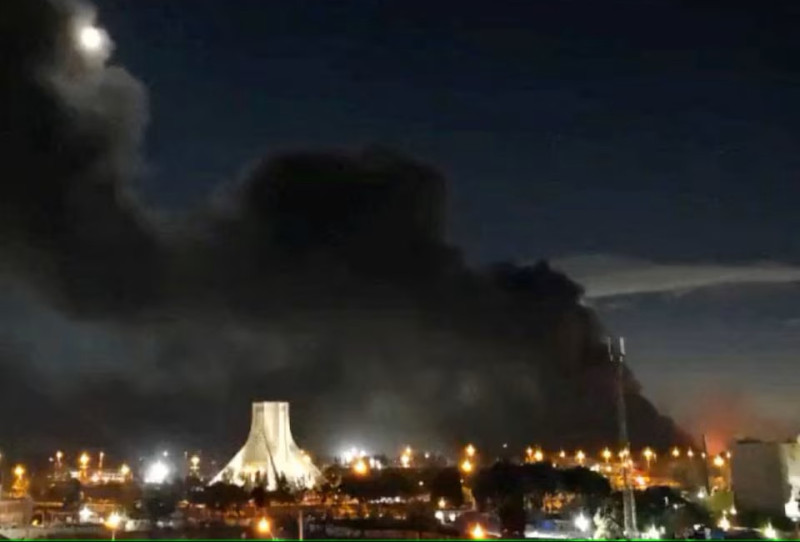
IRAN and Israel engaged in a new wave of hostilities on Tuesday, with Tehran rejecting a U.S. proposal for an immediate ceasefire and refusing to reopen the Strait of Hormuz, a key artery for global oil supplies, on the eve of a deadline set by U.S. President Donald Trump.
The Iranian ambassador to Pakistan, however, indicated cautious optimism over Islamabad’s mediation efforts, describing them as “positive and productive endeavours” now “approaching a critical, sensitive stage.”
Tehran’s refusal follows a plan proposed by Washington and brokered by Pakistan, which called for an immediate ceasefire, lifting the effective blockade of the strait, and broader peace talks within 15 to 20 days.
Iran’s formal response reportedly included ten clauses, covering regional conflict cessation, safe passage through the Strait of Hormuz, lifting of sanctions, and reconstruction efforts, according to the official IRNA news agency.
Reuters cited on Tuesday that Trump issued a stark warning on Monday, saying that the “entire country can be taken out in one night,” threatening to destroy Iranian power plants and infrastructure if Tehran did not comply before the deadline.
He added that without a deal, “every bridge in Iran will be decimated” and “every power plant in Iran will be out of business, burning, exploding, and never to be used again.”
Military operations continued unabated, with the Israeli armed forces reporting a series of airstrikes targeting Iranian government infrastructure across Tehran and other areas.
Israel also urged civilians to avoid trains and railway lines until Tuesday evening, citing safety concerns.
Meanwhile, Saudi Arabia intercepted ballistic missiles heading towards its eastern region, with debris falling near energy facilities, part of a campaign of hundreds of Iranian missile and drone strikes since the war began on February 28.
Bahrain, Saudi Arabia, and the United Arab Emirates issued coordinated public safety alerts, and the bridge linking Saudi Arabia and Bahrain was temporarily closed as a precaution.
Trump has dismissed questions over the legality of his threats to strike Iranian power plants, insisting he is “not at all” concerned about potential war crimes and adding, “I hope I don’t have to do it.”
Iran’s UN envoy labelled the threats “direct incitement to terrorism” and evidence of intent to commit war crimes, while its top military command called the president “delusional.”
Iranian Deputy Sports Minister Alireza Rahimi urged citizens, including artists and athletes, to form human chains around power plants in protest against attacks on public infrastructure.
The blockade of the Strait of Hormuz, through which roughly one-fifth of the world’s oil and gas passes, has driven Brent crude above US$111 a barrel, marking a rise of over 50 per cent since the outbreak of hostilities, while U.S. West Texas Intermediate crude climbed to US$113.31.
Analysts warn that the continued closure poses a severe threat to global energy security and inflation control.
The conflict has already claimed thousands of lives across the Middle East, with at least 3,546 fatalities in Iran and nearly 1,500 in Lebanon, largely among Hezbollah militia members targeted by Israeli forces, according to U.S.-based rights group HRANA.
The war has also heightened political pressures for the United States, particularly following the downing of an F-15E fighter jet and the subsequent high-risk rescue of a stranded U.S. airman deep in Iranian territory.
As the region teeters on the brink, diplomatic negotiations, military threats, and economic consequences continue to converge, leaving global observers closely monitoring developments in what remains one of the most volatile conflicts in recent decades. - April 7, 2026










