


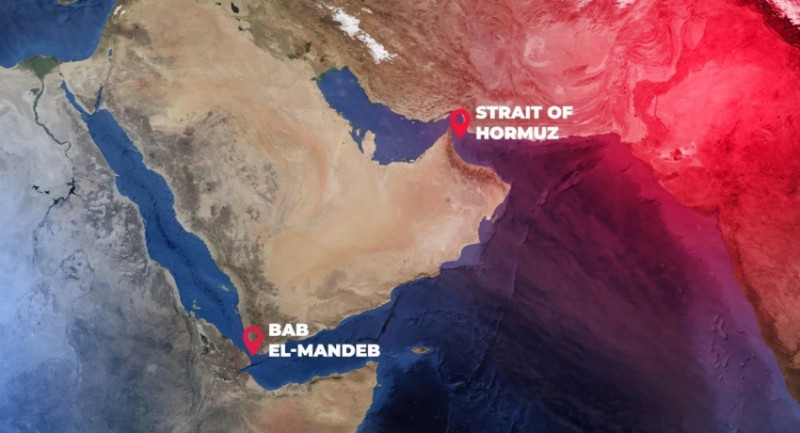
OIL prices recovered slightly on April 9 after suffering their steepest one-day fall since April 2020, as uncertainty surrounding access through the Strait of Hormuz and escalating tensions in the Middle East continued to unsettle markets.
Bloomberg reported on Thursday that West Texas Intermediate (WTI), the US benchmark, rose 2.5 per cent to US$96.75 a barrel as at 7.14am (Malaysia time), following a sharp 14 per cent rise the previous day.
The rebound comes amid conflicting signals over the status of the critical shipping route. Iran’s semi-official Fars news agency reported that oil tanker traffic through the Strait of Hormuz had been halted after Israeli strikes.
However, US Vice President JD Vance disputed that claim, stating that “we are seeing signs that the straits are starting to reopen.”
Vance is expected to lead a US delegation to Islamabad on April 11 for direct talks with Iran, in a diplomatic effort to stabilise the situation.
The near stoppage of traffic through the strait — a vital artery that previously carried about a fifth of the world’s crude oil and liquefied natural gas — has triggered what is being described as the largest disruption in oil markets on record.
The crisis follows initial US and Israeli strikes on Iran at the end of February.
Despite hopes for a resolution, analysts warn that volatility is likely to persist.
“This isn’t over just yet,” said Dennis Kissler, senior vice president for trading at BOK Financial Securities. “We will need to see a full opening of the strait with no obstacles before we see crude prices in the low US$80s for WTI. And I don’t see that in the next two weeks.”
Tensions remain high across the region, with Israeli attacks on Lebanon raising doubts over the durability of a recently agreed two-week ceasefire between the US and Iran.
There is ongoing disagreement over whether the truce extends to Lebanon, with sporadic fighting continuing.
Iranian Parliament Speaker Mohammad-Bagher Ghalibaf said in a statement posted on X that three clauses of the ceasefire proposal have already been violated.
Even if tanker traffic through Hormuz resumes fully, a swift recovery in supply is unlikely.
Production at oil and gas fields has been reduced, while several refineries have curtailed operations or shut down entirely. Restarting these facilities could take weeks or longer.
“We’re still far from over in Iran,” said Carl Larry, an oil and gas analyst at Enverus. “Every day remains an adventure, but US$90 looks like a solid floor until we see fiction become fact.” - April 9, 2026










