


OVER the last month, the international community has been repeatedly warned about the strategic importance of the Strait of Hormuz in sustaining global trade and economic stability.
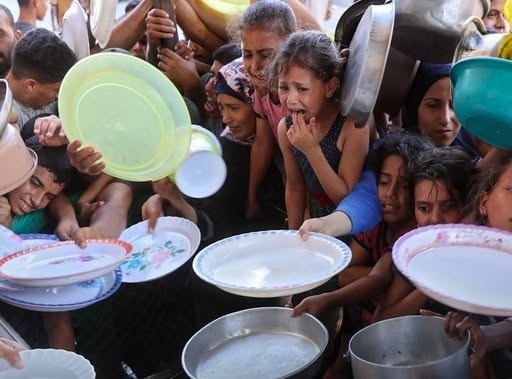
Beyond immediate shocks to financial and energy markets, humanitarian agencies now say the more urgent consequence may be severe disruption to global food aid supply chains, raising fears of one of the worst famine crises in modern history.
According to aid organisation reports, specialised food containers initially dispatched from Dubai across the Strait of Hormuz have been forced to return to warehouses operated by the World Food Programme after shipping routes were disrupted.
Around 70,000 metric tonnes of food supplies are also reported to be stranded following the closure of the key maritime passage.
Bloomberg cited that as vulnerable populations struggle with worsening hunger and deteriorating health conditions, logistics experts are working urgently to identify alternative routes to ensure continued delivery of essential food assistance.
Women and children are said to be among those most severely affected by the deepening global food crisis.
The World Food Programme estimates that the conflict-driven disruption could significantly increase acute food insecurity across multiple regions, including a projected rise of 24 per cent in Asia, 21 per cent in West Africa, 17 per cent in Central Africa, and 16 per cent in East and Southern Africa, as well as 14 per cent in Latin America, the Caribbean, West Asia and North Africa.
The agency also warns that as many as 45 million additional people could face severe hunger if the United States–Iran conflict continues through the end of June and if oil prices remain above US$100 per barrel.
This would push the global total of people facing acute food insecurity to a record 363 million.
The impact is expected to be most severe in regions heavily dependent on imported food and fuel, many of which are already grappling with conflict-related instability and drought conditions.
While the current crisis is described as having few parallels in the modern era, analysts draw comparisons with the global food and energy disruptions triggered by Russia’s invasion of Ukraine in 2022, when coordinated international efforts were required to stabilise supply chains.
The central question now facing policymakers and humanitarian organisations is whether the international community can once again mount a coordinated response—this time in an environment that many fear may be even more severe and far-reaching. - April 20, 2026










